Armenia Goes to Polls Under Shadow of Russian Economic Retaliation
Voters decide between continued European integration under Nikol Pashinyan or returning to Russia's orbit as Moscow bans key Armenian exports.

World correspondent
Reports on international affairs, diplomacy, and humanitarian developments with an emphasis on official statements, multilateral institutions, and regional context.
Editorial responsibility: Lead reviewer for geopolitics, international institutions, and crisis coverage
Primary source: BBC World News. Full source links and update notes are below.
Fast summary
Start here
- Voting is underway in Armenia to determine the country's future alignment with either the West or Russia.
- Russia has imposed bans on Armenian exports, including flowers and cognac, as a pressure tactic against the pro-Western government.
- Incumbent Nikol Pashinyan faces low approval ratings following the loss of Nagorno-Karabakh to Azerbaijan in 2023.
What happened
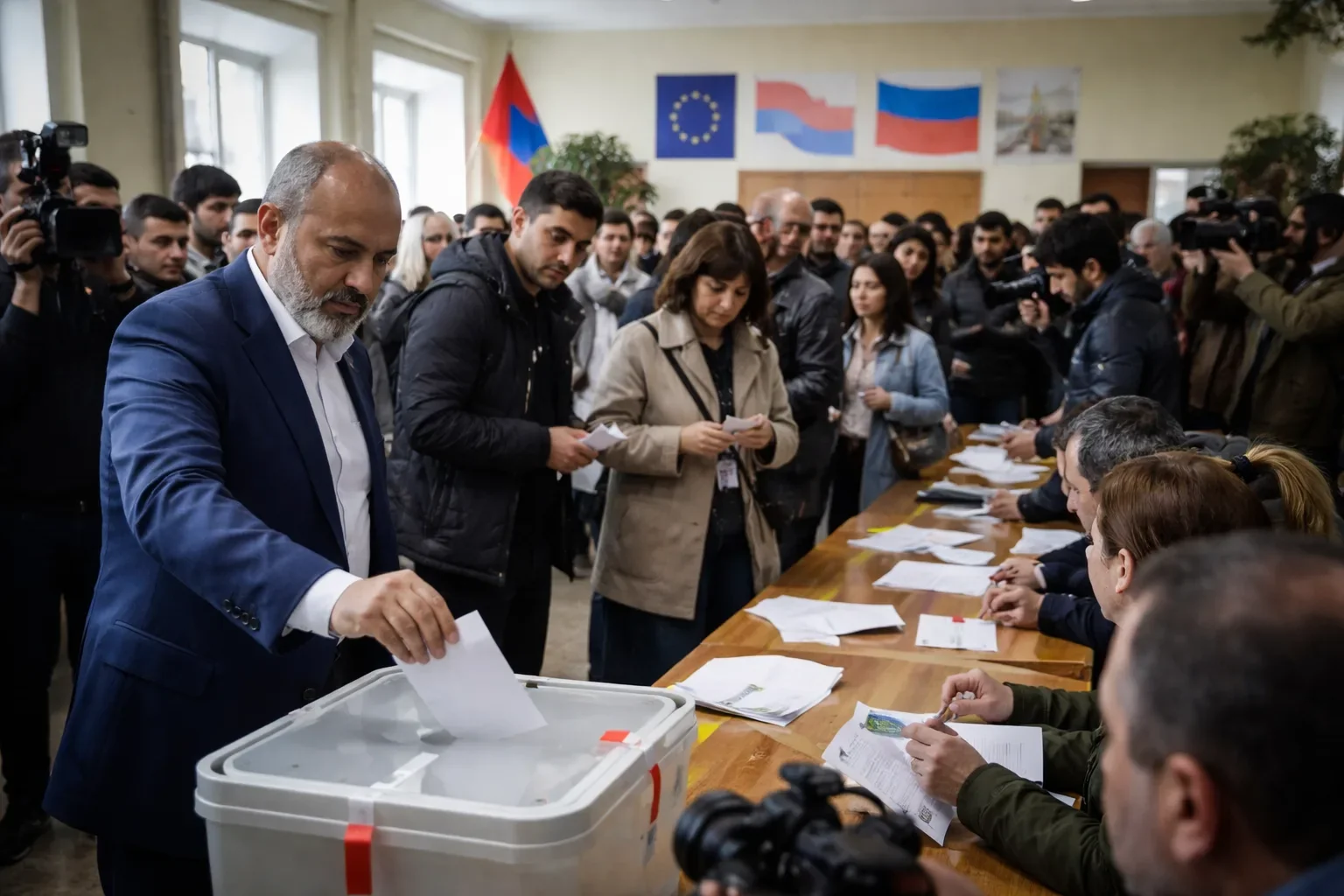
Voters in Armenia are going to the polls in an election shaped as much by geopolitics as by domestic politics. At the center of the vote is Prime Minister Nikol Pashinyan's attempt to keep moving the country toward closer ties with Europe and the United States, even as Russia increases economic pressure to remind Armenians how dependent their country remains on trade and security links with Moscow.
That makes the election more than a standard parliamentary contest. It is being treated as a national choice about orientation: continue a difficult pro-Western shift after years inside Russia's strategic orbit, or return to a model in which Moscow remains the dominant external partner despite widespread frustration over recent events.
Why Moscow's pressure matters
Russia's response to Armenia's recent political direction has not been subtle. Trade restrictions on Armenian exports, including products such as flowers, produce, mineral water, and cognac, have raised the stakes for voters and for the government. In a country where Russia still accounts for a large share of trade and labor-market connection, those measures are not symbolic. They are designed to be felt.
The Kremlin's message is straightforward: geopolitical independence comes with material costs. By tightening commercial pressure before the vote, Moscow appears to be testing whether Armenian voters will remain committed to Pashinyan's course once that choice affects prices, jobs, and economic confidence.
Why Pashinyan is vulnerable
Pashinyan still represents the most visible path toward Western integration, but he enters the vote from a weakened position. His approval has been damaged by the 2023 loss of Nagorno-Karabakh to Azerbaijan, a trauma that shook public faith in the country's security strategy and exposed the limits of Armenia's traditional alliances.
For many Armenians, the deepest question is not ideological but practical. If Russia could not or would not protect Armenian interests when the regional balance shifted, should the country keep relying on Moscow? But there is a second question that cuts the other way: if Armenia turns further West without credible security guarantees, who fills the gap?
That tension defines the election more than any single campaign slogan.
The opposition case for closer ties to Russia
Pashinyan's critics argue that Armenia is trying to outrun its geography. They say Russia, however unreliable it may have seemed, remains too important to alienate. Some opposition figures want a direct restoration of deeper military and economic alignment with Moscow, portraying Pashinyan's Western pivot as morally satisfying but strategically risky.
The challenge for that camp is credibility. Many Armenian voters are angry not only with their current leadership but also with the older political order and its assumptions about Russian protection. That makes the opposition argument powerful in theory but complicated in practice. Returning to Moscow's orbit is not a simple reset. It would require convincing voters that dependence on Russia is still safer than uncertainty elsewhere.
Why this election matters beyond Armenia
The vote is being watched closely across the South Caucasus and in Western capitals because Armenia has become a test case for how smaller post-Soviet states navigate between pressure from Moscow and the pull of Western institutions. If Pashinyan survives, it may encourage further outreach to the EU and the US. If he falters, it will be read as evidence that Russia can still use economic and strategic leverage to reverse political drift in its neighborhood.
The result also matters for regional diplomacy, especially any future peace arrangement with Azerbaijan. Armenia's external orientation will shape how confidently it can negotiate, how much support it can expect, and what kind of security architecture it tries to build.
What to watch next
The immediate focus is the vote count, but the more important story may come after the ballots are tallied. Watch whether Moscow escalates or relaxes trade pressure, whether Western governments step up visible backing, and whether Armenia's next government can translate foreign-policy ambition into a credible security and economic plan.
Why this matters
The Armenia election is about much more than a change of government. It is a referendum on whether a small state can loosen dependence on Russia while absorbing the economic and strategic costs that come with that choice. For Nikol Pashinyan, for Moscow, and for Armenia's Western partners, the result will be read as a measure of how much room the country really has to choose its own direction.
Why it matters
The election determines whether Armenia continues its drift toward the European Union and the U.S. or reverses course back toward its traditional security and economic reliance on Russia.
Read next
Follow this story through the topic hub, more world coverage, and the latest updates.
Weekly briefing
Get the week's key developments in one concise email.
Get a fast catch-up on the biggest stories, the context behind them, and the links worth your time.
Cadence
Weekly, for a quick catch-up
Coverage
AI, business, world, security, sports
Format
Clear takeaways and useful context
Request the briefing
Leave your email to open a prepared request and get on the list for the weekly briefing.
About the byline
World correspondent
Leila Haddad covers world affairs, diplomacy, and humanitarian crises, with a focus on how fast-moving international developments affect public policy, conflict response, and cross-border institutions.
Sources and methodology