Adam Silver Outlines New '3-2-1' Draft Lottery Proposal
The NBA commissioner confirmed the league has settled on a specific framework to be presented for approval in an effort to discourage intentional losing.

Sports reporter
Reports on leagues, tournaments, and athlete developments with an emphasis on verified event details, official announcements, and commercial context.
Editorial responsibility: Lead reviewer for match reporting, tournament context, and league governance coverage
Primary source: ESPN Top Headlines. Full source links and update notes are below.
Fast summary
Start here
- Commissioner Adam Silver announced the league will present a '3-2-1' model for the draft lottery.
- The proposal specifically targets the practice of 'tanking' by altering the reward structure for losing teams.
- The plan will be formally presented to league stakeholders and the Board of Governors for consideration.
What happened
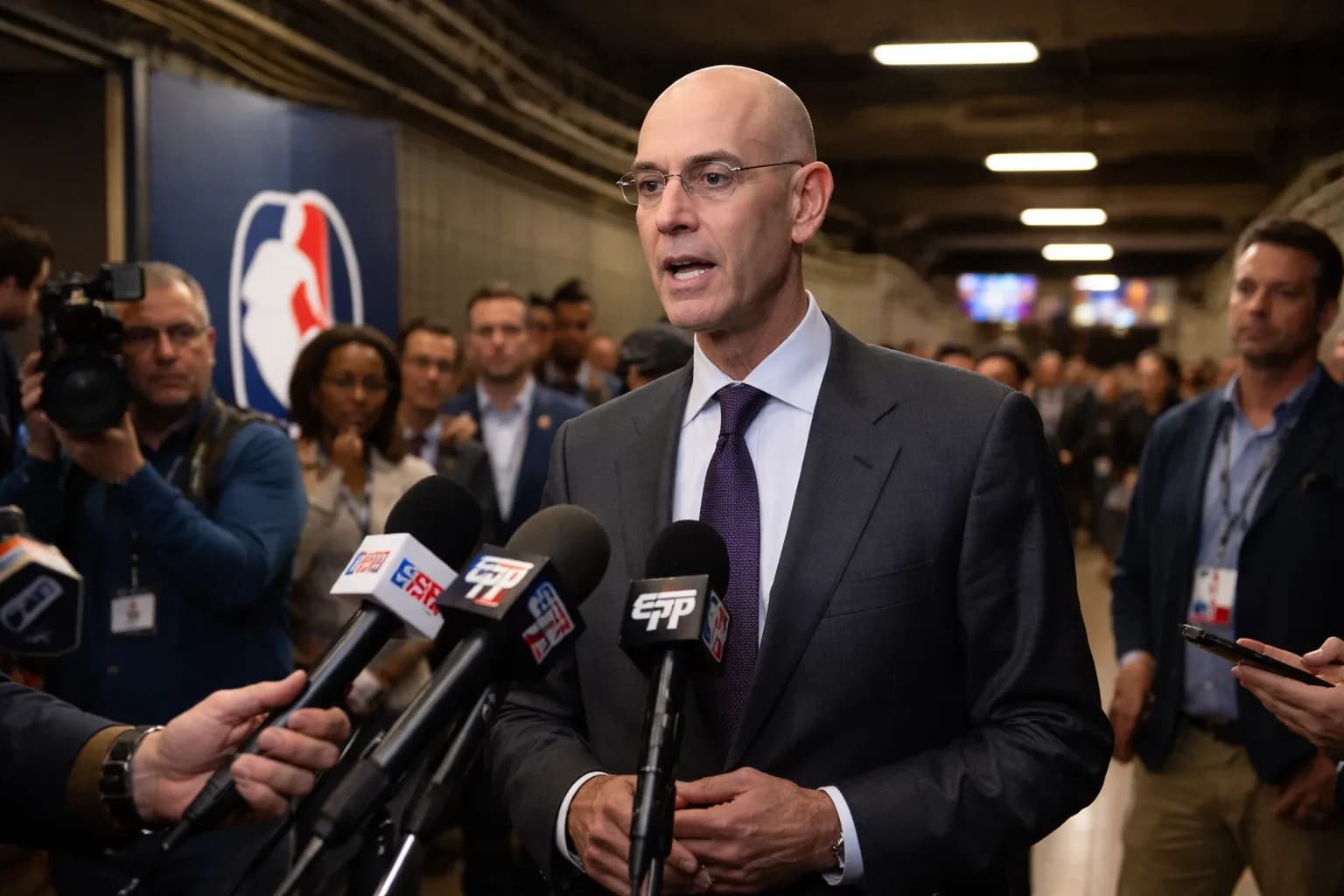
NBA Commissioner Adam Silver says the league is ready to advance a new 3-2-1 NBA draft lottery proposal aimed at reducing the incentive for teams to lose intentionally. The idea is straightforward even if the final percentages have not yet been published: the worst team would no longer enjoy the strongest practical reward for finishing at the bottom, and the relationship between losing and top-pick odds would be weakened again.
That matters because the NBA has spent years trying to reduce tanking without eliminating the draft's role in helping weak teams rebuild. Silver's comments move the debate from general dissatisfaction to a named policy framework. Once that happens, owners, executives, and fans can start evaluating whether this proposal would actually change behavior rather than simply reframe it.
Why the NBA keeps revisiting tanking
The league already tried a major lottery reform in 2019, flattening the odds so the three worst teams each had the same 14% chance at the No. 1 pick. That step reduced the old race to the absolute bottom, but it did not erase suspicion that some franchises still benefit from strategic losing late in the season.
From the league office perspective, tanking creates several problems at once:
- It damages the credibility of regular-season games.
- It frustrates fans who pay to watch teams compete honestly.
- It distorts playoff and play-in races when opponents face weakened rotations.
- It encourages front offices to prioritize draft math over player development and culture.
Silver has repeatedly emphasized meaningful games as a business and competitive priority. A new lottery structure is one of the few tools the league can use to influence incentives without directly accusing teams of bad faith.
What the 3-2-1 draft lottery could change
While the NBA has not released complete details, the 3-2-1 lottery system appears designed to make the bottom of the standings less predictable and less rewarding. If the worst record carries a smaller edge, teams have less reason to treat losses as assets. In theory, that should preserve more competitive lineups and more authentic late-season basketball.
The proposal could also shift how rebuilding teams think about roster strategy. Instead of focusing on maximizing lottery position, franchises may be pushed to invest more heavily in coaching continuity, developmental reps, and internal evaluation. A bad team would still receive lottery access, but the system would place more value on competent rebuilding rather than outright collapse.
That distinction is central to the NBA's argument. The league is not trying to punish rebuilding. It is trying to reduce the reward for obvious bottoming out.
Why owners may disagree
The Board of Governors is unlikely to view the issue uniformly. Teams that believe the draft is their best path to elite talent may resist further reducing the odds advantage for the weakest rosters. Small-market owners, in particular, could argue that flattening the field too much makes it harder to escape long rebuilding cycles.
Supporters of the plan will make the opposite case. They will argue that the league's long-term health depends on keeping games watchable, preserving public trust, and discouraging seasons that become transparent lottery chases by March. In that view, a slightly less favorable draft outlook for the worst teams is an acceptable trade if the regular season becomes more credible.
What to watch next
The next milestone is formal review by league stakeholders and a vote by NBA owners. They will want exact odds, implementation timing, and clarity on how the system would affect non-playoff teams across the standings.
If the proposal passes, analysts will immediately watch whether fringe lottery teams become less aggressive about shutting down veterans or managing lineups for losses. If it fails, it will show that the NBA still lacks consensus on how to fix one of its most persistent structural problems.
Why this matters
The NBA tanking debate is really a debate about trust. A league built on star power, parity ambitions, and national TV relevance cannot allow too many games to feel strategically unserious. By backing a 3-2-1 NBA lottery proposal, Adam Silver is signaling that the current system still does not go far enough. Whether owners agree will shape draft strategy, rebuilding philosophy, and the value of every late-season game.
Related coverage
Why it matters
This proposal represents the league's latest attempt to solve a long-standing competitive balance issue, potentially changing how franchises approach rebuilding and late-season games.
Read next
Follow this story through the topic hub, more sports coverage, and the latest updates.
Weekly briefing
Get the week's key developments in one concise email.
Get a fast catch-up on the biggest stories, the context behind them, and the links worth your time.
Cadence
Weekly, for a quick catch-up
Coverage
AI, business, world, security, sports
Format
Clear takeaways and useful context
Request the briefing
Leave your email to open a prepared request and get on the list for the weekly briefing.
About the byline
Sports reporter
Olivia Park covers sports with an emphasis on competition, governance, and the business forces shaping global leagues, major events, and athlete decision-making.
Sources and methodology