US Officials Dispute ASML Over Potential Presence of Advanced Chip
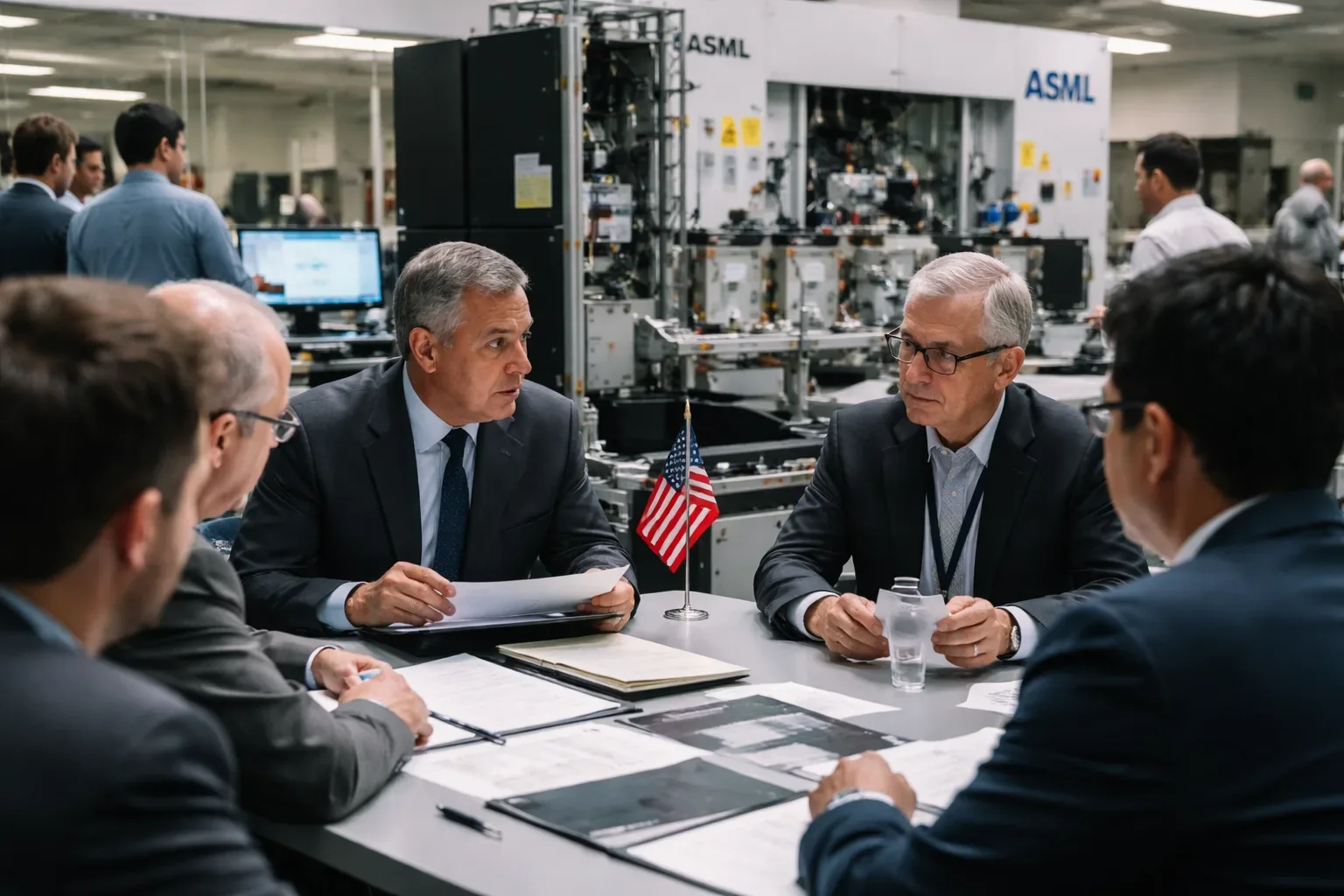
U.S. Commerce Secretary Howard Lutnick has raised concerns that restricted EUV lithography machines entered China, while ASML maintains no such systems

AI reporter
Reports on model launches, frontier labs, developer platforms, and AI policy with an emphasis on claims verification and rollout context.
Editorial responsibility: Lead reviewer for AI coverage, launch claims, and policy context
Primary source: TechCrunch AI. Full source links and update notes are below.
Fast summary
Start here
- U.S. Commerce Secretary Howard Lutnick reportedly told ASML executives he is concerned EUV machines reached China in violation of export controls.
- ASML denies the claim, stating it tracks all units and maintains strict internal firewalls to prevent unauthorized technology access.
- U.S. officials claim to have evidence of EUV-related component shipments but have reportedly declined to share that data with ASML.
What happened
The United States says ASML's advanced chip tools—specifically equipment tied to EUV lithography—may have reached China, while the Dutch semiconductor-equipment giant strongly denies that any such machines are there. The dispute immediately raises the stakes around one of the most sensitive chokepoints in the global technology economy: access to the tools required to manufacture the most advanced chips on Earth.
This is not a routine export-control disagreement. If the US is right, it could mean the most important restriction in the semiconductor supply chain has been breached. If ASML is right, it could mean Washington is escalating suspicion without disclosing evidence.
Why EUV tools matter so much
The reason the ASML China claim is explosive is simple: ASML has a near-monopoly on EUV lithography systems, which are essential for producing cutting-edge chips used in advanced AI, high-performance computing, and other strategic technologies. These machines are not just valuable industrial assets. They are geopolitical leverage.
That is why Western export controls around them are so strict. Keeping EUV systems out of China has been one of the most consequential pieces of the US-led effort to slow Beijing's progress in top-tier semiconductor manufacturing.
Why the allegation is so serious
If advanced chip tools may be in China despite those restrictions, several assumptions break at once:
- Export enforcement may be weaker than policymakers thought.
- China's advanced domestic chip capabilities could accelerate faster than expected.
- Western allies may face pressure for even stricter controls.
- ASML's own oversight and compliance posture could come under intense scrutiny.
That is why even an unproven allegation is market-moving and politically significant.
Why ASML is pushing back hard
ASML's denial is also understandable. The company has every reason to defend the credibility of its tracking, compliance systems, and internal security measures. If customers, regulators, or allied governments start doubting whether ASML EUV machines can be controlled, the consequences reach far beyond one disputed shipment. The entire trust framework around export restrictions weakens.
That is why the company is emphasizing that it knows where its systems are, restricts access internally, and regards unauthorized appearance in China as inconsistent with its own records.
Why the evidence dispute matters
One of the most important details is that US officials reportedly claim to have evidence of related shipments or components, while not fully sharing that evidence with ASML or publicly clarifying the basis of the suspicion. That creates a dangerous ambiguity. Markets and policymakers are being asked to process a severe allegation without the normal level of transparency needed to evaluate it independently.
In geopolitical technology disputes, ambiguity can be a tool. But it can also destabilize trust among allies if accusations outpace documented proof.
Why this affects more than one company
The US claims ASML’s advanced chip tools may be in China story matters because ASML sits inside a broader semiconductor alliance that includes equipment suppliers, foundries, chip designers, and export-control regulators across the US, Europe, and Asia. If enforcement credibility weakens at the lithography level, the effects ripple across the whole strategic architecture.
This is especially important in the AI era. The country that can access and scale advanced chip production fastest gains an enormous advantage in training, deploying, and militarizing next-generation systems.
What to watch next
The key question is whether Washington provides more concrete evidence or instead escalates pressure through licensing, diplomacy, and public signaling alone. Watch too for Dutch and European regulatory responses, because any serious suspicion around EUV diversion could force allied governments into a tougher export-control posture.
Why this matters
The US claims ASML’s advanced chip tools may be in China story matters because EUV export controls are one of the central barriers separating China's current chip capacity from the technological frontier. If that barrier has weakened, it changes the strategic map of semiconductors and AI. If the allegation is wrong, it still shows how tense and fragile the politics of advanced chip control have become.
Why it matters
A breach in export controls for EUV technology would significantly accelerate China's domestic AI and military chip capabilities, bypassing years of Western technological leads.
Read next
Follow this story through the topic hub, more ai coverage, and the latest updates.
Weekly briefing
Get the week's key developments in one concise email.
Get a fast catch-up on the biggest stories, the context behind them, and the links worth your time.
Cadence
Weekly, for a quick catch-up
Coverage
AI, business, world, security, sports
Format
Clear takeaways and useful context
Request the briefing
Leave your email to open a prepared request and get on the list for the weekly briefing.
About the byline
AI reporter
Alex Rivera reports on artificial intelligence with an emphasis on model launches, frontier lab strategy, developer tooling, and the policy decisions shaping commercial deployment.
Sources and methodology
- https://techcrunch.com/2026/06/19/the-us-says-asmls-top-chip-tool-may-be-in-china-asml-says-it-isnt/