OpenAI Launches Jalapeño, Its First Custom Inference Chip Developed
The new processor aims to lower operating costs and improve performance-per-watt for real-time model execution.

AI reporter
Reports on model launches, frontier labs, developer platforms, and AI policy with an emphasis on claims verification and rollout context.
Editorial responsibility: Lead reviewer for AI coverage, launch claims, and policy context
Primary source: TechCrunch AI. Full source links and update notes are below.
Fast summary
Start here
- OpenAI's new Jalapeño chip is an inference-specific processor designed to execute pre-built AI models more efficiently.
- Developed in collaboration with Broadcom, the silicon was partially designed using OpenAI's own AI models to meet specific workload needs.
- Early testing indicates significantly better performance-per-watt compared to existing state-of-the-art AI accelerator alternatives.
What happened
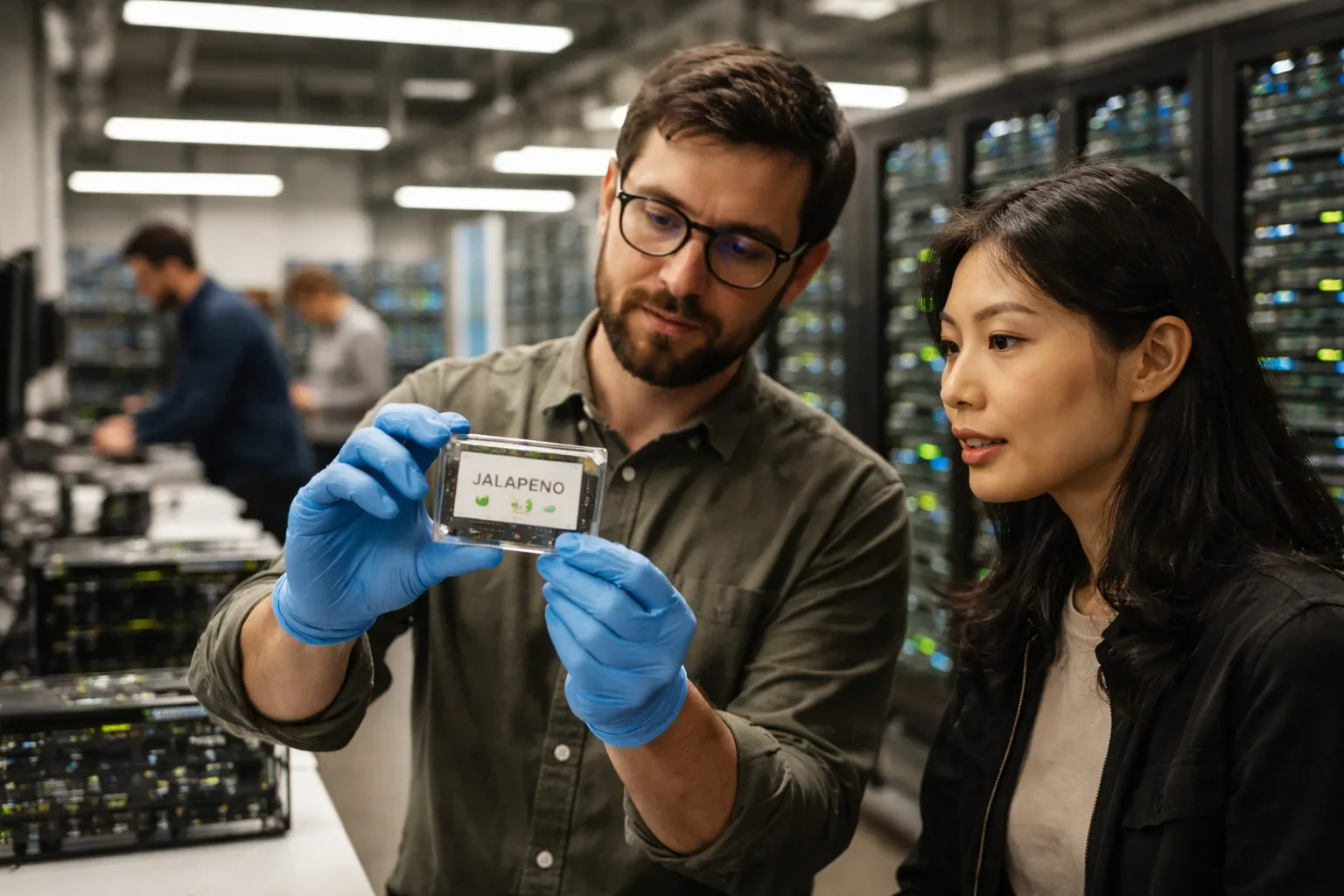
OpenAI has unveiled Jalapeño, its first custom chip designed specifically for AI inference, marking a notable shift in how the company plans to support the growing cost and scale demands of its products. Built with Broadcom, the Jalapeño chip is not aimed at training giant frontier models from scratch. Instead, it is focused on inference, the stage where trained models respond to real-world user requests in products such as chat assistants, coding systems, and enterprise tools.
That distinction matters. Training is expensive, but inference is where cost multiplies at scale because it happens constantly. Every prompt, completion, edit, and agent step consumes compute. If OpenAI can lower the cost of inference while maintaining strong performance, it changes the economics of serving millions of requests across consumer and business products.
Why the Jalapeño chip matters
The biggest strategic takeaway is that OpenAI is trying to reduce its dependence on Nvidia hardware for at least part of its stack. Nvidia remains dominant in AI infrastructure, especially for large-scale training, but reliance on a single supplier creates cost pressure, capacity risk, and less control over optimization. A custom inference chip gives OpenAI a way to tune hardware around its own workloads rather than adapting its software entirely around general-purpose accelerators.
Inference-specific silicon can be especially valuable because many real products need low latency, predictable cost, and efficient power use more than they need maximum raw training throughput. If Jalapeño delivers better performance-per-watt, as early testing reportedly suggests, OpenAI could improve response speed and operating margins at the same time.
What OpenAI says the chip is built for
According to the reporting summarized here, Jalapeño is optimized for real-time model execution, with particular attention to workloads such as coding. That makes sense. Coding models and assistant-style products require rapid back-and-forth interaction, often over long sessions with many generated tokens. Small gains in efficiency at that layer can produce very large savings when multiplied across a large user base.
OpenAI also reportedly used its own AI systems to help with aspects of the chip design process. That point is easy to treat as a headline flourish, but it hints at a deeper ambition: using AI not only as a product, but as a tool for designing the infrastructure that powers future AI systems. If that cycle matures, hardware and software development could become more tightly integrated over time.
The broader AI infrastructure race
OpenAI is not alone in moving toward custom silicon. Google, Amazon, and other major technology companies have already invested heavily in in-house accelerators to reduce costs and tailor infrastructure to their own workloads. The logic is straightforward. When you operate at hyperscale, buying only off-the-shelf compute becomes a strategic constraint.
That does not mean Nvidia is disappearing from the picture. Training frontier models will likely continue to depend heavily on top-tier GPUs for the foreseeable future. But the AI market is large enough that training and inference no longer need to be treated as one hardware problem. Companies can pursue specialized chips for specific stages of the stack, and that is exactly what Jalapeño appears to represent.
Why inference economics matter so much
Inference has become one of the defining business questions in AI. The more successful a product becomes, the more valuable it is to trim the cost of each response while protecting quality. That is especially true for tools that encourage heavy daily usage, including assistants, enterprise copilots, and code generation systems.
For OpenAI, even modest reductions in inference cost could have broad downstream effects. They could support more generous product tiers, improve reliability during usage spikes, or make high-frequency agentic workflows more economically viable. In other words, a better inference chip is not only a hardware story. It is a product roadmap story.
What to watch next
The key question now is deployment. Early testing results are one thing; broad production use across data-center environments is another. Observers will want to see whether Jalapeño reaches stable deployment, which workloads it handles first, and whether OpenAI keeps expanding custom silicon beyond inference into networking, memory optimization, or eventually training-oriented processors.
If the rollout goes well, Jalapeño could become an early sign of OpenAI evolving from a model company into a more vertically integrated AI infrastructure company.
Why this matters
The OpenAI Jalapeño chip launch signals that AI competition is increasingly moving below the model layer, where control over inference hardware, power efficiency, and deployment economics may shape which companies can scale advanced products most effectively.
Why it matters
By designing its own silicon, OpenAI reduces its reliance on Nvidia's expensive GPUs and gains vertical control over its hardware-to-software stack to lower costs.
Read next
Follow this story through the topic hub, more ai coverage, and the latest updates.
Weekly briefing
Get the week's key developments in one concise email.
Get a fast catch-up on the biggest stories, the context behind them, and the links worth your time.
Cadence
Weekly, for a quick catch-up
Coverage
AI, business, world, security, sports
Format
Clear takeaways and useful context
Request the briefing
Leave your email to open a prepared request and get on the list for the weekly briefing.
About the byline
AI reporter
Alex Rivera reports on artificial intelligence with an emphasis on model launches, frontier lab strategy, developer tooling, and the policy decisions shaping commercial deployment.
Sources and methodology