SpaceX Eyes $119 Billion Investment for 'Terafab' Chip Facility in
A new filing reveals plans for a vertically integrated semiconductor plant designed to produce chips for xAI, Tesla, and SpaceX.

AI reporter
Reports on model launches, frontier labs, developer platforms, and AI policy with an emphasis on claims verification and rollout context.
Editorial responsibility: Lead reviewer for AI coverage, launch claims, and policy context
Primary source: TechCrunch AI. Full source links and update notes are below.
Fast summary
Start here
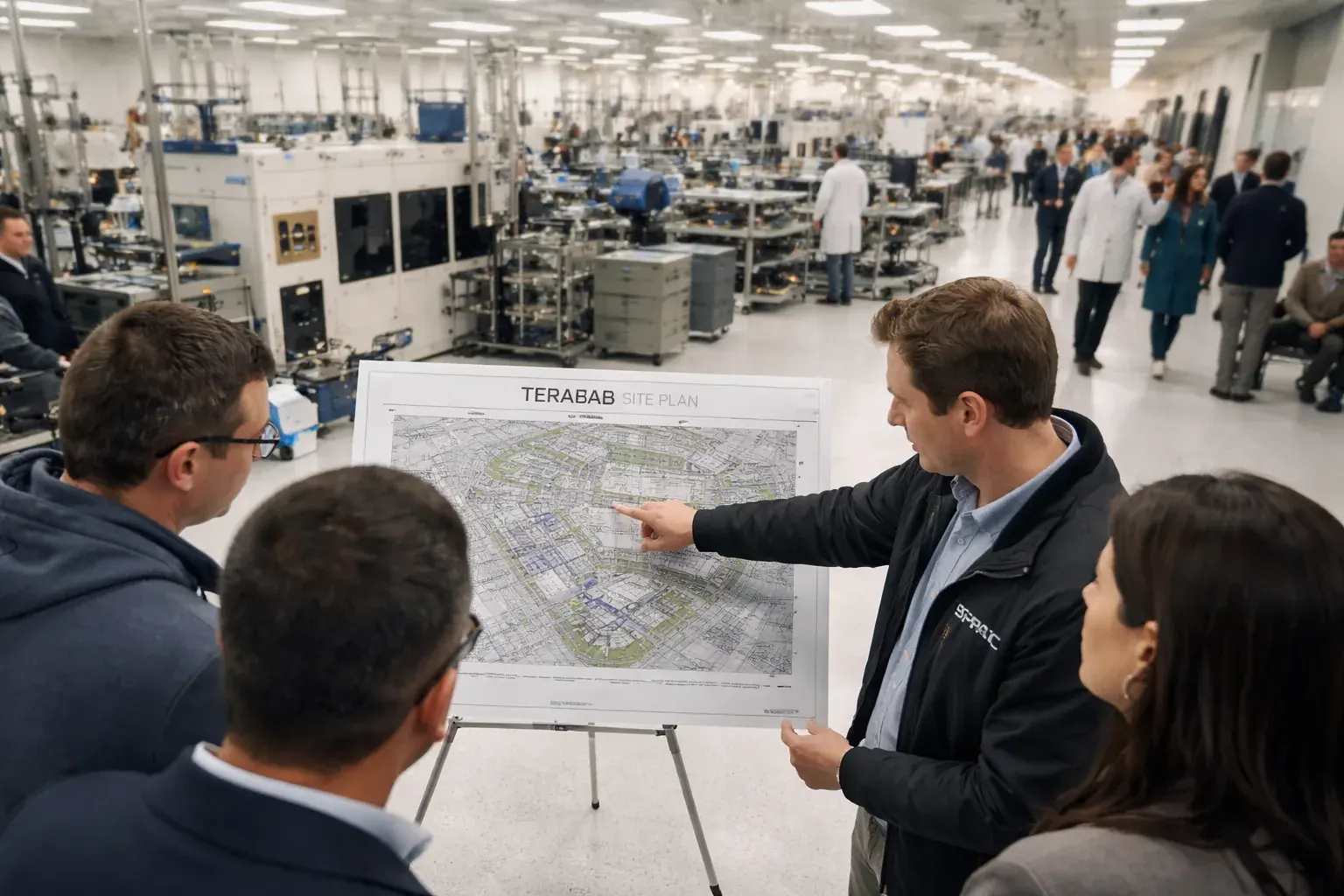
- SpaceX filed a proposal for a multi-phase semiconductor manufacturing facility in Grimes County, Texas.
- The project, named Terafab, could cost up to $119 billion and involves partnerships with Tesla and Intel.
- The facility aims to solve chip shortages for AI servers, satellites, and autonomous vehicles.
What happened
SpaceX is reportedly exploring a giant semiconductor manufacturing project in Texas known as Terafab, with total investment potentially reaching $119 billion across multiple phases. If the project moves forward at anything close to that scale, it would rank as one of the most ambitious attempts by a private technology group to internalize chip production for AI, robotics, and infrastructure-heavy businesses.
The scale is what makes the story stand out. Plenty of companies talk about supply-chain resilience. Very few respond by proposing a fabrication project large enough to serve not just one business line, but a whole ecosystem including xAI, Tesla, and SpaceX itself.
Why SpaceX would want its own chip manufacturing base
The logic behind Terafab is straightforward: advanced chips have become a strategic bottleneck for companies building AI servers, autonomous systems, satellites, and robotics. If third-party suppliers cannot deliver enough capacity, then vertically integrated groups begin asking whether they should build the capacity themselves.
For Elon Musk's companies, that question is particularly acute because their needs overlap:
- xAI needs compute hardware for model training and inference.
- Tesla needs chips for autonomous driving and robotics.
- SpaceX needs hardware for communications, satellites, and high-performance systems.
If one fabrication base could help support all three, the business case becomes easier to imagine, even if the execution remains daunting.
Why the $119 billion number matters
A proposed $119 billion semiconductor factory is not just a large industrial investment. It implies a long-term strategy to reduce dependence on external chip suppliers and potentially create an internal hardware platform across multiple Musk-linked firms. That would represent a major change in how these companies position themselves relative to the broader semiconductor market.
It would also align with a wider industry reality: the most powerful AI and infrastructure companies increasingly want more control over their stack. Software advantage is still important, but hardware scarcity can erase software ambition very quickly. That is why chip manufacturing has become central to AI competition rather than a separate industrial concern.
Why Texas is a logical candidate
Texas fits the pattern for a project like this. The state has land, political appetite for large industrial development, and growing relevance in manufacturing, energy, and infrastructure. It also already sits inside the geographic orbit of Musk's companies, making it easier to imagine a future cluster that connects fabrication, deployment, testing, and integration.
That said, a county filing or site exploration is not the same as a final commitment. Large semiconductor plants take years, huge capital discipline, specialized talent, water and power planning, and a supply network that cannot be improvised at the last minute.
Why Terafab is also a geopolitical story
The SpaceX Terafab Texas proposal lands in a global environment where semiconductors are already treated as strategic assets by governments and corporations alike. Building more domestic fabrication capacity in the United States aligns with a wider push to reduce vulnerability in critical technology chains.
For Musk's companies, the motivation may be commercial first. But the broader context is geopolitical. The same chips that power AI models and robots also sit inside national competition over computing capacity, industrial leverage, and infrastructure independence.
What could limit the plan
The most obvious challenge is execution. Semiconductor fabrication is among the hardest manufacturing problems in the world. Money alone does not guarantee success. Partnerships, talent, timeline discipline, process maturity, and demand planning all matter. Even if Intel or other partners are involved, a project of this size would still face major technical and financial hurdles.
There is also the question of whether one site can efficiently serve such different internal priorities across AI, automotive, and aerospace workloads.
What to watch next
The immediate question is whether Texas remains the preferred location and whether more formal commitments emerge. After that, attention will turn to financing, partner structure, and how central Terafab becomes to the longer-term hardware strategy of xAI, Tesla, and SpaceX.
Why this matters
The SpaceX Terafab semiconductor factory story matters because it shows how the AI race is forcing companies to think like industrial powers, not just software firms. If compute is the new bottleneck, then chip manufacturing becomes a strategic weapon. Terafab is an extreme expression of that logic.
Related coverage
Why it matters
This project represents a massive shift toward vertical integration for Musk's companies, aiming to secure the hardware supply chain necessary for advanced AI and space infrastructure.
Read next
Follow this story through the topic hub, more ai coverage, and the latest updates.
Weekly briefing
Get the week's key developments in one concise email.
Get a fast catch-up on the biggest stories, the context behind them, and the links worth your time.
Cadence
Weekly, for a quick catch-up
Coverage
AI, business, world, security, sports
Format
Clear takeaways and useful context
Request the briefing
Leave your email to open a prepared request and get on the list for the weekly briefing.
About the byline
AI reporter
Alex Rivera reports on artificial intelligence with an emphasis on model launches, frontier lab strategy, developer tooling, and the policy decisions shaping commercial deployment.
Sources and methodology