OpenAI Names GPT 5.6 Preferred Model for Microsoft Copilot 365
OpenAI designates its new GPT 5.6 as the preferred model for Microsoft’s productivity suite, aiming to quell rumors of a growing partnership rift.

AI reporter
Reports on model launches, frontier labs, developer platforms, and AI policy with an emphasis on claims verification and rollout context.
Editorial responsibility: Lead reviewer for AI coverage, launch claims, and policy context
Primary source: TechCrunch AI. Full source links and update notes are below.
Fast summary
Start here
- OpenAI unveiled GPT 5.6 and confirmed its primary role in Microsoft 365 apps.
- The announcement follows reports that Microsoft is developing in-house models.
- Microsoft's MAI models were reportedly used in Word and Excel to lower costs.
What happened
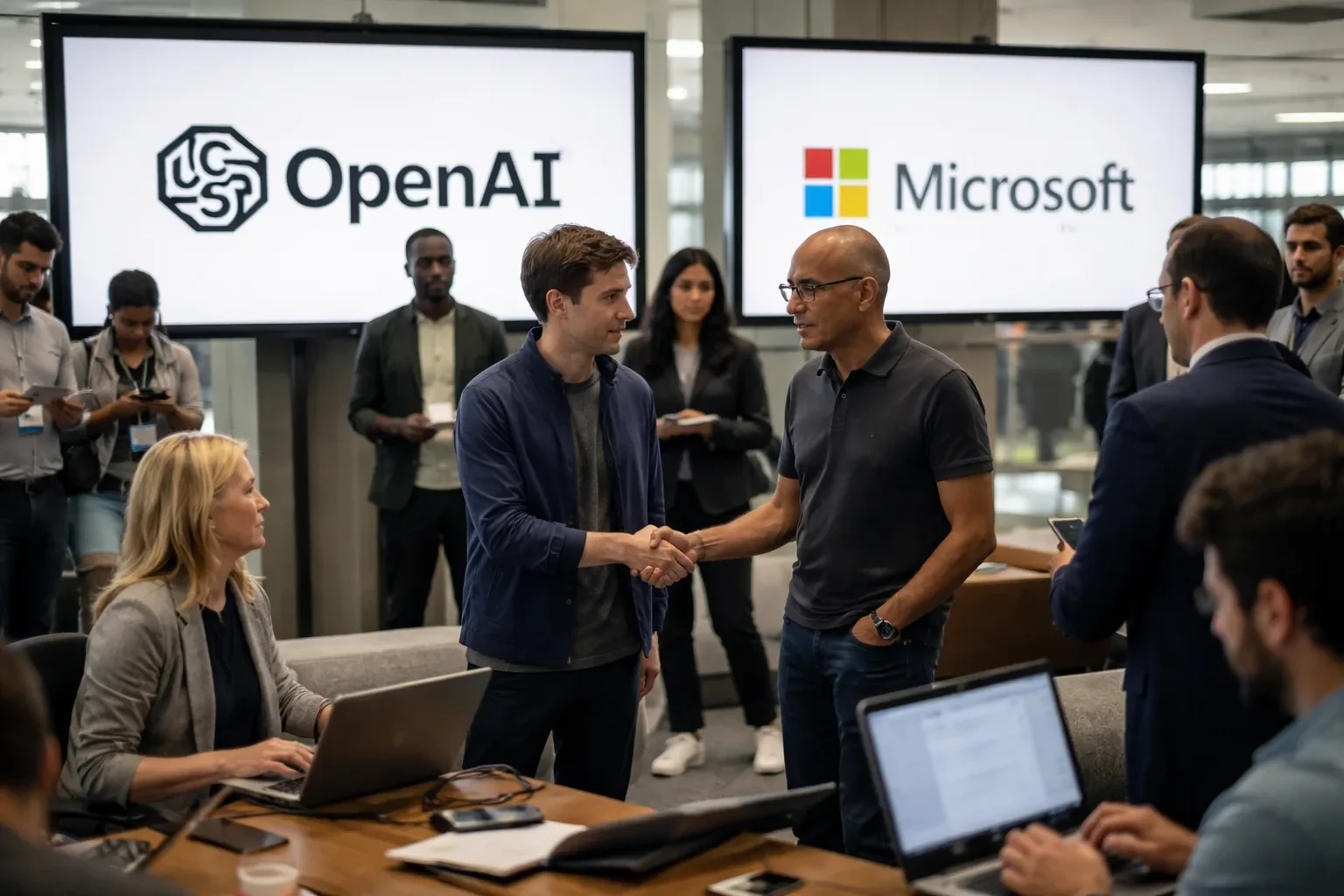
OpenAI officially launched its GPT 5.6 model family on Thursday, designating it as the preferred model to power Microsoft’s 365 Copilot ecosystem. This announcement comes at a critical juncture for the two tech giants, as industry analysts and media outlets have recently questioned the stability of their long-term partnership. By labeling GPT 5.6 as the primary engine for Microsoft’s flagship productivity tools, OpenAI is signaling that their collaboration remains the foundation of its enterprise strategy. The move appears designed to counter reports that Microsoft is pivoting toward proprietary, in-house solutions to manage the massive computational costs associated with large-scale generative AI deployments across its global user base of millions. While the companies have often been viewed as inseparable, recent market signals had suggested a potential cooling of their deep-rooted alliance.
What's new in this update
The latest disclosure clarifies that GPT 5.6 will support a wide array of applications within the Microsoft 365 suite, including Word, Excel, PowerPoint, and the recently integrated Cowork platform. In a blog post accompanying the model launch, OpenAI emphasized that the partnership is rooted in a shared commitment to making advanced artificial intelligence accessible to diverse organizations. While the specific technical advantages of GPT 5.6 over its predecessors were highlighted during the launch, the focus of the Microsoft-specific announcement was on continuity. This update serves as a public-facing rebuttal to the narrative of a breakup, though it notably leaves room for Microsoft to continue its multi-model strategy behind the scenes. OpenAI explicitly noted that the new model would offer deeper cross-app functionality, enabling more complex automation across the productivity suite.
Key details
The term preferred model carries significant weight but remains technically ambiguous. It suggests that while OpenAI’s software remains the first choice for high-end generative tasks within Copilot, it does not necessarily grant OpenAI exclusivity. Earlier this week, reports from Bloomberg indicated that Microsoft had begun integrating its own MAI models—in-house software designed specifically for cost reduction—into certain Word and Excel functions. These MAI models are intended to handle less complex tasks that do not require the full reasoning capabilities of a frontier model like GPT 5.6. The cost of running high-parameter models is a growing concern for Microsoft as it scales AI to its entire enterprise customer base. Consequently, the preferred designation may represent a marketing-focused reassurance even as the underlying technical architecture becomes increasingly hybrid.
Background and context
For years, Microsoft and OpenAI were viewed as the most formidable duo in the AI sector, with Microsoft providing the massive Azure compute power necessary for OpenAI’s research in exchange for early access to groundbreaking technology. However, this situationship has faced increasing scrutiny as Microsoft invested in rival ventures and developed its own internal AI research division. The shift towards in-house models like MAI was widely interpreted as a sign that Microsoft wanted to reduce its dependency on OpenAI’s expensive API. At the same time, OpenAI has sought to diversify its own revenue streams, sometimes putting it in direct competition with Microsoft’s enterprise sales teams. This friction has fueled speculation that the two companies are drifting apart, a theory OpenAI attempted to put to rest with the GPT 5.6 announcement.
What to watch next
The industry will now be looking for performance benchmarks comparing GPT 5.6 against Microsoft’s internal MAI models to see where the preference truly lies in daily operations. If Microsoft continues to successfully offload simpler tasks to its own software, the financial relationship between the two companies could still undergo a significant shift despite the branding of GPT 5.6 as the preferred option. Furthermore, the broader competitive landscape is intensifying; with the recent release of SpaceXAI’s Grok 4.5 and Meta’s Muse Spark 1.1, the pressure is on OpenAI to prove that its status with Microsoft is based on superior technology rather than just contractual legacy. Future updates to the Microsoft 365 roadmap will likely reveal whether OpenAI remains the exclusive provider for high-tier generative features or if Microsoft's in-house tools eventually close the gap.
Why it matters
The relationship between OpenAI and Microsoft defines the current enterprise AI market; any shift in their cooperation affects how millions of professional users interact with software.
Read next
Follow this story through the topic hub, more ai coverage, and the latest updates.
Weekly briefing
Get the week's key developments in one concise email.
Get a fast catch-up on the biggest stories, the context behind them, and the links worth your time.
Cadence
Weekly, for a quick catch-up
Coverage
AI, business, world, security, sports
Format
Clear takeaways and useful context
Request the briefing
Leave your email to open a prepared request and get on the list for the weekly briefing.
About the byline
AI reporter
Alex Rivera reports on artificial intelligence with an emphasis on model launches, frontier lab strategy, developer tooling, and the policy decisions shaping commercial deployment.
Sources and methodology