Jury Rules Against Elon Musk in OpenAI Lawsuit Over Statute of
A unanimous verdict found Musk's claims were filed past legal deadlines, removing a significant hurdle for OpenAI ahead of its reported IPO.

AI reporter
Reports on model launches, frontier labs, developer platforms, and AI policy with an emphasis on claims verification and rollout context.
Editorial responsibility: Lead reviewer for AI coverage, launch claims, and policy context
Primary source: TechCrunch AI. Full source links and update notes are below.
Fast summary
Start here
- A California jury returned a unanimous verdict finding that Elon Musk filed his lawsuit against OpenAI and its leadership after the statute of limitations had expired.
- The case focused on allegations that Sam Altman and Greg Brockman 'stole' a charity by creating a for-profit affiliate and partnering with Microsoft.
- Judge Yvonne Gonzalez Rogers indicated she was prepared to dismiss the case immediately following the jury's short deliberation period.
What happened
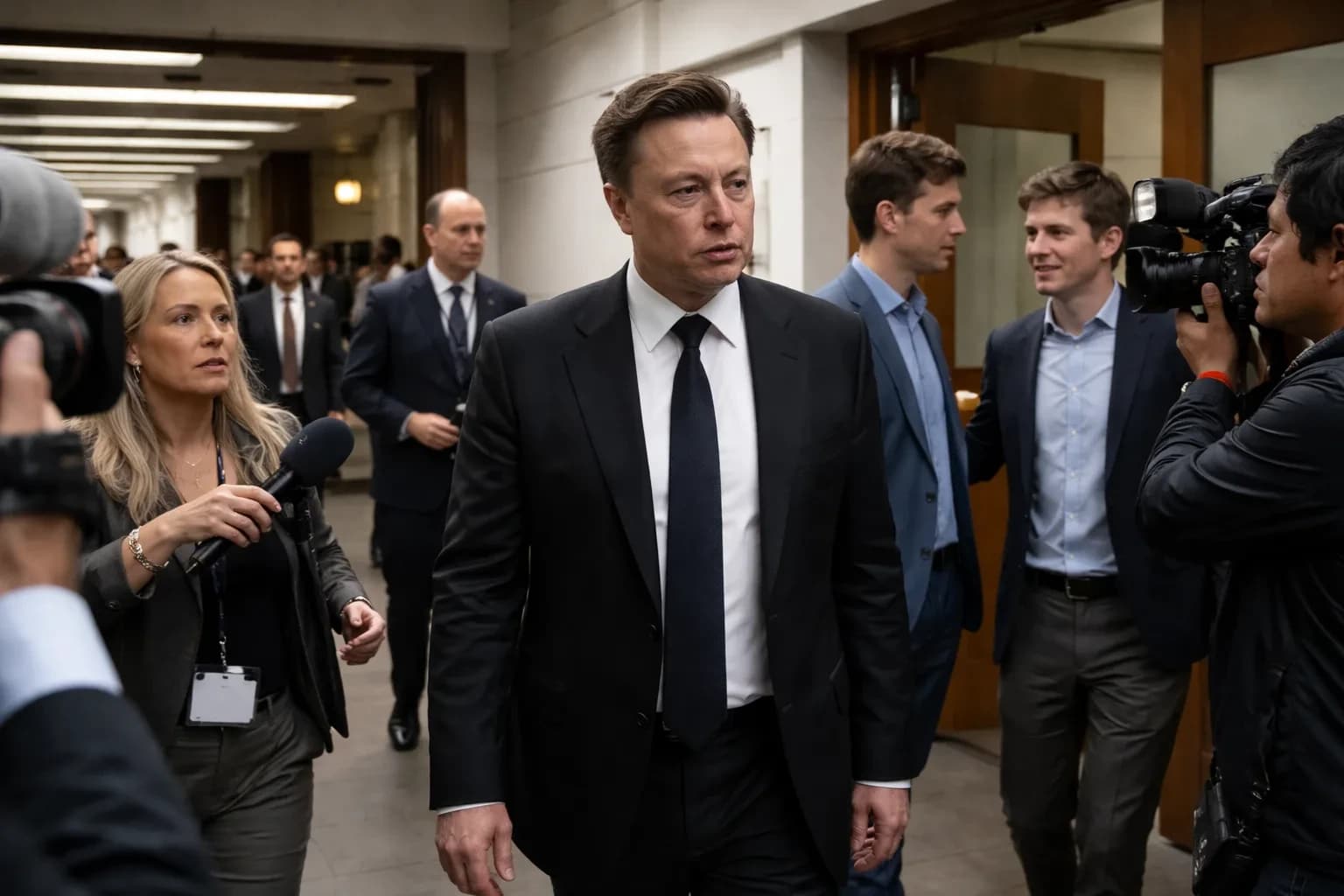
Elon Musk lost his lawsuit against OpenAI, Sam Altman, Greg Brockman, and related defendants after a California jury concluded that his claims were brought too late under the applicable statute of limitations. The legal theory behind the case was politically and symbolically significant: Musk argued that OpenAI had betrayed its original nonprofit-style mission by building a for-profit structure and deepening its partnership with Microsoft. But the verdict did not turn on whether that broader accusation was persuasive in principle. It turned on timing.
That distinction matters. The ruling does not settle every philosophical dispute about OpenAI's evolution, but it does remove a major near-term legal threat to the company's existing corporate trajectory.
What's new in this update
The key development is the unanimous jury finding that Musk's legal claims came after the deadlines had already run. That outcome gave OpenAI and its allies a procedural victory with very large practical consequences. Rather than forcing a deeper judicial reckoning over whether the company abandoned a charitable mandate, the verdict short-circuited the case on timeliness and left the current structure intact.
Judge Yvonne Gonzalez Rogers' posture also matters. Reporting suggests she was prepared to move quickly once the jury resolved the limitations issue, which indicates the court did not see a strong path for keeping the claims alive once the timing question broke against Musk.
Key details
Musk's lawsuit centered on the argument that OpenAI's partnership with Microsoft and its more commercial architecture violated the spirit or legal foundation of the organization he helped create. His team also aimed to cast Microsoft's role as more than incidental, portraying the company as a beneficiary of that alleged mission drift. But once the jury accepted the defense argument that the relevant events were old enough to be time-barred, those larger claims lost their vehicle.
Several consequences flow from the ruling:
- OpenAI avoids immediate court-ordered restructuring risk.
- Microsoft's partnership position is strengthened in the near term.
- Musk can still appeal, but the present verdict favors institutional stability for OpenAI.
- The legal defeat weakens one of the most direct courtroom attacks on OpenAI's current corporate model.
This is why the case mattered so much to investors and industry observers. It was not just founder drama. It was a test of whether one of the most important AI companies in the world might be forced into structural uncertainty.
Background and context
OpenAI's transformation from a mission-driven nonprofit-style entity into a more commercially integrated organization has been one of the defining controversies in modern AI. Musk has long argued that the shift represented a betrayal of original principles, while OpenAI has maintained that scaling frontier AI responsibly requires enormous capital, infrastructure, and partnerships. The company's relationship with Microsoft has been central to that debate because it supplied both strategic legitimacy and extraordinary financial and compute leverage.
This lawsuit arrived in a broader atmosphere of conflict among powerful AI figures, including Musk's own efforts to build rival AI power through xAI. That means the courtroom fight was always partly about governance and partly about influence over the future of artificial intelligence.
What to watch next
The immediate next issue is whether Musk's legal team can revive any part of the challenge on appeal. Even if the philosophical arguments remain politically potent, appellate courts may still be reluctant to disturb a clean limitations ruling without strong reason. Meanwhile, OpenAI's corporate planning, fundraising, and any public-markets ambitions become easier to manage with one major legal overhang reduced.
It will also be important to watch whether critics shift away from courtroom strategies and toward regulatory or legislative pressure over AI governance and nonprofit-to-for-profit transitions.
Why this matters
This matters because Elon Musk, OpenAI, Sam Altman, Microsoft, and the future corporate structure of frontier AI are all implicated in this verdict. By defeating the lawsuit on statute-of-limitations grounds, OpenAI preserves its current path and reduces the risk that a court will force a major rethink of its relationship with Microsoft. The ruling does not end the political fight over what OpenAI has become, but it gives the company a significant legal win at a moment when structure, capital, and legitimacy all matter enormously.
Reader context
This story belongs to Northstar Herald's OpenAI and Generative AI coverage, with related entities including Elon Musk, Sam Altman, Microsoft, Lawsuit. The report is based on TechCrunch AI source material.
Related coverage
Why it matters
This ruling stabilizes OpenAI's corporate structure and preserves its partnership with Microsoft, potentially clearing the legal path for the company's anticipated initial public offering.
Read next
Follow this story through the topic hub, more ai coverage, and the latest updates.
Weekly briefing
Get the week's key developments in one concise email.
Get a fast catch-up on the biggest stories, the context behind them, and the links worth your time.
Cadence
Weekly, for a quick catch-up
Coverage
AI, business, world, security, sports
Format
Clear takeaways and useful context
Request the briefing
Leave your email to open a prepared request and get on the list for the weekly briefing.
About the byline
AI reporter
Alex Rivera reports on artificial intelligence with an emphasis on model launches, frontier lab strategy, developer tooling, and the policy decisions shaping commercial deployment.
Sources and methodology