Jury Rejects Musk's Lawsuit Against OpenAI as Trial Disclosures
Following a swift verdict against Elon Musk, court testimony highlighted his 2017 efforts to divert OpenAI resources to Tesla and gain control of the

AI reporter
Reports on model launches, frontier labs, developer platforms, and AI policy with an emphasis on claims verification and rollout context.
Editorial responsibility: Lead reviewer for AI coverage, launch claims, and policy context
Primary source: TechCrunch AI. Full source links and update notes are below.
Fast summary
Start here
- A jury rejected Musk's claims of breach of charitable trust and unjust enrichment against Sam Altman and Greg Brockman.
- Testimony revealed Musk used OpenAI scientists in 2017 to consult on Tesla's autopilot software without reimbursing the non-profit.
- The trial documented Musk's 2017 attempt to secure sole control over OpenAI’s potential for-profit affiliate.
What happened
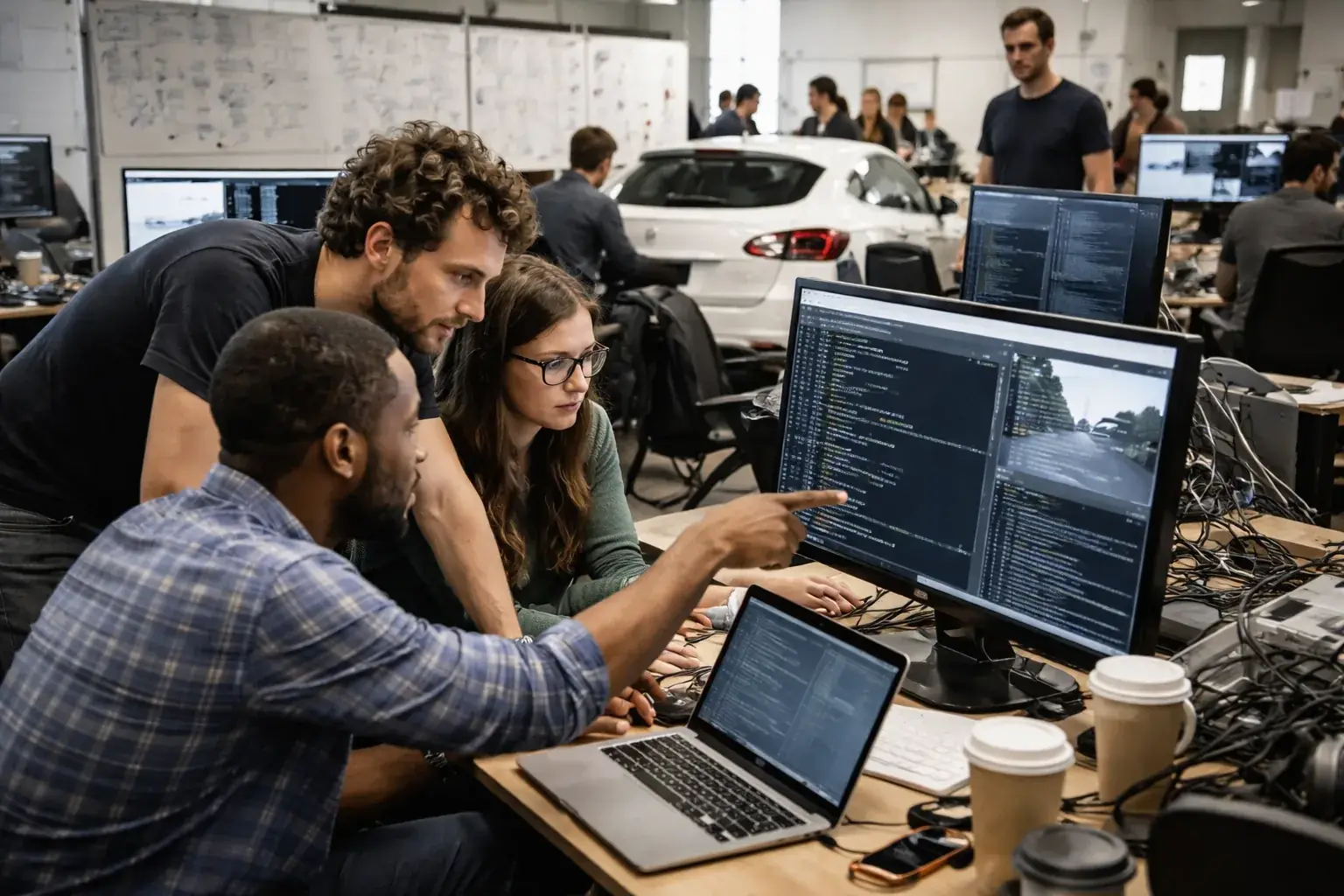
Elon Musk's failed lawsuit against OpenAI ended with more than a courtroom loss. It also surfaced testimony that complicated his public story about defending OpenAI's original mission. During the trial, evidence and witness accounts suggested that Musk had previously used OpenAI researchers to help Tesla's Autopilot effort in 2017 without reimbursement to the nonprofit. That disclosure matters because Musk's lawsuit was framed around the claim that others had corrupted a public-interest organization for private gain. The testimony suggested he had at least explored a similar blending of mission-driven talent with commercial priorities.
That does not automatically erase every criticism Musk has made of OpenAI's evolution. But it does weaken the moral clarity of his position by showing that the boundary between nonprofit mission and for-profit interest was already being strained during his own involvement.
What's new in this update
The key development is not just that the jury rejected Musk's legal claims. It is that the trial record broadened the narrative around his relationship with OpenAI. Witness testimony indicated that OpenAI researchers were brought into Tesla-related technical problem solving at a moment when Tesla was struggling with difficult Autopilot challenges. If accurate, that creates a direct contrast with Musk's later attempt to cast others as uniquely responsible for redirecting OpenAI toward commercial benefit.
The disclosures also added detail to Musk's 2017 push for control over a possible for-profit path at OpenAI. That makes the dispute look less like a clean fight between principled nonprofit stewardship and later betrayal, and more like an early power struggle over how commercially useful OpenAI might become and who would direct it.
Key details
Greg Brockman and others testified that OpenAI researchers were asked to engage with Tesla engineering problems during a period of internal pressure around Autopilot. The broader trial also revisited Musk's attempts to secure a dominant position in OpenAI's future organizational structure. These details matter because they suggest that the commercialization and control questions at the center of the lawsuit were present much earlier than Musk's later criticism implied.
Several implications follow:
- The jury rejected Musk's legal case, undermining the immediate courtroom path of his challenge.
- Testimony portrayed Musk as willing to draw on OpenAI talent for Tesla's commercial benefit.
- The record suggested Musk had sought deeper organizational control before leaving.
- OpenAI's defense gained a stronger argument that commercialization tensions were inherent from early on.
Taken together, the trial made the historical dispute messier and more symmetrical than public rhetoric had often suggested.
Background and context
OpenAI's history has become one of the most contested origin stories in tech because the organization sits at the center of a massive economic and geopolitical transformation. Musk has argued that OpenAI abandoned its founding commitment to benefit humanity broadly rather than enrich a private corporate structure. OpenAI and its allies have responded that scaling frontier AI required capital, compute, and organizational forms that a pure nonprofit could not sustain.
This testimony adds another layer: perhaps the internal conflict was never simply between purity and corruption. It may have been a struggle between competing visions of who would steer commercialization and who would capture influence once the technology became clearly valuable.
What to watch next
The next thing to watch is whether Musk's appeal efforts can overcome the legal defeat or whether the more lasting impact of the case will be reputational rather than judicial. The trial has already produced a more complicated public archive of OpenAI's early years, and future battles over AI governance may draw on that record.
It will also be important to see whether these disclosures affect how lawmakers, regulators, or the public view founder narratives in AI. The case reinforces that mission language and commercial ambition have often coexisted uneasily inside the same institutions.
Why this matters
This matters because Elon Musk, OpenAI, Tesla, Sam Altman, Greg Brockman, and the broader argument over AI mission versus commercialization are all implicated in the trial record. The failed lawsuit did not just preserve OpenAI's current structure. It exposed evidence that Musk himself had once tested the same boundary between nonprofit ideals and for-profit utility. That makes the dispute less about simple betrayal and more about longstanding competition over power, resources, and the future value of advanced AI.
Reader context
This story belongs to Northstar Herald's OpenAI and Artificial Intelligence coverage, with related entities including Elon Musk, Sam Altman, Tesla, Greg Brockman. The report is based on TechCrunch AI source material.
Related coverage
Why it matters
The verdict and revealed testimony undermine Musk's narrative of altruistic intent by highlighting his own history of leveraging OpenAI resources for his for-profit ventures.
Read next
Follow this story through the topic hub, more ai coverage, and the latest updates.
Weekly briefing
Get the week's key developments in one concise email.
Get a fast catch-up on the biggest stories, the context behind them, and the links worth your time.
Cadence
Weekly, for a quick catch-up
Coverage
AI, business, world, security, sports
Format
Clear takeaways and useful context
Request the briefing
Leave your email to open a prepared request and get on the list for the weekly briefing.
About the byline
AI reporter
Alex Rivera reports on artificial intelligence with an emphasis on model launches, frontier lab strategy, developer tooling, and the policy decisions shaping commercial deployment.
Sources and methodology