Meta to Start Production of New Custom AI Chips in September
The social media giant is ramping up its internal silicon program with modular chip designs to power next-generation AI workloads and ranking systems.

AI reporter
Reports on model launches, frontier labs, developer platforms, and AI policy with an emphasis on claims verification and rollout context.
Editorial responsibility: Lead reviewer for AI coverage, launch claims, and policy context
Primary source: TechCrunch AI. Full source links and update notes are below.
Fast summary
Start here
- Production of the newest Meta Training and Inference Accelerator (MTIA) silicon begins in September.
- Meta is collaborating with Broadcom for design and TSMC for manufacturing while sourcing memory from Samsung.
- The company expects to spend up to $145 billion this year on capital expenditures, largely focused on AI infrastructure.
What happened
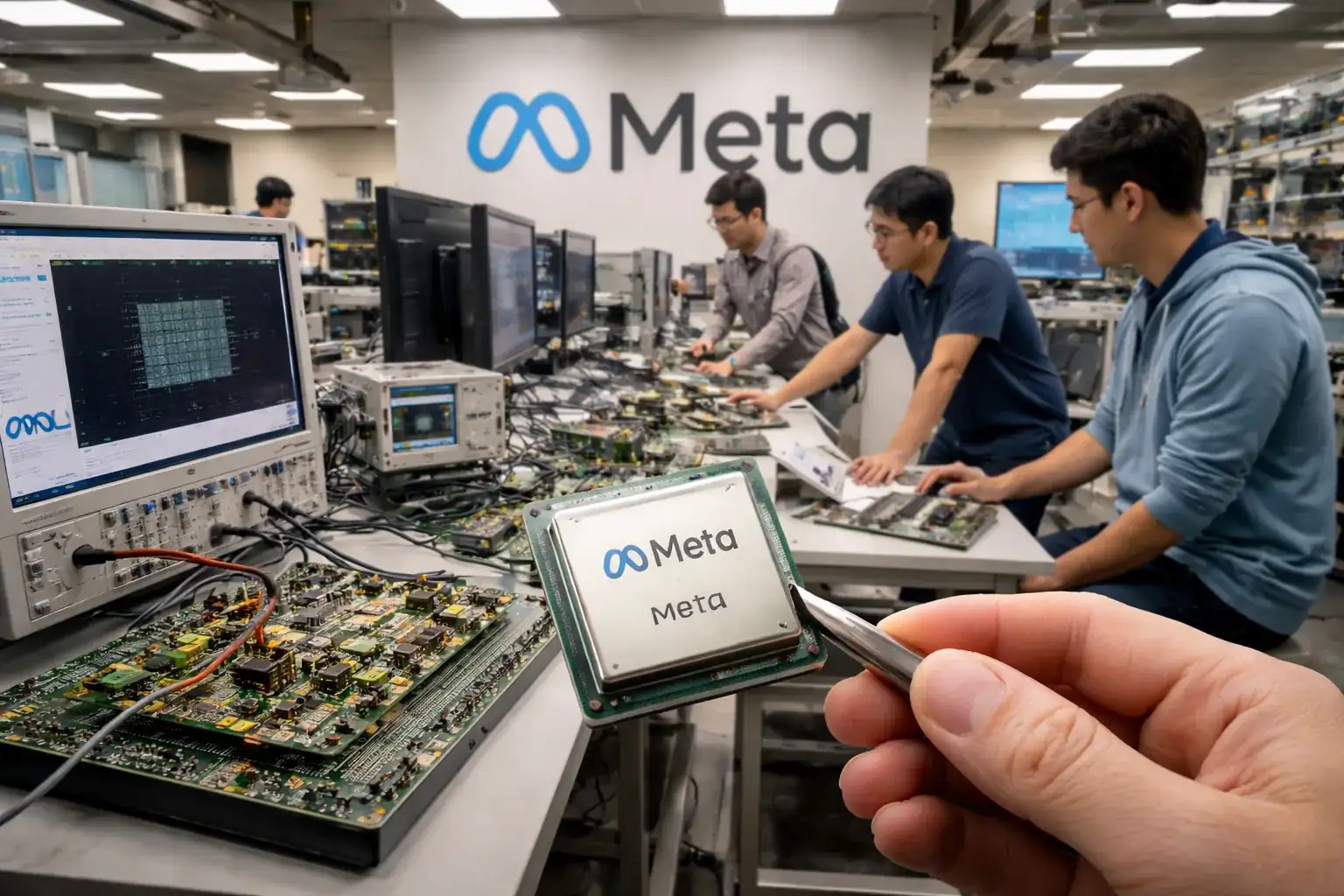
Meta is scheduled to begin mass production of its latest generation of custom artificial intelligence chips this September, marking a significant milestone in its long-term effort to build internal hardware capabilities. According to internal documents first reported by Reuters, the new silicon has successfully cleared a critical six-week testing phase, paving the way for a full manufacturing rollout this fall. These chips are part of the Meta Training and Inference Accelerator (MTIA) program, which the company first detailed earlier this spring. By moving into the production phase now, Meta aims to integrate this specialized hardware into its global network of data centers to support the increasingly complex computational demands of its social media platforms and newer generative AI initiatives. This shift represents a direct effort to diversify its supply chain and challenge the current market dominance of external chip providers like Nvidia.
What's new in this update
The upcoming production cycle highlights a strategic partnership framework involving several major industry players across the semiconductor landscape. While Meta handles the core architectural requirements and high-level logic, it is working closely with Broadcom on the specific chip design and integration. The actual fabrication of the silicon will be handled by Taiwan Semiconductor Manufacturing Company (TSMC), utilizing their advanced process nodes to ensure efficiency. Additionally, the supply chain for these chips involves a global network of specialized vendors, including Samsung for high-bandwidth RAM, SanDisk for internal storage solutions, and Sumitomo Electric for the necessary fiber-optic connectivity. This update also confirms Meta's move toward a modular chiplet architecture, which allows the company to swap or upgrade specific components more rapidly as AI models evolve, ensuring that the hardware remains performant as software requirements change.
Key details
The MTIA chips are specifically optimized for Meta’s proprietary ranking and recommendation algorithms, which serve as the backbone of content delivery on Facebook and Instagram. Beyond simple recommendation systems, the silicon is designed to handle broader AI workloads, including the inference tasks required for the company's newest generative AI models, such as the Muse Spark series. Meta has set an ambitious goal to deploy 7 gigawatts of compute capacity this year alone, with plans to double that figure in the following calendar year. To support this massive scaling, the company has projected total capital expenditures between $125 billion and $145 billion for the current fiscal year. These funds are being funneled into data center construction, power agreements, and the acquisition of both internal and external hardware to sustain its competitive position in the artificial intelligence race.
Background and context
Meta has been developing its own silicon since 2023 to mitigate the risks associated with the global GPU shortage and the rising costs of third-party hardware. Despite the push for internal chips, Meta remains a primary customer for major chipmakers, recently securing multibillion-dollar deals for Nvidia’s H100s and AMD’s Instinct GPUs. The company is also utilizing Amazon’s homegrown CPUs for certain cloud-based AI tasks and has an agreement with ARM to bolster its recommendation systems. This multi-pronged approach reflects the intense competition among 'hyperscalers' like Google, Amazon, and Microsoft, all of whom are developing custom AI accelerators to gain a competitive edge in performance and cost-efficiency. By building its own chips, Meta seeks to lower its operational overhead while optimizing hardware specifically for the unique architecture of its social media and advertising algorithms.
What to watch next
As production begins in September, the industry will be watching to see how quickly Meta can integrate these chips into its live production environments and whether they deliver the promised performance gains. The success of the MTIA program could significantly alter Meta's future purchasing patterns, potentially reducing its massive spend on Nvidia’s flagship products over the next several years. Furthermore, the modular nature of these chips suggests that Meta may announce even shorter development cycles for future generations of silicon to keep pace with rapid advancements in machine learning. Observers are also monitoring similar moves by competitors; OpenAI is currently collaborating with Broadcom on a new inference processor, and Anthropic is reportedly exploring custom chip development with Samsung. The outcome of these internal silicon efforts will likely determine the balance of power in the AI infrastructure market through the end of the decade.
Why it matters
Meta is seeking to insulate itself from the global GPU shortage and high hardware costs by developing bespoke silicon tailored for its specific algorithmic needs.
Read next
Follow this story through the topic hub, more ai coverage, and the latest updates.
Weekly briefing
Get the week's key developments in one concise email.
Get a fast catch-up on the biggest stories, the context behind them, and the links worth your time.
Cadence
Weekly, for a quick catch-up
Coverage
AI, business, world, security, sports
Format
Clear takeaways and useful context
Request the briefing
Leave your email to open a prepared request and get on the list for the weekly briefing.
About the byline
AI reporter
Alex Rivera reports on artificial intelligence with an emphasis on model launches, frontier lab strategy, developer tooling, and the policy decisions shaping commercial deployment.
Sources and methodology