DeepSeek Could Reach $45 Billion Valuation in First External Funding
The Chinese AI lab is reportedly in talks to raise capital from state-backed funds and tech giants Tencent and Alibaba to retain talent and scale its

AI reporter
Reports on model launches, frontier labs, developer platforms, and AI policy with an emphasis on claims verification and rollout context.
Editorial responsibility: Lead reviewer for AI coverage, launch claims, and policy context
Primary source: TechCrunch AI. Full source links and update notes are below.
Fast summary
Start here
- Potential valuation for the startup has risen from $20 billion to $45 billion in a matter of weeks.
- The funding round is expected to be led by the state-backed China Integrated Circuit Industry Investment Fund.
- Founder Liang Wenfeng, who owns roughly 90% of the company, is seeking capital to provide employee shares and prevent talent poaching.
What happened
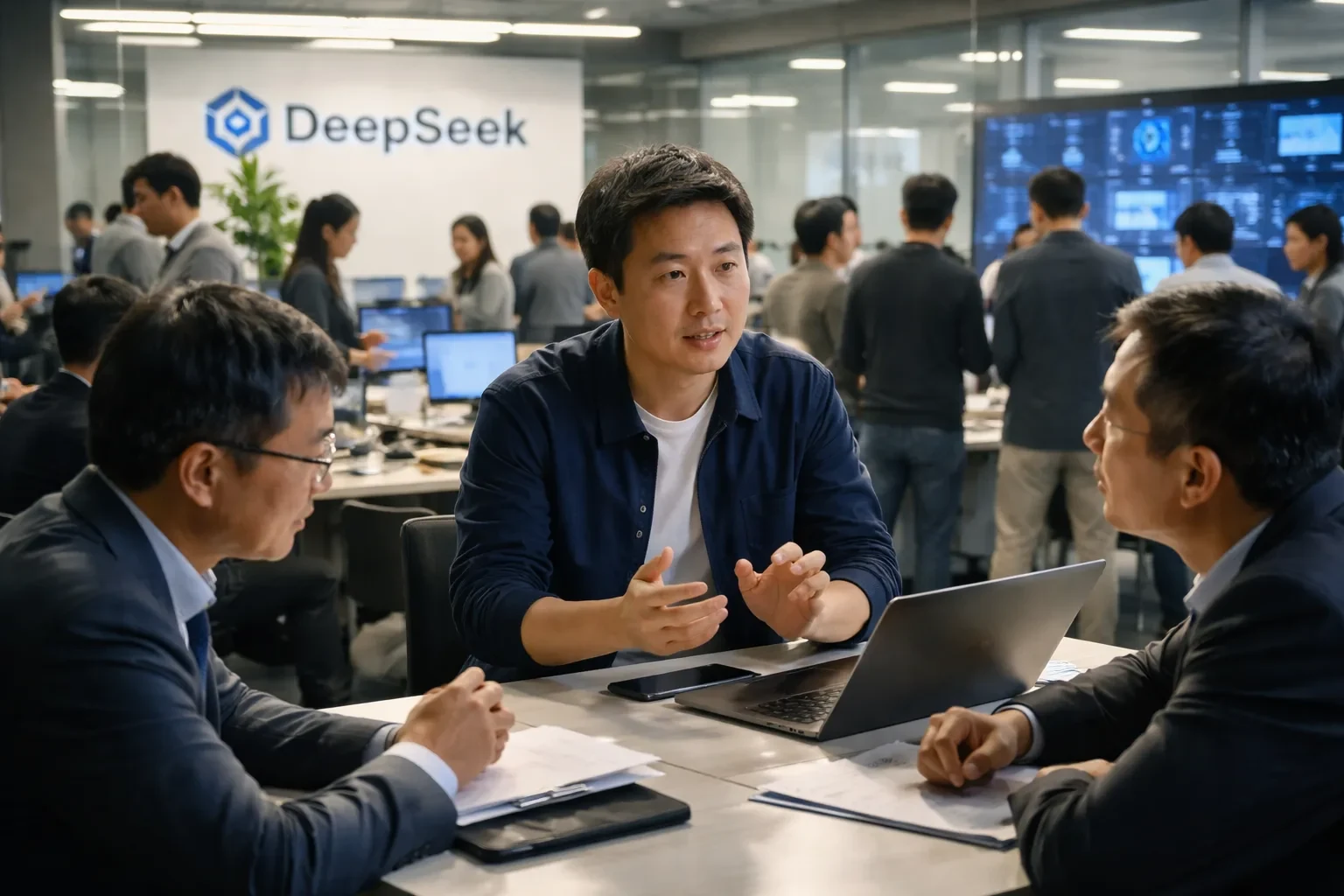
DeepSeek, one of China's most closely watched artificial intelligence labs, is reportedly seeking its first outside funding round at a valuation that could reach $45 billion. That figure represents a dramatic jump from earlier estimates closer to $20 billion and reflects how quickly investor enthusiasm can escalate when a company appears to have solved part of the AI cost problem. DeepSeek's appeal is not based only on hype around large language models. It rests on a more specific belief that the startup has found a comparatively efficient path to building capable models under much tighter hardware constraints than many U.S. peers face.
If the round closes near the high end of current expectations, DeepSeek would move into the top tier of private AI company valuations worldwide. It would also confirm that Chinese investors and state-linked capital sources view frontier AI as a strategic asset, not just a venture trend.
What's new in this update
The latest reporting suggests that the round could involve the state-backed China Integrated Circuit Industry Investment Fund as well as major Chinese technology groups such as Tencent and Alibaba. That combination matters because it would give DeepSeek more than cash. It could tie the company more closely to domestic cloud infrastructure, distribution channels, and the broader push for Chinese technology self-sufficiency in response to export controls and geopolitical pressure.
Founder Liang Wenfeng is also said to be pursuing external capital in part to create stronger employee incentives and defend against talent poaching. That detail is important because leading AI labs increasingly compete not just on compute and data but on their ability to keep elite researchers from being pulled into better-capitalized rivals. In frontier AI, retention can matter as much as research direction.
Key details
DeepSeek attracted global attention by showing that strong performance in reasoning and coding does not necessarily require the same spending profile as the largest American labs. Its work has been associated with lower-cost training and a more resource-constrained engineering approach, which is especially relevant inside China, where access to the most advanced U.S. chips has been restricted.
Several themes explain why investors are willing to price the company so aggressively:
- DeepSeek is seen as a flagship Chinese AI contender with strong technical credibility.
- Its model efficiency story aligns with China's need to maximize domestic hardware and software resources.
- Backing from Tencent, Alibaba, or state funds would strengthen distribution and political alignment.
- Employee-equity financing could help protect the research team from competitive hiring pressure.
The company's relationship with hardware also matters. Reports suggest DeepSeek has optimized for Chinese alternatives, including Huawei-linked ecosystems, as part of adapting to U.S. semiconductor controls. That makes the startup strategically relevant beyond pure model performance.
Background and context
The global AI race is increasingly defined by a few overlapping questions: who can build the best models, who can build them most cheaply, and who can do so despite supply-chain constraints. In the United States, the largest labs still benefit from comparatively deep access to capital, high-end accelerators, and hyperscale cloud capacity. Chinese firms operate in a different environment, where export restrictions and geopolitical pressure make efficiency and domestic substitution more important.
That is why DeepSeek's valuation story resonates. Investors are not only buying into a startup. They are buying into a thesis that China can remain competitive in advanced AI even with a constrained semiconductor pipeline. For Beijing-aligned strategic investors, that is a national technology story as much as a financial one.
What to watch next
The first thing to watch is whether the round actually prices at $45 billion or whether negotiations settle lower once governance, investor rights, and growth expectations are tested. The second issue is what the money changes inside the company. A previously founder-dominated lab can evolve quickly once external capital, strategic investors, and political expectations become more prominent.
Observers will also watch whether DeepSeek continues to embrace an open-weight posture or becomes more selective as commercial and strategic pressure increases. Greater funding can accelerate research, but it can also narrow how much openness a company is willing to tolerate.
Why this matters
This matters because DeepSeek sits at the intersection of venture capital, China tech policy, semiconductor strategy, and the global contest over AI leadership. A $45 billion valuation would signal that efficient model building has become one of the most prized narratives in the sector. It would also suggest that Chinese investors believe domestic labs can remain globally relevant even under chip restrictions, especially if companies like DeepSeek, Liang Wenfeng's team, Huawei-linked infrastructure, Tencent, and Alibaba become part of a more tightly connected national AI stack.
Reader context
This story belongs to Northstar Herald's Artificial Intelligence and Venture Capital coverage, with related entities including DeepSeek, Liang Wenfeng, Huawei, Tencent. The report is based on TechCrunch AI source material.
Related coverage
Why it matters
DeepSeek's ability to produce high-performing models at a fraction of the cost of U.S. competitors makes it a critical player in the global AI race and China's domestic technology self-sufficiency.
Read next
Follow this story through the topic hub, more ai coverage, and the latest updates.
Weekly briefing
Get the week's key developments in one concise email.
Get a fast catch-up on the biggest stories, the context behind them, and the links worth your time.
Cadence
Weekly, for a quick catch-up
Coverage
AI, business, world, security, sports
Format
Clear takeaways and useful context
Request the briefing
Leave your email to open a prepared request and get on the list for the weekly briefing.
About the byline
AI reporter
Alex Rivera reports on artificial intelligence with an emphasis on model launches, frontier lab strategy, developer tooling, and the policy decisions shaping commercial deployment.
Sources and methodology