Why Enterprise AI Deals Stall: Databricks Co-founder to Target
Arsalan Tavakoli-Shiraji will explore the shift from AI experimentation to the rigorous demands of large-scale corporate deployment.

AI reporter
Reports on model launches, frontier labs, developer platforms, and AI policy with an emphasis on claims verification and rollout context.
Editorial responsibility: Lead reviewer for AI coverage, launch claims, and policy context
Primary source: TechCrunch AI. Full source links and update notes are below.
Fast summary
Start here
- Enterprise AI deals are increasingly failing because of operational risks rather than poor model performance.
- Corporate buyers are prioritizing governance, workflow integration, and infrastructure strain over impressive product demos.
- Databricks co-founder Arsalan Tavakoli-Shiraji will detail these shifts during his session at the upcoming TechCrunch Disrupt event.
What happened
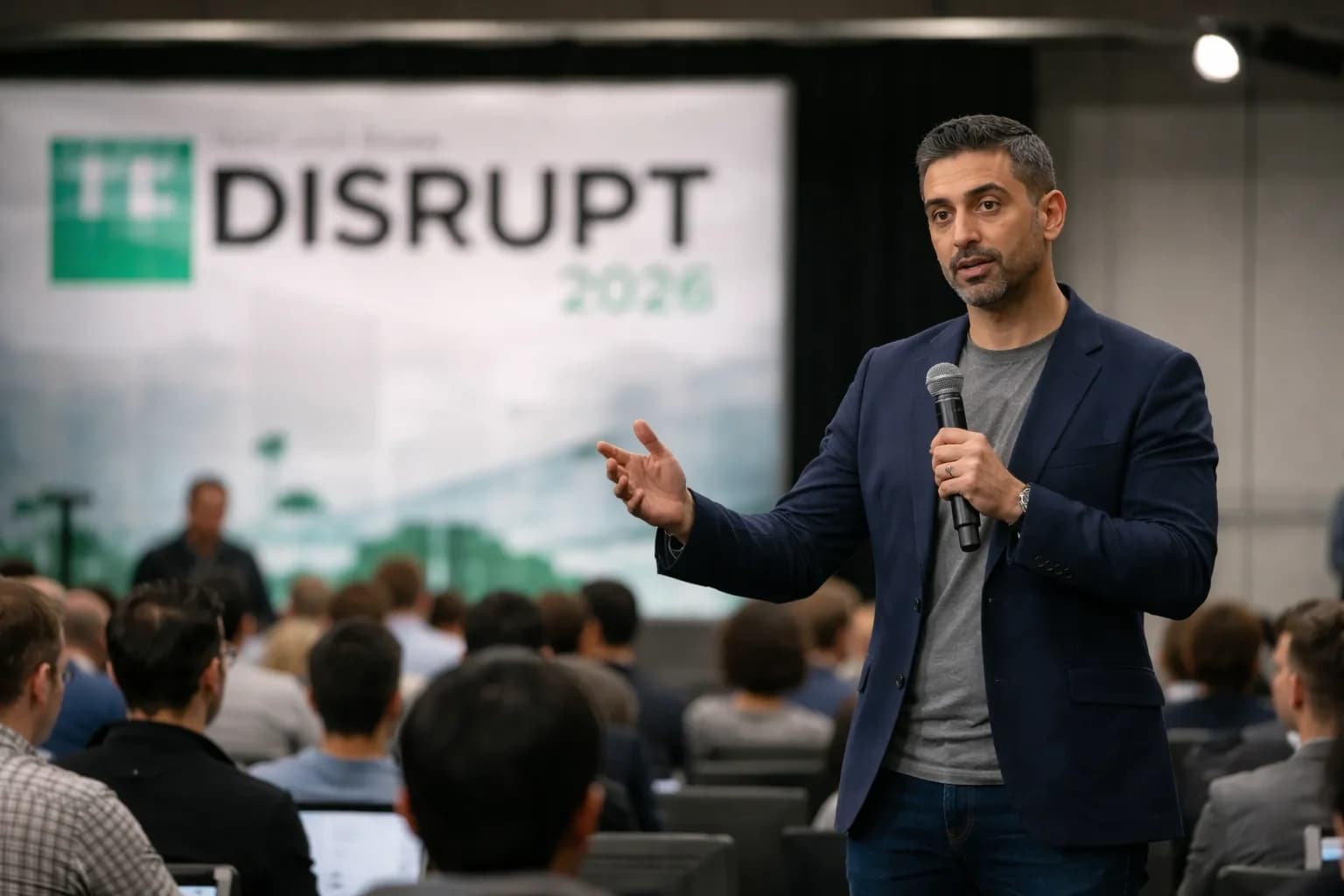
Databricks co-founder Arsalan Tavakoli-Shiraji is set to speak at TechCrunch Disrupt 2026 about a problem that has become increasingly obvious across the enterprise AI market: many deals do not fail because the models are weak, but because the surrounding systems, governance, and organizational assumptions are not ready for production use. His planned remarks point to a shift in how the AI industry is being evaluated. The era when a great demo alone could carry a product into a major enterprise account is ending. What matters now is whether the software can survive contact with procurement, compliance, workflow integration, and long-term operational reality.
What's new in this update
The new angle here is not that enterprises are cautious. That has always been true. The important change is what they are cautious about. Tavakoli-Shiraji's framing suggests that buyers are no longer primarily asking whether the model is impressive. They are asking whether the deployment is safe, stable, governable, and trustworthy at scale.
That distinction is critical for startups. Many founders still speak as if enterprise reluctance is caused by conservatism or lack of vision. The Databricks view is more blunt: the enterprise is not broken, but startup assumptions often are. A product that performs beautifully in a pilot may still be unusable if it creates infrastructure strain, governance ambiguity, or workflow disruption.
Key details
Tavakoli-Shiraji's session, titled "The Enterprise Isn't Broken. Your Assumptions About It Are," is expected to focus on why enterprise AI evaluations now prioritize implementation risk, operational durability, and integration complexity over headline model capability.
This reflects a broader reality inside large organizations. AI tools do not arrive in a vacuum. They enter environments with identity systems, data controls, legal review, internal audit, procurement rules, and existing software ecosystems. Any product that ignores that stack may win enthusiasm from a technical champion but still lose the actual deal.
Databricks is well positioned to speak credibly on this because it has spent years operating at the layer where data infrastructure, machine learning, and enterprise deployment meet. The company has watched firsthand how different the conversation becomes once experimentation turns into production.
Background and context
The AI market has moved through a familiar cycle. Early on, companies won attention with model breakthroughs, impressive demos, and broad claims about automation. Enterprises were willing to run pilots partly because the cost of curiosity was low. But as budget owners and executives now ask what scaled deployment really looks like, the criteria have become much tougher.
That is why operational instability has become such a powerful phrase. It captures several separate deal-killers at once: unreliable outputs, weak governance, difficult integration, security uncertainty, unclear ownership, and organizational mistrust. Even if a model works well in isolation, those surrounding issues can make an enterprise customer walk away.
This is not just a procurement problem. It is a product strategy problem. Startups that treat enterprise AI as a benchmark race may keep winning demos while losing contracts.
What to watch next
The most useful takeaway from Tavakoli-Shiraji's session will likely be whether he offers a clearer blueprint for what enterprise buyers now consider minimum credibility. If founders can understand which operational issues consistently kill deals, they can stop overinvesting in surface-level model theatrics and start building toward production readiness sooner.
It will also be worth watching how much this theme spreads across the broader market. If more investors, founders, and infrastructure leaders adopt the same framing, enterprise AI may enter a more disciplined phase where hype is not enough to sustain valuations or pipeline claims.
That is why this conversation matters beyond one conference appearance. Enterprise AI is growing up, and the companies that succeed may be the ones that learn fastest that adoption barriers are no longer mainly technical magic problems. They are systems problems, trust problems, and execution problems.
Why it matters
As the AI market matures, startups must pivot from building hype to ensuring their products can be safely and reliably integrated into complex, regulated corporate environments.
Read next
Follow this story through the topic hub, more ai coverage, and the latest updates.
Weekly briefing
Get the week's key developments in one concise email.
Get a fast catch-up on the biggest stories, the context behind them, and the links worth your time.
Cadence
Weekly, for a quick catch-up
Coverage
AI, business, world, security, sports
Format
Clear takeaways and useful context
Request the briefing
Leave your email to open a prepared request and get on the list for the weekly briefing.
About the byline
AI reporter
Alex Rivera reports on artificial intelligence with an emphasis on model launches, frontier lab strategy, developer tooling, and the policy decisions shaping commercial deployment.
Sources and methodology