Apple Reports Unexpected Mac Sales Growth as AI Workloads Drive
Mac revenue outperformed Wall Street expectations, reaching $8.4 billion in the second quarter as users adopted the platform for local AI models.

AI reporter
Reports on model launches, frontier labs, developer platforms, and AI policy with an emphasis on claims verification and rollout context.
Editorial responsibility: Lead reviewer for AI coverage, launch claims, and policy context
Primary source: TechCrunch AI. Full source links and update notes are below.
Fast summary
Start here
- Mac revenue reached $8.4 billion in Q2 2026, a 6% year-over-year increase that defied analyst projections of flat growth.
- CEO Tim Cook attributed the surge to 'off the charts' demand for the MacBook Neo and hardware needed to run local AI tools like OpenClaw.
- Supply constraints are currently affecting the Mac mini and Mac Studio, with Apple estimating several months to reach supply-demand balance.
What happened
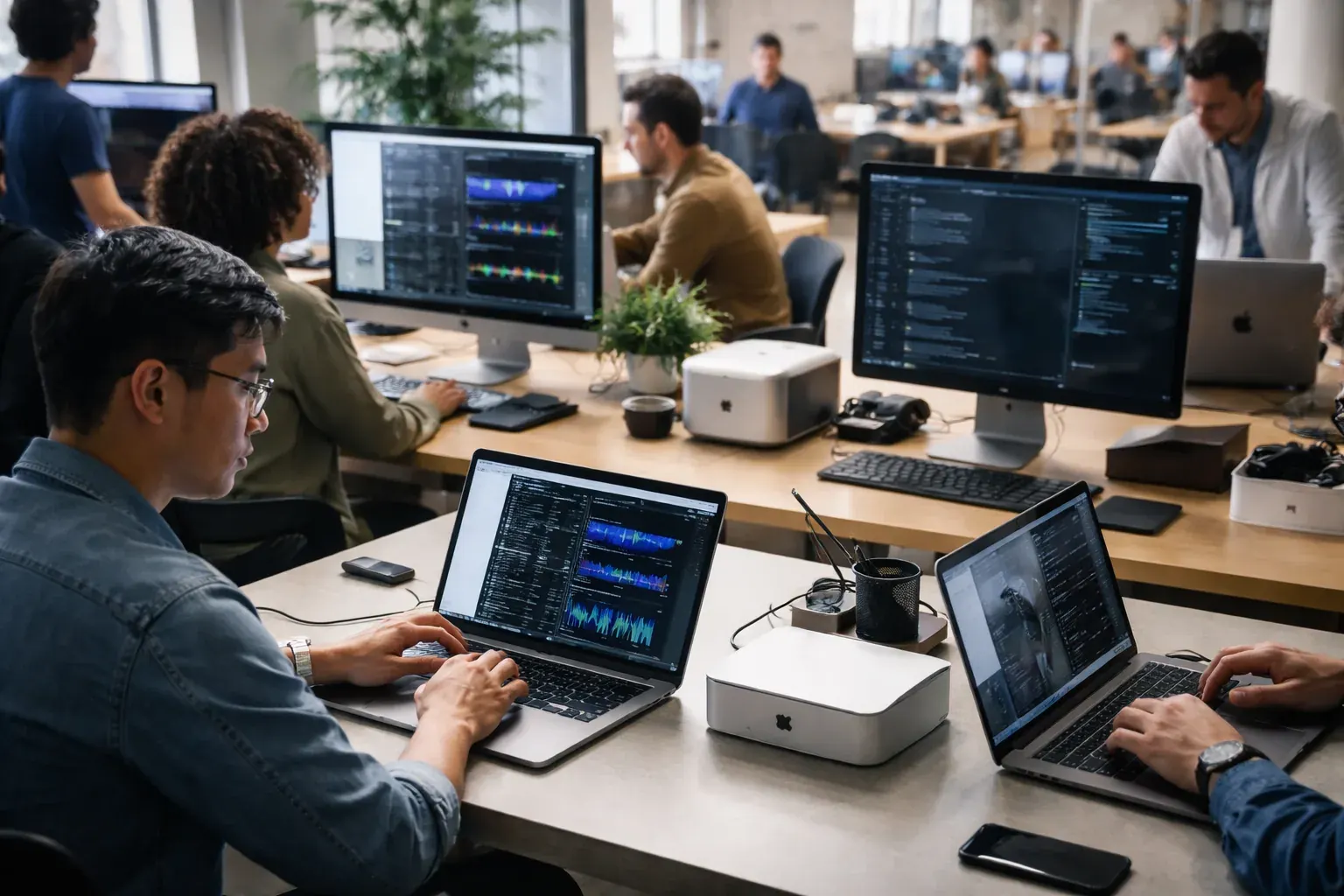
Apple says Mac demand rose more than expected in the second quarter of 2026, with revenue reaching $8.4 billion and surprising analysts who had expected much flatter performance. The company linked much of that momentum to a new pattern of customer behavior: buyers are increasingly choosing Macs not only for traditional creative work, but also for running local AI models, agentic software, and on-device development tools. In other words, Apple appears to be benefiting from the idea that high-performance personal computing for artificial intelligence is becoming a real consumer and enterprise category.
That matters because the Mac business had often been treated as mature and relatively predictable. A meaningful AI-driven jump suggests Apple may have found a new demand engine beyond design, media, and general productivity use.
What's new in this update
Chief executive Tim Cook explicitly called out unexpectedly strong interest in Mac hardware for local AI workloads. The models cited in reporting include the MacBook Neo, Mac mini, and Mac Studio, all of which benefit from Apple's tight integration of chips, memory, and software. Demand has reportedly been strong enough to create supply constraints, especially for higher-performance configurations favored by developers and organizations experimenting with on-device models.
The shift is significant because local AI is increasingly attractive for reasons beyond speed alone. Running models on a Mac can help with privacy, cost control, offline use, and lower-latency experimentation. As developers test assistants, code agents, and retrieval workflows, machines with unified memory and strong local inference performance become more valuable.
Key details
Apple's earnings result suggests the Mac is gaining relevance in the early AI-PC landscape. Unlike cloud-only workflows, local model use requires a machine that can handle memory-heavy inference and sustained compute without the complexity of building a custom desktop rig. That may explain why certain Mac systems are attracting buyers who previously might not have considered Apple hardware central to AI work.
Several points stand out:
- Mac revenue beat Wall Street expectations by a meaningful margin.
- Tim Cook tied demand to local AI tools and agentic workloads.
- MacBook Neo, Mac mini, and Mac Studio were highlighted as pressure points in supply.
- Enterprise and developer adoption may be broadening the Mac's role beyond creative niches.
The mention of tools like OpenClaw is also notable because it suggests the Mac is being discussed as a platform for serious applied AI experimentation, not just consumer-facing assistant features.
Background and context
For years, Apple was seen as cautious in the public AI narrative compared with companies making louder bets on frontier models and cloud platforms. But the rise of local inference has created a more favorable terrain for Apple's hardware strategy. Unified memory architectures, efficient chips, and tightly integrated software stacks can make Macs appealing for developers who want to run compact or mid-sized models directly on-device.
This fits a broader industry shift toward AI PCs and local model execution. Not every workflow needs the cloud, and not every organization wants sensitive prototypes, documents, or internal prompts routed through external infrastructure during early development. That gives Apple a strategic opening: it can sell trusted personal hardware for privacy-sensitive, performance-intensive AI use.
What to watch next
The next thing to watch is whether this demand surge proves durable or reflects an early adopter spike among developers and AI-heavy professionals. If supply remains tight for several quarters, Apple may be able to confirm that the category is broader than a temporary niche. Future earnings will also show whether enterprise deployment grows, especially in education, startups, and internal corporate tooling teams.
There is also a product question. If Apple sees local AI as a durable Mac growth driver, it may shape future chip roadmaps, memory configurations, and software features more aggressively around inference performance and agent workflows.
Why this matters
This matters because Apple's Mac business may be entering a new phase where artificial intelligence drives hardware replacement and platform switching. MacBook Neo, Mac mini, Mac Studio, Tim Cook, and local AI tools like OpenClaw now sit inside the same market story: developers and organizations want machines that can run meaningful workloads without depending entirely on the cloud. If that trend holds, Apple gains a credible new growth vector in AI hardware while redefining what the Mac is for.
Reader context
This story belongs to Northstar Herald's Apple and Artificial Intelligence coverage, with related entities including MacBook Neo, Mac mini, Mac Studio, Tim Cook. The report is based on TechCrunch AI source material.
Related coverage
Why it matters
The shift suggests Apple hardware is becoming a preferred platform for local AI development, opening a new growth vector beyond traditional creative sectors.
Read next
Follow this story through the topic hub, more ai coverage, and the latest updates.
Weekly briefing
Get the week's key developments in one concise email.
Get a fast catch-up on the biggest stories, the context behind them, and the links worth your time.
Cadence
Weekly, for a quick catch-up
Coverage
AI, business, world, security, sports
Format
Clear takeaways and useful context
Request the briefing
Leave your email to open a prepared request and get on the list for the weekly briefing.
About the byline
AI reporter
Alex Rivera reports on artificial intelligence with an emphasis on model launches, frontier lab strategy, developer tooling, and the policy decisions shaping commercial deployment.
Sources and methodology