Meta Expands Humanoid Ambitions with Acquisition of ARI Startup
The social media giant is bringing ARI's founding team into its Superintelligence Labs to develop models for whole-body humanoid control and physical

AI reporter
Reports on model launches, frontier labs, developer platforms, and AI policy with an emphasis on claims verification and rollout context.
Editorial responsibility: Lead reviewer for AI coverage, launch claims, and policy context
Primary source: TechCrunch AI. Full source links and update notes are below.
Fast summary
Start here
- Meta acquired Assured Robot Intelligence (ARI) for an undisclosed amount to bolster its robotics research.
- The ARI team, led by experts from Nvidia, NYU, and UC San Diego, will join Meta’s Superintelligence Labs.
- The deal signals Meta’s focus on embodied AI as a potential pathway toward achieving artificial general intelligence.
What happened
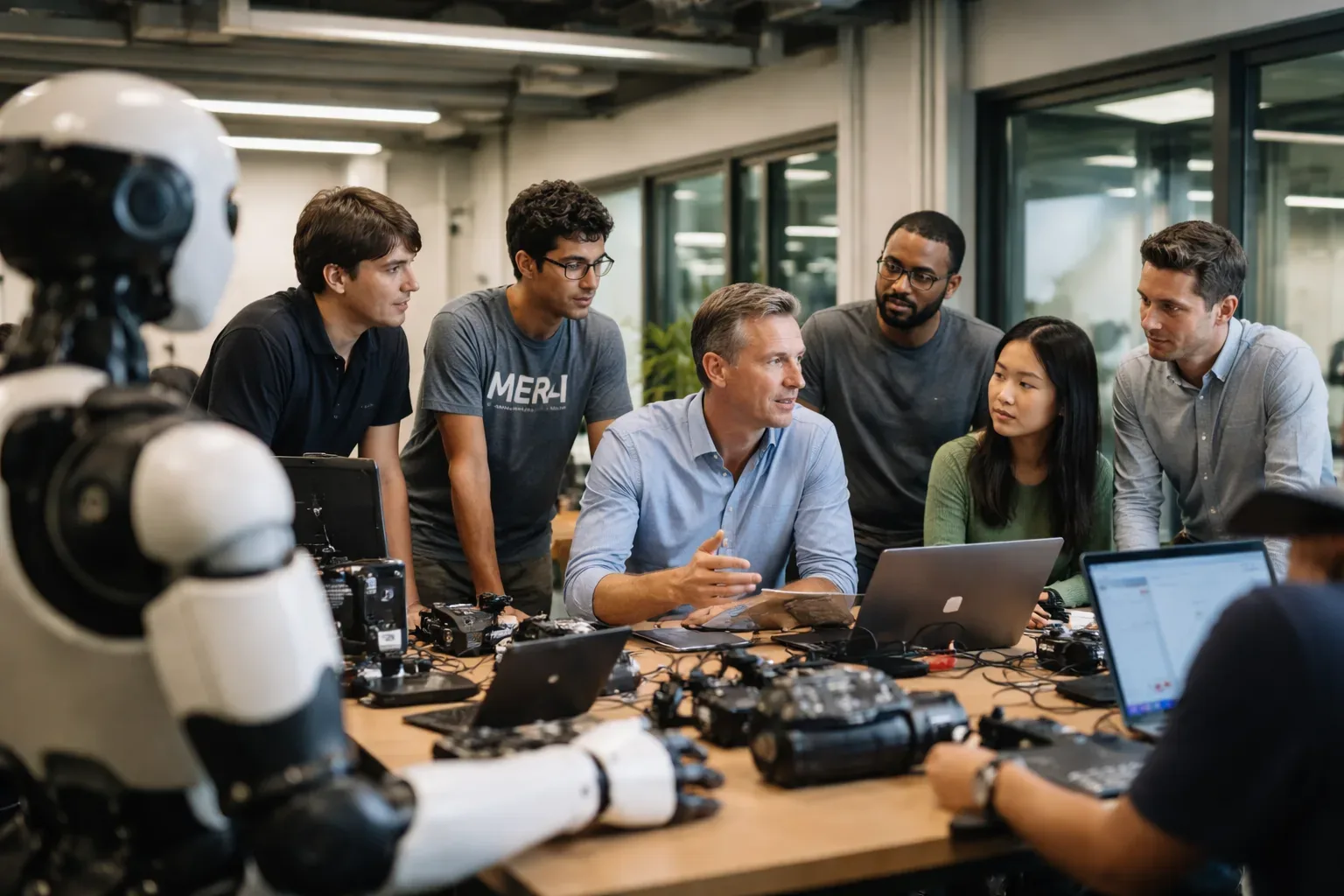
Meta has acquired Assured Robot Intelligence, or ARI, bringing the robotics startup's team and technical expertise into Superintelligence Labs as part of a broader push into humanoid AI development. The move signals that Meta is treating robotics and embodied intelligence as a serious frontier rather than a side experiment, even though the company is still better known publicly for social platforms and consumer software.
The acquisition is important because it suggests Meta believes the path to more general AI capability may run not only through text, images, and video, but through machines that learn by acting in the physical world.
Why ARI matters to Meta
The Meta acquires ARI story matters because embodied AI requires a different talent and research stack than conventional foundation-model work. Training systems to control humanoid bodies, navigate real environments, and respond to physical uncertainty is not the same problem as training a large language model to produce text.
By acquiring ARI rather than building everything internally from scratch, Meta gains a faster route into that expertise:
- Robotics-specific model development
- Whole-body control research
- Teams already focused on physical-world adaptation
- Credibility in an increasingly competitive humanoid robotics race
This is less about buying a product and more about buying a capability base.
Why embodied AI is becoming more central
The humanoid robot narrative has moved from science-fiction branding into a real strategic bet among major technology companies. The idea behind embodied AI is that intelligence becomes richer when a system can perceive, move, experiment, and learn in real environments rather than only from static datasets or digital simulations.
That is one reason many researchers see robotics as connected to the longer-term pursuit of AGI. A model that can understand language is powerful. A model that can coordinate perception, planning, movement, and adaptation in the real world may be closer to the kind of general competence many companies want.
Why this fits Meta's broader ambitions
For Meta, the acquisition makes sense inside a larger pattern. The company has repeatedly shown willingness to spend heavily on long-horizon platforms, even when the commercial return is not immediate. In the past that meant VR, AR, and the metaverse. Now it increasingly includes AI systems that may need new hardware interfaces and new forms of physical embodiment.
If Meta wants to be a serious platform company in the next computing era, owning capability in humanoid AI and robotics may look less optional than it did a few years ago.
Why Superintelligence Labs is the destination
The fact that the ARI team is reportedly joining Superintelligence Labs matters because it suggests Meta is not isolating robotics as a niche hardware unit. It is connecting it to the company's highest-level AI ambitions. That indicates Meta sees physical-world intelligence as part of the same strategic conversation as frontier reasoning, multimodal models, and long-term machine autonomy.
This is an important signal. It says the company wants robotics talent near the center of its AI agenda, not at the edges.
The competitive pressure is real
Meta is not entering an empty field. Tesla, Amazon, and other large players are all exploring robotics from different angles, while startup activity around humanoids continues to attract attention and capital. That means this acquisition is also defensive. Meta needs to make sure it is not locked out of a category that could matter if robotics becomes a major deployment layer for advanced AI systems.
What to watch next
The most important next question is whether Meta turns this talent acquisition into visible research output or product direction. Watch for new publications, internal platform references, or broader statements about how robotics fits into Meta's AI roadmap. If the company starts talking more openly about physical agents and whole-body control, that will be a sign this is more than a quiet acqui-hire.
Why this matters
The Meta acquires ARI to advance humanoid AI development story matters because it shows the frontier AI race is expanding beyond screens and software. Companies that want to shape the next era of intelligence increasingly believe they may need machines that can move, perceive, and work in the real world. Meta does not want to be absent from that future.
Why it matters
This acquisition secures key talent for Meta’s robotics division, positioning the company to compete in the emerging market for humanoid robots and physical-world AI training.
Read next
Follow this story through the topic hub, more ai coverage, and the latest updates.
Weekly briefing
Get the week's key developments in one concise email.
Get a fast catch-up on the biggest stories, the context behind them, and the links worth your time.
Cadence
Weekly, for a quick catch-up
Coverage
AI, business, world, security, sports
Format
Clear takeaways and useful context
Request the briefing
Leave your email to open a prepared request and get on the list for the weekly briefing.
About the byline
AI reporter
Alex Rivera reports on artificial intelligence with an emphasis on model launches, frontier lab strategy, developer tooling, and the policy decisions shaping commercial deployment.
Sources and methodology