Groq Raises $650M for Talent and Infrastructure Following Nvidia IP
The AI chip startup is restaffing its executive ranks and pivoting toward its neocloud business after Nvidia licensed its core technology and hired its

AI reporter
Reports on model launches, frontier labs, developer platforms, and AI policy with an emphasis on claims verification and rollout context.
Editorial responsibility: Lead reviewer for AI coverage, launch claims, and policy context
Primary source: TechCrunch AI. Full source links and update notes are below.
Fast summary
Start here
- Groq confirmed a new $650 million funding round aimed at scaling its neocloud infrastructure and hiring new executive leadership.
- The raise follows a December deal where Nvidia licensed Groq's Language Processing Unit (LPU) IP and hired away its founder and CEO Jonathan Ross.
- New leadership includes veterans from xAI, Meta, and Microsoft to lead the company's shift toward serving five million developers via 13 global data centers.
What happened
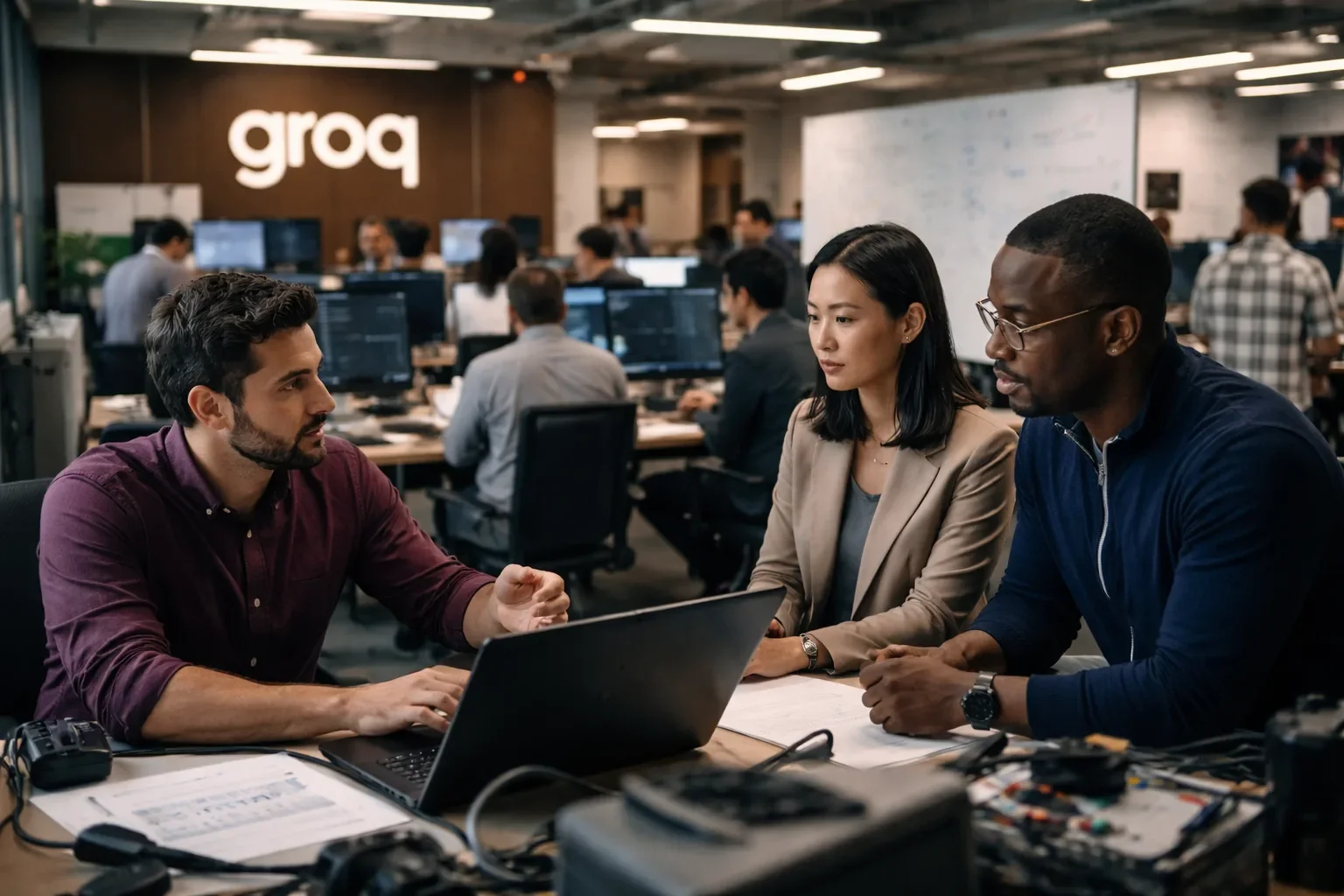
AI infrastructure startup Groq has confirmed a $650 million funding round, giving the company fresh capital after a turbulent stretch in which Nvidia licensed its core technology and hired away founder Jonathan Ross along with other key talent. The company is now pitching the raise not as a simple continuation of its original hardware story, but as the financial foundation for a rebuild.
That distinction matters. Groq is no longer just trying to prove that its chips are fast or technically elegant. It is trying to prove that it can remain strategically relevant after a dominant competitor gained access to its IP and absorbed part of the team that built the original advantage.
Why investors are still backing Groq
In a crowded AI market, a large funding round usually signals optimism about growth. In Groq's case, it also signals belief in recovery. Investors appear willing to bet that the company can survive a jolt that would have crippled many hardware startups: losing founding leadership while a market giant turns licensed internal technology into part of its own product narrative.
That makes the Groq funding round unusual. It is not only about expansion. It is about institutional resilience. Backers are effectively saying that Groq still has enough technical depth, customer traction, and market opportunity to build a second act even after Nvidia's intervention reshaped the competitive landscape.
The pivot toward neocloud
Groq's main answer is its neocloud business. Instead of relying exclusively on chip sales or licensing, the company is leaning into cloud-based AI inference services. Management says this platform now spans 13 data centers across North America, Europe, the Middle East, and Asia-Pacific, serving millions of developers and thousands of AI companies.
That move aligns with a broader shift in the AI infrastructure economy. Buyers increasingly care less about hardware in isolation and more about the service wrapped around it. They want:
- Fast inference for production workloads.
- Reliable access to capacity across regions.
- Predictable pricing and deployment support.
- Developer tooling that makes model serving easier to adopt.
If Groq can win on those terms, it has a plausible path forward even with Nvidia dominating the underlying hardware conversation.
Rebuilding the leadership team
The company is also reconstructing its executive bench under CEO Doug Wightman, who remained after the Nvidia deal. New hires with backgrounds at xAI, Meta, and Microsoft are meant to restore operational strength and help the company scale beyond its founding identity.
This is a critical part of the story. Infrastructure startups do not survive on architecture alone. They need product discipline, cloud operations, enterprise sales, and the ability to recruit engineers who believe the company still has momentum. Groq's leadership reset is therefore a test of culture as much as strategy.
The Nvidia factor will not disappear
Before the recent disruption, Groq was best known for its Language Processing Unit, or LPU, built to accelerate AI inference. That specialization helped it stand out in a market where most challengers were defined mainly by their attempt to reduce dependence on Nvidia. But once Nvidia licensed the IP and later showcased related hardware, Groq's moat became less clear.
That does not mean the company is finished. The AI market is large enough for multiple winners, especially if they differentiate on latency, orchestration, or developer experience. But Groq no longer gets to tell a story of pristine technical separation from the industry leader. It now has to compete on execution.
What to watch next
The next phase will be measured in adoption and operating proof, not headline funding. Watch whether Groq expands enterprise usage, improves developer retention, and turns neocloud into a recognizable inference platform rather than a defensive pivot. Investors will also look for evidence that new leadership can stabilize the company faster than rivals can absorb its customers.
The competitive backdrop remains harsh. Every serious AI infrastructure company wants a share of inference demand, and Nvidia still sets the pace across the stack. If Groq grows anyway, this raise will look prescient. If it stalls, the round may be remembered as capital deployed to buy time rather than to secure a durable market position.
Why this matters
The Groq Nvidia story has become a broader test of how AI infrastructure companies survive asymmetry. A startup can have strong technology and still be forced into reinvention when the sector's most powerful player gains access to its people and ideas. Groq's $650 million raise is therefore about more than financing. It is a live experiment in whether a hardware company can rebuild itself around cloud services, developer demand, and disciplined execution.
Why it matters
This capital injection tests whether a hardware startup can successfully pivot to a services model after its core intellectual property is shared with a dominant market leader like Nvidia.
Read next
Follow this story through the topic hub, more ai coverage, and the latest updates.
Weekly briefing
Get the week's key developments in one concise email.
Get a fast catch-up on the biggest stories, the context behind them, and the links worth your time.
Cadence
Weekly, for a quick catch-up
Coverage
AI, business, world, security, sports
Format
Clear takeaways and useful context
Request the briefing
Leave your email to open a prepared request and get on the list for the weekly briefing.
About the byline
AI reporter
Alex Rivera reports on artificial intelligence with an emphasis on model launches, frontier lab strategy, developer tooling, and the policy decisions shaping commercial deployment.
Sources and methodology