NATO Chief Welcomes Trump’s Plan to Deploy 5,000 Extra Troops to Poland
The announcement follows a recent cancellation of a smaller deployment and occurs as the U.S. reduces its military presence in Germany.
Primary source: BBC World News. Full source links and update notes are below.
Fast summary
Start here
- President Trump announced the deployment of 5,000 troops to Poland, citing a strong relationship with Polish President Karol Nawrocki.
- The move follows the Pentagon's cancellation of a 4,000-troop deployment just one week prior and a separate 5,000-troop withdrawal from Germany.
- NATO Secretary General Mark Rutte endorsed the decision while acknowledging Europe's ongoing trajectory toward less reliance on U.S. military support.
What happened
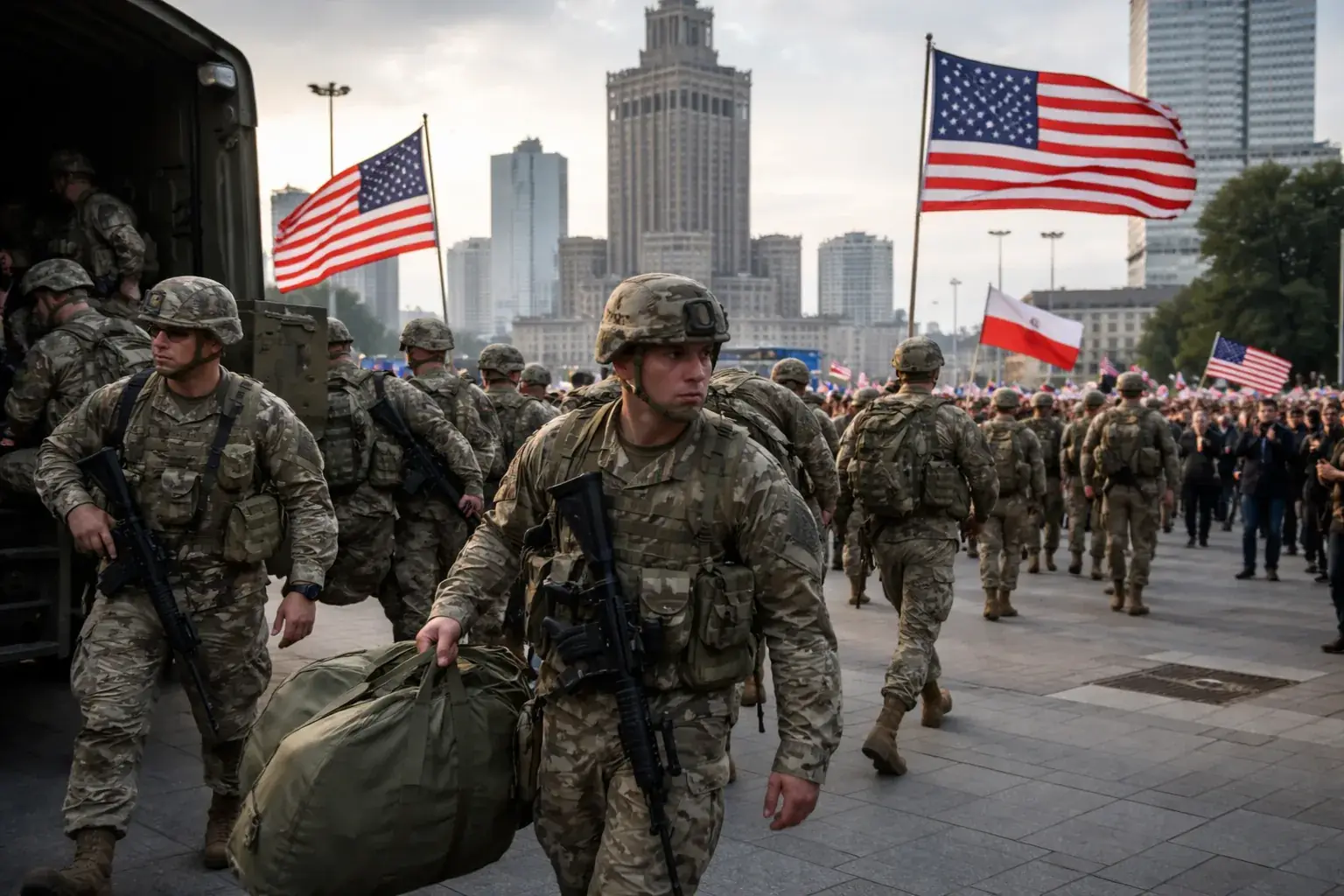
President Donald Trump announced on Thursday that the United States will send an additional 5,000 troops to Poland. The decision, shared via his Truth Social platform, marks a reversal from the Pentagon’s recent cancellation of a planned 4,000-troop deployment to the same country. NATO Secretary General Mark Rutte welcomed the move during a meeting of foreign ministers in Sweden, though he noted that Europe must continue its trend toward becoming less dependent on American military resources.
What's new in this update
This latest deployment appears directly tied to the personal and political relationship between Trump and Polish President Karol Nawrocki. Trump endorsed Nawrocki in Poland's recent presidential election, and the Polish leader has consistently voiced support for Trump’s foreign policy. This development also coincides with a U.S. decision to pull 5,000 troops out of Germany following a diplomatic row between Trump and German Chancellor Friedrich Merz regarding the war with Iran.
Key details
Secretary of State Marco Rubio, speaking from Helsingborg, clarified that the reallocation of forces is part of a broader re-examination of global commitments rather than a purely 'punitive' measure. However, Rubio did express the administration's disappointment with certain NATO allies regarding their lack of support for U.S. operations in the Middle East. It remains unclear if the 5,000 troops bound for Poland will be drawn from the units leaving Germany or if they represent an entirely new contingent.
Background and context
Poland has long sought a permanent and expanded U.S. military presence to deter potential Russian aggression, particularly since the start of the Russia-Ukraine War. President Nawrocki has described the U.S. as the primary guarantor of European security and has argued that Trump is the only leader capable of ending the conflict in Ukraine. Conversely, the U.S. military presence in Germany—the largest in Europe with over 36,000 troops—has become a point of contention as the Trump administration pushes for increased defense spending from European partners.
What to watch next
Future discussions at the NATO summit in Sweden are expected to focus on burden-sharing and the potential for the U.S. to further shrink its total troop numbers available in the event of an attack on a NATO member. Observers will also look for clarification on whether the U.S. will seek more formal commitments from Poland in exchange for the increased troop presence, and how Germany responds to the reduction of its domestic U.S. military footprint.
Why it matters
This shift in deployment signals a reconfiguration of U.S. presence in Europe, rewarding allies that align with the 'America First' agenda while pressuring others on defense spending.
Read next
Follow this story through the topic hub, more world coverage, and the latest updates.
Weekly briefing
Get the week's key developments in one concise email.
Get a fast catch-up on the biggest stories, the context behind them, and the links worth your time.
Cadence
Weekly, for a quick catch-up
Coverage
AI, business, world, security, sports
Format
Clear takeaways and useful context
Request the briefing
Leave your email to open a prepared request and get on the list for the weekly briefing.
Author
See who assembled this story and follow more of their work.
Sources and methodology