Pharmaceutical Maker Petitions Supreme Court to Restore Abortion
Danco Laboratories filed an emergency request after a federal appeals court reinstated requirements that patients obtain mifepristone in person.

World correspondent
Reports on international affairs, diplomacy, and humanitarian developments with an emphasis on official statements, multilateral institutions, and regional context.
Editorial responsibility: Lead reviewer for geopolitics, international institutions, and crisis coverage
Primary source: BBC World News. Full source links and update notes are below.
Fast summary
Start here
- Danco Laboratories is seeking an emergency pause on a Fifth Circuit ruling that curbs mail-order access to mifepristone.
- The Fifth Circuit's decision reinstated a requirement that abortion pills be obtained in person, affecting telemedicine services.
- The legal battle stems from a lawsuit led by Louisiana challenging the FDA's 2023 decision to allow mail-order dispensing.
What happened
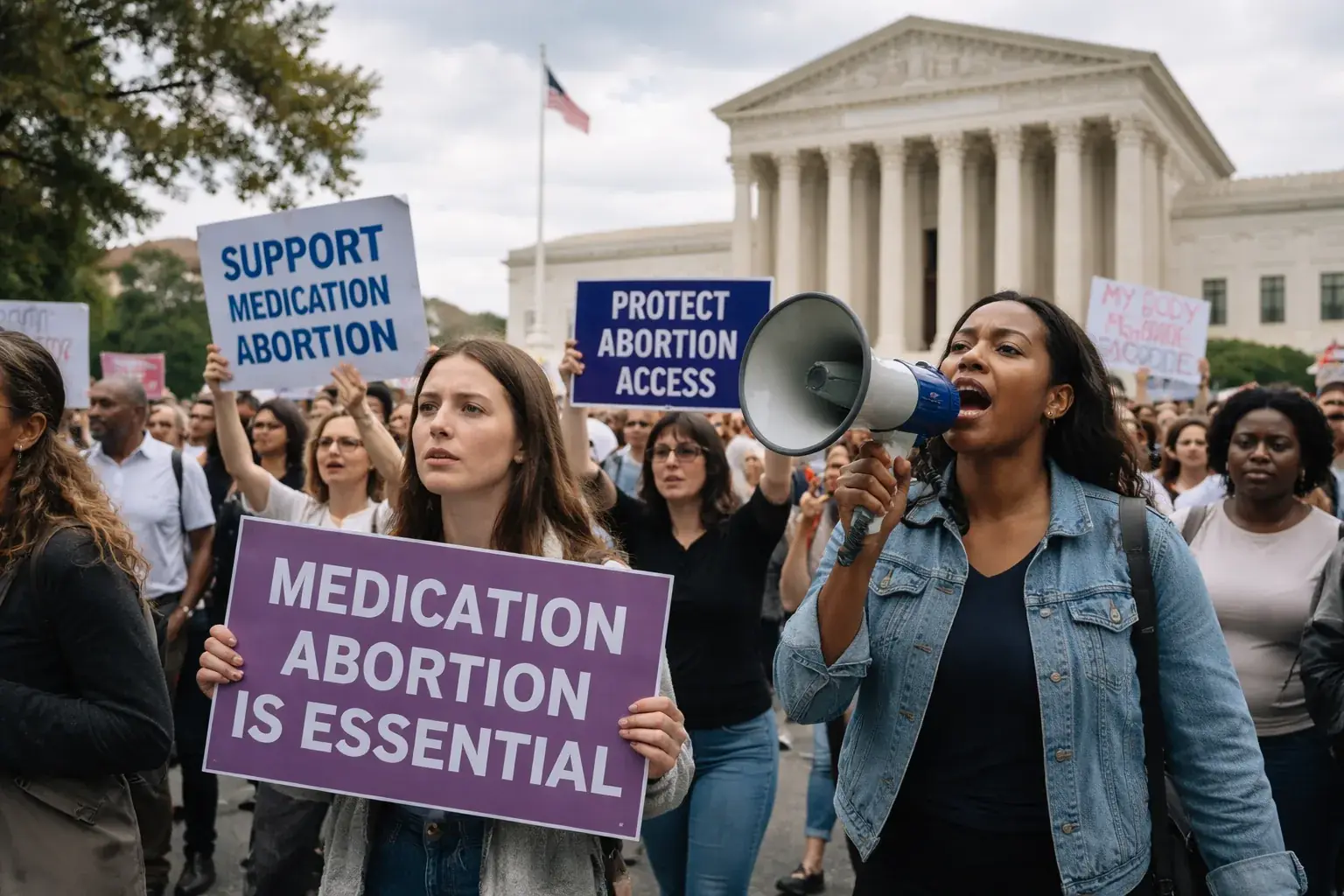
Danco Laboratories, the company that makes mifepristone, has filed an emergency appeal asking the US Supreme Court to block a lower-court ruling that restricts how the abortion pill can be distributed. At stake is whether patients will once again need to obtain mifepristone in person rather than through telemedicine prescriptions and mail delivery. The dispute matters because mifepristone is a central component of medication abortion, now the most common method of ending a pregnancy in the United States. If the Fifth Circuit ruling stays in effect, access to the abortion pill would narrow immediately in practical terms even before the wider legal challenge is finally resolved.
What's new in this update
The latest development is Danco's emergency request for the Supreme Court to step in after the Fifth Circuit reinstated in-person dispensing requirements that the FDA had removed in 2023. Danco's lawyers argued that the appeals court order would cause irreparable harm and operational chaos for both patients and providers because it would abruptly reverse the telemedicine-and-mail framework that many clinics and reproductive health systems now rely on. The request also sharpens the legal stakes by moving the issue back toward the nation's highest court after a separate mifepristone challenge was turned away in 2024 on standing grounds. This time, the company is trying to stop the restrictions before they become the new normal during ongoing litigation.
Key details
The Fifth Circuit order arose from a challenge led by Louisiana, which argues that mail access to mifepristone conflicts with state policies and weakens abortion restrictions. In practical terms, the decision would require patients to receive the abortion pill in person, cutting directly against the FDA's 2023 position that mifepristone could be prescribed through telemedicine and shipped by mail. The effects would not be evenly distributed. States such as New York have said they will keep protecting abortion access within their own borders, but patients in restrictive or rural states often depend most heavily on mail access because clinics are sparse, travel is expensive, and state law already creates multiple barriers. The case is therefore about regulatory power, but it is also about geography, access, and the real-world mechanics of care.
Background and context
The FDA's decision to remove the in-person dispensing requirement was part of a broader shift in reproductive healthcare practice after telemedicine became more integrated into mainstream care delivery. Mifepristone has been at the center of repeated legal and political battles because abortion opponents increasingly see drug access as a major front in the post-Roe landscape. When the Supreme Court declined to restrict the drug in 2024, it did so on standing grounds rather than by decisively resolving the merits of federal regulation versus state objections. That left room for a new case such as this one. As a result, the mifepristone fight has become one of the clearest examples of how abortion policy in the United States is now being shaped simultaneously by courts, state governments, federal agencies, and healthcare logistics.
What to watch next
The Supreme Court must now decide whether to grant Danco's request for an emergency stay, a move that would temporarily preserve mail access to mifepristone while the broader case proceeds. If the justices decline to intervene, the in-person rule would remain in effect and likely disrupt telemedicine abortion services across large parts of the country. The court's handling of the application may also offer clues about whether a majority is willing to protect FDA authority in the short term even if a deeper merits fight is still coming. Beyond the immediate legal ruling, the larger question is whether medication abortion access in the US will continue to function through national pharmaceutical regulation or become increasingly fragmented by state-by-state litigation and conflicting court orders.
Why this matters
Medication abortion is the most common method of terminating pregnancies in the US, and mail access is a primary tool for patients in restrictive states.
Reader context
This story belongs to Northstar Herald's Law and Healthcare coverage, with related entities including Abortion Pill, Mifepristone, Supreme Court, FDA. The report is based on BBC World News source material.
Related coverage
Why it matters
Medication abortion is the most common method of terminating pregnancies in the US, and mail access is a primary tool for patients in restrictive states.
Read next
Follow this story through the topic hub, more world coverage, and the latest updates.
Weekly briefing
Get the week's key developments in one concise email.
Get a fast catch-up on the biggest stories, the context behind them, and the links worth your time.
Cadence
Weekly, for a quick catch-up
Coverage
AI, business, world, security, sports
Format
Clear takeaways and useful context
Request the briefing
Leave your email to open a prepared request and get on the list for the weekly briefing.
About the byline
World correspondent
Leila Haddad covers world affairs, diplomacy, and humanitarian crises, with a focus on how fast-moving international developments affect public policy, conflict response, and cross-border institutions.
Sources and methodology