Seattle Streets Erupt in Celebration as US Defeats Australia 2-0
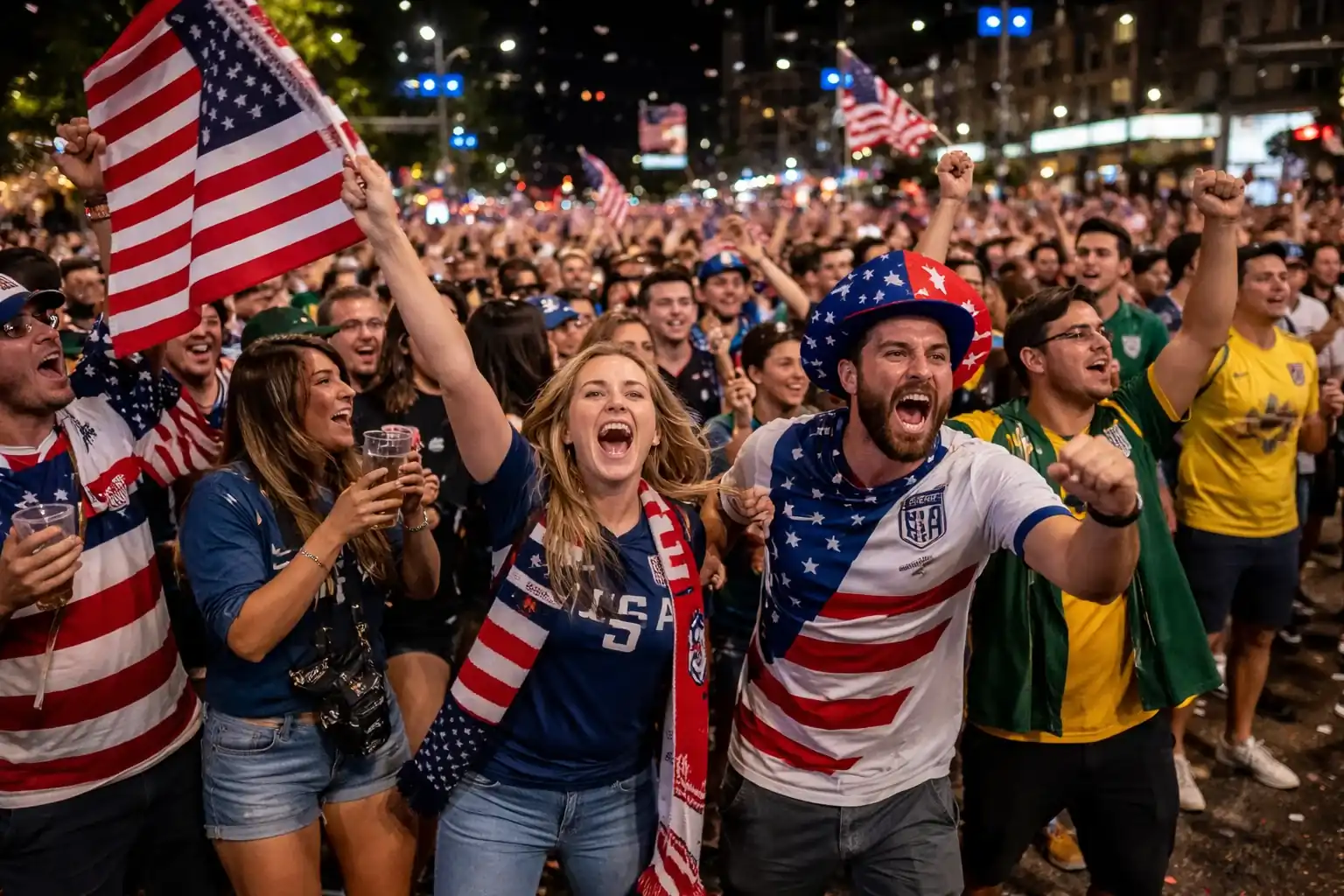
Fans gathered in Washington state to celebrate the United States' advancement to the World Cup knockout stage after a decisive victory.

World correspondent
Reports on international affairs, diplomacy, and humanitarian developments with an emphasis on official statements, multilateral institutions, and regional context.
Editorial responsibility: Lead reviewer for geopolitics, international institutions, and crisis coverage
Primary source: BBC World News. Full source links and update notes are below.
Fast summary
Start here
- The United States defeated Australia 2-0 to advance to the knockout round of the FIFA World Cup.
- Supporters in Seattle, Washington, filled the streets in a massive celebration following the victory.
- The match brought together fans wearing the stars and stripes as well as Australia's green and gold.
What happened
United States fans in Seattle poured into the streets after a 2-0 win over Australia secured the US team's place in the World Cup knockout stage. The scenes captured after the match reflected more than a standard postgame celebration. They showed how a result on the field can rapidly become a citywide cultural event when tournament stakes, national pride, and an already soccer-friendly local fan base all converge at once.
The victory mattered first because it advanced the United States. It mattered immediately after because it transformed public spaces into a visible demonstration of how strongly World Cup momentum can travel beyond the stadium or the screen.
Why Seattle is a fitting setting for this reaction
Seattle has long been one of the strongest soccer cities in the United States, with a fan culture that already understands large-scale public celebration, coordinated support, and the communal side of football. When the US national team wins a high-pressure World Cup match, Seattle is exactly the kind of city where that emotion spills outward rather than staying private.
That helps explain why the reaction became part of the story. The location amplifies the meaning. A knockout-stage-clinching win in a soccer-literate city feels different from a quiet result absorbed only through national headlines.
Why beating Australia mattered competitively
A 2-0 win over Australia was important not only for the scoreline, but for the clarity it provided. World Cup group-stage scenarios can become messy quickly, with teams needing help elsewhere or depending on tiebreakers. A result strong enough to secure advancement removes that anxiety and allows both players and supporters to shift from qualification stress to bracket anticipation.
For the United States, that is a meaningful psychological step. A team that knows it is through can start thinking about the knockout stage as opportunity rather than uncertainty.
The fan culture side of the World Cup
One reason these scenes matter is that the World Cup is never only about tactics and standings. It is also about atmosphere, diaspora, community, and the way football temporarily reorganizes public emotion. The sight of US supporters celebrating alongside or near Australian fans in green and gold reflects one of the tournament's most distinctive qualities: rivalry on the field does not prevent shared spectacle around it.
In other words, the street celebration is part of the event, not just a reaction to it.
What this says about soccer in the US
A knockout-stage-clinching win can do more than energize existing fans. It can pull casual viewers deeper into the tournament and reinforce the sense that soccer in the United States is no longer a niche enthusiasm that awakens only every four years. When public celebrations spill into major city streets, they help normalize the sport's emotional centrality in the national calendar.
That matters especially during a World Cup cycle, when each strong result helps convert attention into lasting engagement.
Why the next stage changes the mood
Advancing to the knockout round changes fan psychology immediately. Group-stage matches are often lived through with nerves, calculations, and defensive hope. The knockout stage simplifies everything. It becomes a direct survival contest, and fan energy shifts from "can we get through?" to "how far can this go?"
That is the atmosphere the US result has now created. The celebration is not only about what was achieved. It is about what might still be possible.
What comes next
The United States will now prepare for the next opponent in the bracket, while supporters across the country begin to imagine the stakes of a win-or-go-home match. In Seattle and elsewhere, the excitement from the Australia result may continue building as kickoff approaches for the round ahead.
For now, the 2-0 win over Australia did exactly what major tournament victories are supposed to do. It pushed the US into the knockout round, gave supporters a moment of release and pride, and turned one city's streets into a visible reminder that World Cup football can still create shared public joy at national scale.
Why it matters
This victory secures the United States' position in the tournament's next phase, fueling domestic momentum for the sport during a major international competition.
Read next
Follow this story through the topic hub, more world coverage, and the latest updates.
Weekly briefing
Get the week's key developments in one concise email.
Get a fast catch-up on the biggest stories, the context behind them, and the links worth your time.
Cadence
Weekly, for a quick catch-up
Coverage
AI, business, world, security, sports
Format
Clear takeaways and useful context
Request the briefing
Leave your email to open a prepared request and get on the list for the weekly briefing.
About the byline
World correspondent
Leila Haddad covers world affairs, diplomacy, and humanitarian crises, with a focus on how fast-moving international developments affect public policy, conflict response, and cross-border institutions.
Sources and methodology