Ukraine Pivots to Drone Diplomacy as Middle East Tensions Rise
Kyiv is transforming its battlefield experience with Iranian drones into a strategic asset, signing defense agreements with Gulf nations and European

World correspondent
Reports on international affairs, diplomacy, and humanitarian developments with an emphasis on official statements, multilateral institutions, and regional context.
Editorial responsibility: Lead reviewer for geopolitics, international institutions, and crisis coverage
Primary source: BBC World News. Full source links and update notes are below.
Fast summary
Start here
- Ukraine has signed drone technology and expertise sharing deals with Saudi Arabia, the UAE, and Qatar.
- President Zelensky reports that Iranian-designed drones can be intercepted for roughly $10,000, a fraction of their production cost.
- Donald Trump has expressed confidence in a solution to the conflict following a conversation with Vladimir Putin.
What happened
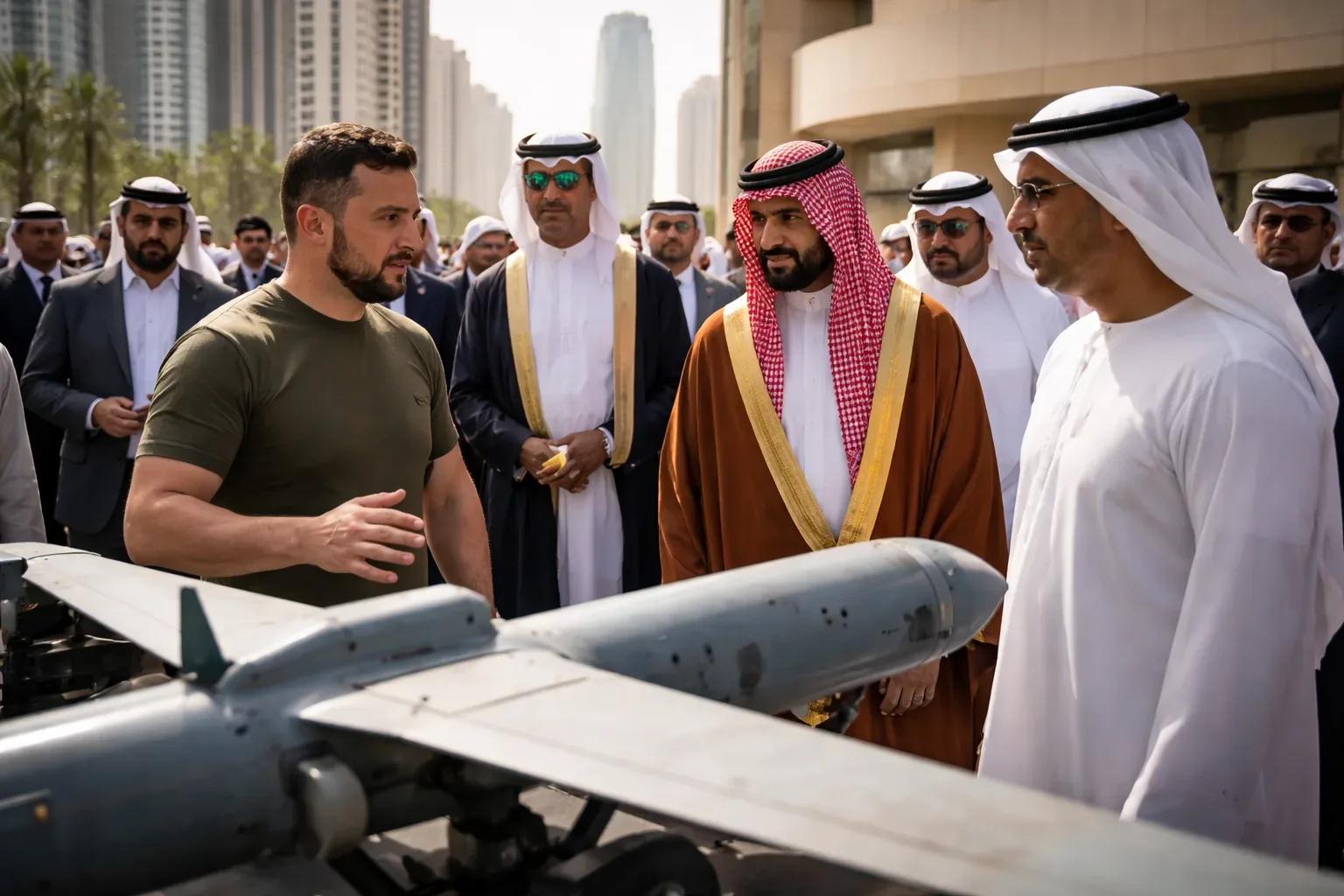
Ukraine is trying to turn one of the hardest lessons of its war into a diplomatic and commercial advantage. President Volodymyr Zelensky and Ukrainian officials have been promoting the country's experience countering Iranian-designed drones as a valuable form of military expertise, and that pitch is now helping Kyiv secure defense partnerships with Gulf states and additional backing from European allies.
The strategy reflects a broader shift in how Ukraine presents itself internationally. Rather than appearing only as a recipient of aid, Kyiv is increasingly arguing that it can provide relevant battlefield knowledge, drone warfare tactics, interception methods, and defense-industrial experience to countries confronting similar threats. That makes Ukraine a security partner as well as a state seeking assistance.
What's new in this update
Ukrainian officials say new cooperation deals have been signed with Saudi Arabia, the United Arab Emirates, and Qatar, focusing on technology sharing, defensive planning, and lessons learned from repeated attacks involving Iranian-designed Shahed drones. Those systems have become a major feature of Russia's long-range strike campaign against Ukrainian cities and infrastructure, giving Kyiv several years of unusually intense operational experience in how to track, intercept, and adapt to them.
The broader international backdrop has also shifted. As tensions involving Iran affect the Middle East, countries that may once have seen Ukraine's drone struggle as a distant European problem now have more reason to treat that knowledge as immediately useful. That has opened space for what could be called drone diplomacy, in which battlefield experience becomes leverage in alliance-building.
Key details
Ukrainian officials have emphasized the economics of defense as much as the technology itself. Zelensky has said Iranian-designed drones costing far more to produce can sometimes be intercepted using significantly cheaper countermeasures, a claim meant to show both practical experience and cost-effective innovation. That argument matters for partners that need scalable defenses against large volumes of relatively inexpensive aerial threats.
The Gulf outreach is also taking place alongside larger European defense commitments. Norway and Germany have both been cited in reporting about substantial support packages connected to drones and modern defense capabilities. Taken together, those agreements suggest Ukraine is building a wider network around military technology rather than relying solely on traditional wartime solidarity.
Background and context
At first glance, rising Middle East tension might seem to weaken Ukraine by diverting attention and resources. Higher oil prices can also benefit Russia, which continues to rely on energy exports despite sanctions. But Kyiv is attempting to reverse that logic by arguing that the spread of Iranian-designed drone threats makes Ukraine more strategically relevant, not less.
That reframing is important. If partners see Ukrainian experience as transferable to their own defense planning, then support for Kyiv becomes linked not only to political sympathy but also to practical self-interest. In a crowded geopolitical environment, that can be a stronger foundation for sustained cooperation.
What to watch next
The next test is whether these defense partnerships remain mostly symbolic or lead to larger procurement deals, industrial collaboration, joint training, and direct financial commitments. If Ukraine can convert expertise into durable strategic ties, it may strengthen both its wartime resilience and its long-term defense sector.
Observers are also watching how this affects diplomacy around the war itself. Any peace process or ceasefire discussion will be shaped not only by battlefield conditions, but by the alliances Ukraine can mobilize and the value other states see in keeping Kyiv closely connected to their security planning.
Why this matters
This story matters because it shows Ukraine trying to extract geopolitical advantage from painful battlefield experience. By turning drone warfare knowledge into a basis for new strategic alliances, Zelensky is broadening Ukraine's role in international security and reducing the risk that Kyiv is viewed only through the narrow lens of dependency on Western aid.
Reader context
This story belongs to Northstar Herald's International Relations and Military Technology coverage, with related entities including Ukraine, Zelensky, Drone Warfare, Saudi Arabia. The report is based on BBC World News source material.
Related coverage
Why it matters
Ukraine is diversifying its alliances and proving its military value beyond traditional Western aid, potentially strengthening its position in future peace negotiations.
Read next
Follow this story through the topic hub, more world coverage, and the latest updates.
Weekly briefing
Get the week's key developments in one concise email.
Get a fast catch-up on the biggest stories, the context behind them, and the links worth your time.
Cadence
Weekly, for a quick catch-up
Coverage
AI, business, world, security, sports
Format
Clear takeaways and useful context
Request the briefing
Leave your email to open a prepared request and get on the list for the weekly briefing.
About the byline
World correspondent
Leila Haddad covers world affairs, diplomacy, and humanitarian crises, with a focus on how fast-moving international developments affect public policy, conflict response, and cross-border institutions.
Sources and methodology