Trump Announces Naval Blockade of Iran After Islamabad Peace Talks
Following failed negotiations led by Vice-President JD Vance, the US is shifting to a naval blockade to prevent Iran from collecting tolls and to halt its

World correspondent
Reports on international affairs, diplomacy, and humanitarian developments with an emphasis on official statements, multilateral institutions, and regional context.
Editorial responsibility: Lead reviewer for geopolitics, international institutions, and crisis coverage
Primary source: BBC World News. Full source links and update notes are below.
Fast summary
Start here
- The US will impose a naval blockade to stop Iran from collecting 'illegal tolls' from ships in the Strait of Hormuz.
- A 20-hour diplomatic mission in Islamabad led by JD Vance failed to secure a deal on Iran's nuclear ambitions.
- The US military remains 'locked and loaded' for potential strikes while continuing mine-clearing operations in the region.
What happened
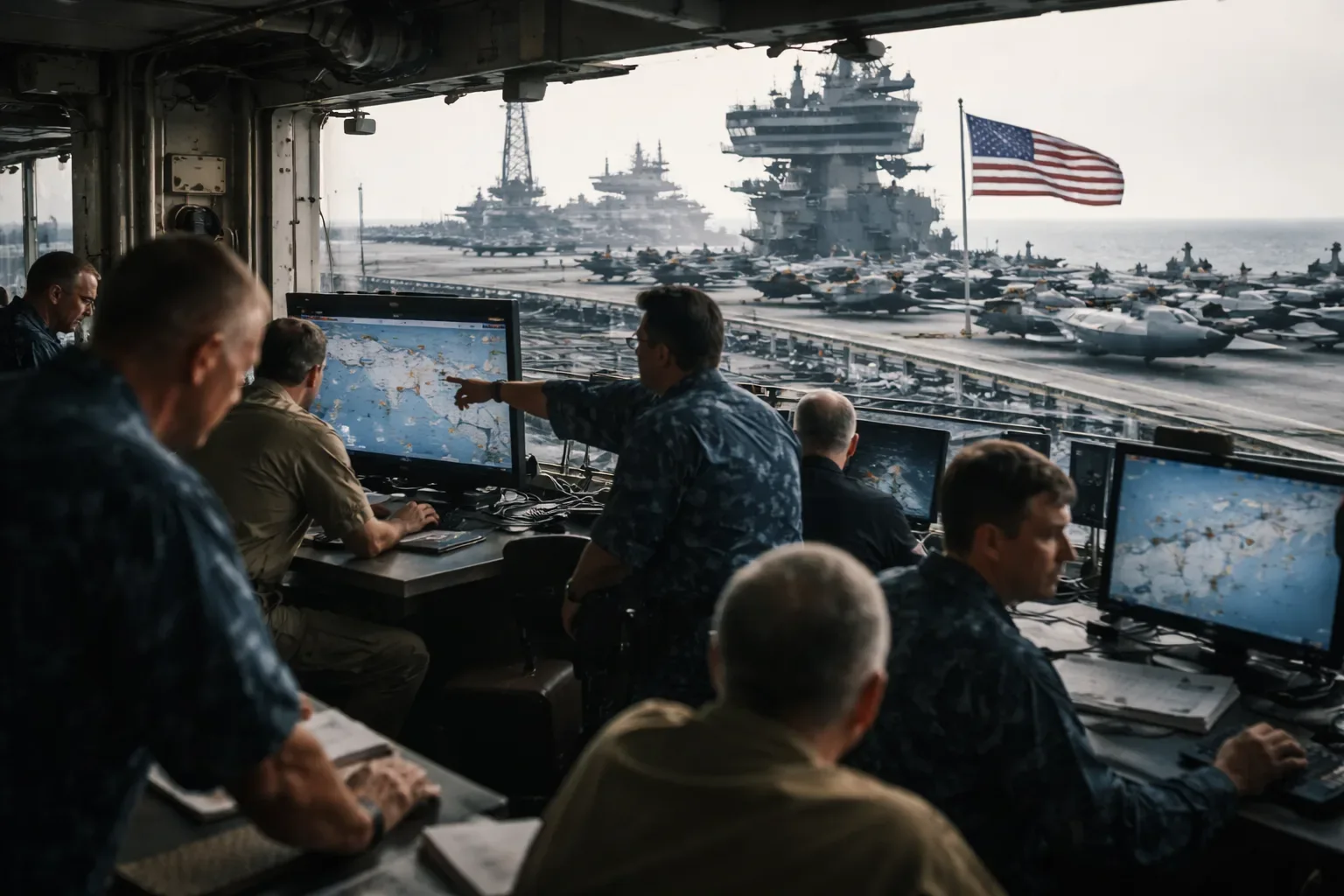
President Donald Trump says the United States will move toward a naval blockade of Iran after peace talks in Islamabad failed to produce an agreement on Iran's nuclear program, regional conduct, and maritime control. The decision marks a sharp escalation in the confrontation around the Strait of Hormuz, where global shipping, military deterrence, and oil market stability are tightly intertwined.
Trump framed the blockade as a response to what he called Iran's attempt to exercise unlawful control over international passage by collecting tolls and intimidating shipping through the Strait of Hormuz. In practice, however, a naval blockade is not a narrow technical measure. It is a military step with legal, diplomatic, and commercial consequences that can quickly pull other states into a crisis.
What's new in this update
The shift came after a 20-hour diplomatic effort in Islamabad led by Vice-President JD Vance failed to close the gap between Washington and Tehran. US officials presented the talks as a last serious attempt to avoid a harder military posture, but once they broke down, the White House pivoted to force-backed pressure.
That pivot is important because it leaves the central strategic problem unresolved. A blockade may disrupt Iran's leverage over the Strait of Hormuz, but it does not by itself resolve disputes over nuclear restrictions, proxy activity, or regional sovereignty. Instead, it raises the cost of the standoff while leaving the core political arguments intact.
Key details
Trump said the Navy would focus on stopping vessels that cooperate with Iranian toll demands, while mine-clearing operations would continue to protect allied ships. The phrase "locked and loaded" used by the administration reinforced the idea that the blockade is being backed by credible strike planning, not simply symbolic deployment.
That creates immediate questions for commercial operators. If foreign-flagged civilian ships continue paying Iranian authorities or attempt to move through contested zones under their own risk calculations, the United States may be forced to decide whether to interdict, divert, or confront them. Every one of those options carries escalation risk.
Background and context
The Strait of Hormuz remains one of the world's most important energy chokepoints, carrying a major share of globally traded oil and liquefied natural gas. Any disruption there is watched closely not only by regional governments, but by import-dependent economies, insurers, traders, and shipping companies around the world.
That is why a US naval blockade of Iran is never just about bilateral pressure. It reshapes risk for third countries, especially those with strong incentives to keep oil moving regardless of US-Iran tensions. China, among others, becomes a critical factor because its response can influence how durable or internationally contested the blockade becomes.
What to watch next
The immediate issue is rules of engagement. Markets and foreign governments will want to know whether the blockade is largely a deterrent posture, a selective interdiction campaign, or the beginning of a broader maritime confrontation. That distinction will affect everything from freight pricing to diplomatic mediation attempts.
Another major question is whether the blockade pushes Iran back toward negotiations or convinces Tehran that it must respond more aggressively to restore leverage. If the latter happens, the Strait of Hormuz could shift from a zone of coercive signaling to a site of direct military encounters.
Why this matters
This matters because the Strait of Hormuz is too important for a blockade threat to remain a contained policy move. Trump's naval blockade approach raises the risk of military confrontation, commercial disruption, and a sharp oil-price response while leaving the underlying US-Iran conflict fundamentally unresolved. It is escalation without clear evidence of resolution.
Reader context
This story belongs to Northstar Herald's International Relations and Global Economy coverage, with related entities including Donald Trump, Iran, Strait of Hormuz, JD Vance. The report is based on BBC World News source material.
Related coverage
Why it matters
The Strait of Hormuz is a critical global energy chokepoint; a blockade risks direct military confrontation and a significant spike in international oil prices.
Read next
Follow this story through the topic hub, more world coverage, and the latest updates.
Weekly briefing
Get the week's key developments in one concise email.
Get a fast catch-up on the biggest stories, the context behind them, and the links worth your time.
Cadence
Weekly, for a quick catch-up
Coverage
AI, business, world, security, sports
Format
Clear takeaways and useful context
Request the briefing
Leave your email to open a prepared request and get on the list for the weekly briefing.
About the byline
World correspondent
Leila Haddad covers world affairs, diplomacy, and humanitarian crises, with a focus on how fast-moving international developments affect public policy, conflict response, and cross-border institutions.
Sources and methodology