Trump Claims 'Fantastic' Trade Progress in China as Summit Concludes
President Trump announced potential sales of hundreds of Boeing aircraft and increased soybean exports, though Chinese officials focused on mutual

World correspondent
Reports on international affairs, diplomacy, and humanitarian developments with an emphasis on official statements, multilateral institutions, and regional context.
Editorial responsibility: Lead reviewer for geopolitics, international institutions, and crisis coverage
Primary source: BBC World News. Full source links and update notes are below.
Fast summary
Start here
- Trump claimed China agreed to purchase 200 Boeing jets with potential for 750 additional aircraft
- The two nations agreed to establish a Board of Trade to manage economic relations without reopening tariff talks
- Chinese President Xi Jinping has been invited to visit the White House in September following the summit
What happened
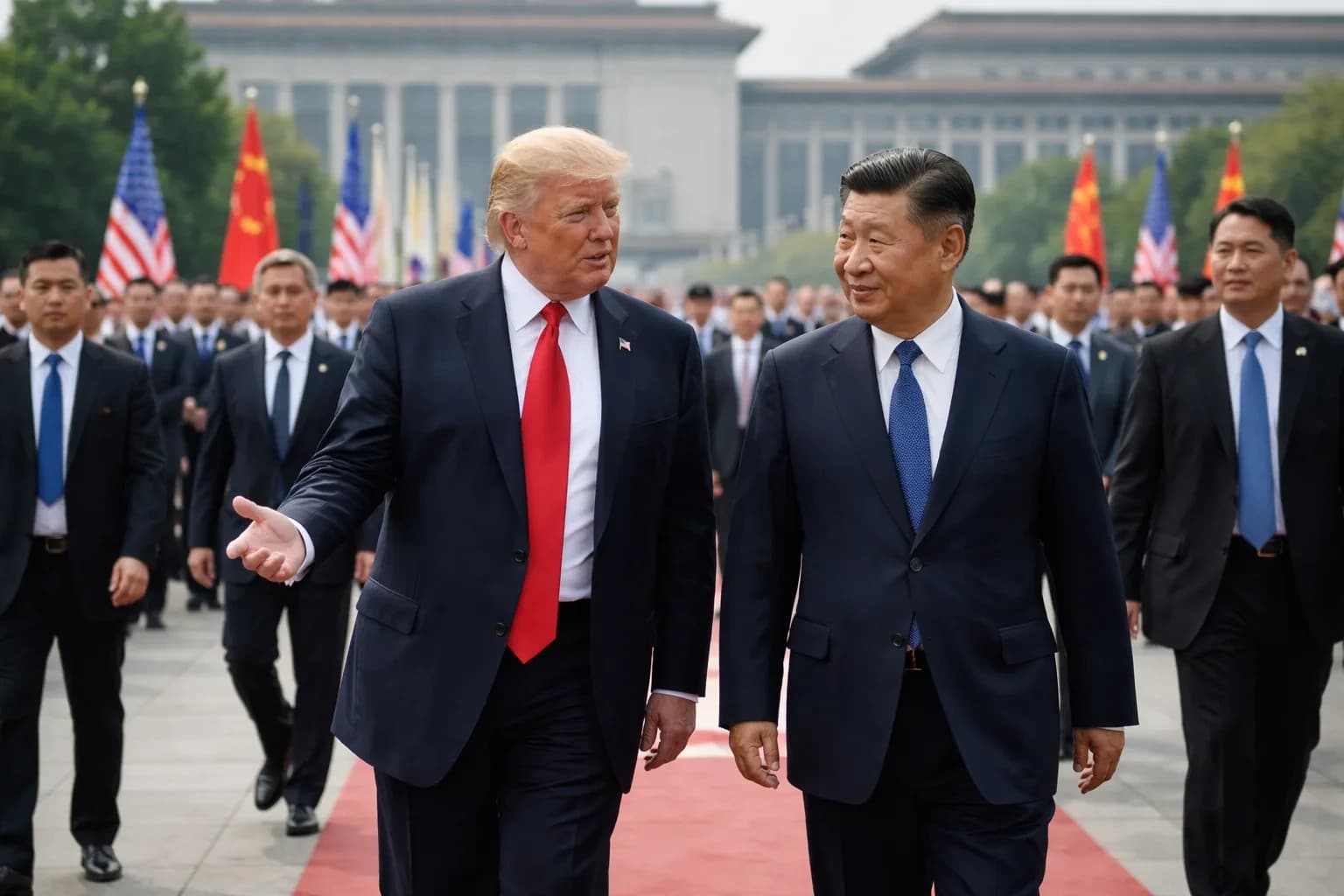
Donald Trump and Xi Jinping have concluded a high-profile Beijing summit with Trump claiming major trade progress, including large Boeing jet orders and increased soybean purchases, even as Chinese officials stopped short of formally confirming the deals. The result is a familiar kind of diplomatic ambiguity: both sides want to project momentum, but only one side is publicly describing specific commercial wins.
That gap between claims and confirmation is central to understanding the summit. Trump is presenting the Beijing meetings as evidence of a significant thaw in China-US trade relations. Beijing, by contrast, is emphasizing broad cooperation language while avoiding firm public endorsement of the most dramatic announced outcomes.
What's new in this update
Trump said China had agreed to purchase 200 Boeing jets with the possibility of hundreds more, and he highlighted billions of dollars in soybean demand as further evidence of a breakthrough. Chinese officials, however, responded in much more restrained language, describing bilateral ties in terms of mutual benefit and cooperation without ratifying the headline numbers.
That difference matters because trade diplomacy between Washington and Beijing is often shaped as much by domestic messaging as by the underlying agreements. Trump benefits politically from describing big wins. Xi benefits from avoiding the appearance of publicly conceding under American pressure.
Key details
The summit also produced announcements about a new Board of Trade meant to manage economic relations without immediately reopening full tariff negotiations. That mechanism suggests both governments are looking for a way to stabilize the relationship procedurally even if the deeper disputes over market access, subsidies, technology, and strategic competition remain unresolved.
The composition of the US delegation reinforced the summit's economic and technological focus. High-profile business leaders linked to aerospace, semiconductors, artificial intelligence, and electric vehicles helped frame the Beijing summit not just as a diplomatic visit, but as a contest over the future architecture of commercial power between the world's two largest economies.
Background and context
US-China relations had already been operating under a trade truce that paused some escalation while leaving tariffs and structural grievances largely in place. In that context, even symbolic progress in Beijing carries weight. Boeing, for example, has long been treated as a bellwether of whether political friction is easing enough to permit meaningful commercial reopening.
But symbolism cuts both ways. A summit can create the appearance of progress while leaving most contentious issues untouched. Trump's comment that tariffs were not a major discussion point is telling, because tariffs remain one of the clearest indicators of unresolved competition even when leaders prefer to spotlight more positive deliverables.
What to watch next
The immediate test is whether China formally confirms any of the Boeing orders or soybean commitments Trump described. Without that confirmation, the summit narrative may remain split between US enthusiasm and Chinese procedural caution. Xi's expected September visit to the White House could become the next moment when both sides try to convert broad statements into something more concrete.
Observers will also watch whether the Board of Trade develops into a meaningful channel or simply another diplomatic label layered on top of persistent trade friction.
Why this matters
This matters because the Beijing summit sits at the intersection of diplomacy, trade theater, and strategic rivalry. If Trump's claims are eventually backed by formal Chinese action, the meeting could mark a real easing in parts of the economic relationship. If not, the summit may be remembered mainly as a moment when both capitals tried to shape perception while leaving the hardest US-China trade conflicts unresolved.
Reader context
This story belongs to Northstar Herald's International Relations and Diplomacy coverage, with related entities including Donald Trump, Xi Jinping, China-US Trade, Boeing. The report is based on BBC World News source material.
Related coverage
Why it matters
The summit signals a potential thaw in trade relations between the world's two largest economies, though the lack of formal Chinese signatures suggests long-term friction remains.
Read next
Follow this story through the topic hub, more world coverage, and the latest updates.
Weekly briefing
Get the week's key developments in one concise email.
Get a fast catch-up on the biggest stories, the context behind them, and the links worth your time.
Cadence
Weekly, for a quick catch-up
Coverage
AI, business, world, security, sports
Format
Clear takeaways and useful context
Request the briefing
Leave your email to open a prepared request and get on the list for the weekly briefing.
About the byline
World correspondent
Leila Haddad covers world affairs, diplomacy, and humanitarian crises, with a focus on how fast-moving international developments affect public policy, conflict response, and cross-border institutions.
Sources and methodology