Trump Administration Unveils $1.7B Fund for Allies as IRS Lawsuit Is Dropped
The new 'Anti-Weaponization Fund' will compensate individuals claiming partisan targeting as the president ends his $10 billion legal battle with the IRS.
Primary source: BBC World News. Full source links and update notes are below.
Fast summary
Start here
- The US Justice Department established a $1.776 billion fund to settle claims from individuals alleging they were targets of government 'weaponization.'
- President Trump dismissed his $10 billion lawsuit against the IRS over leaked tax returns as part of the agreement.
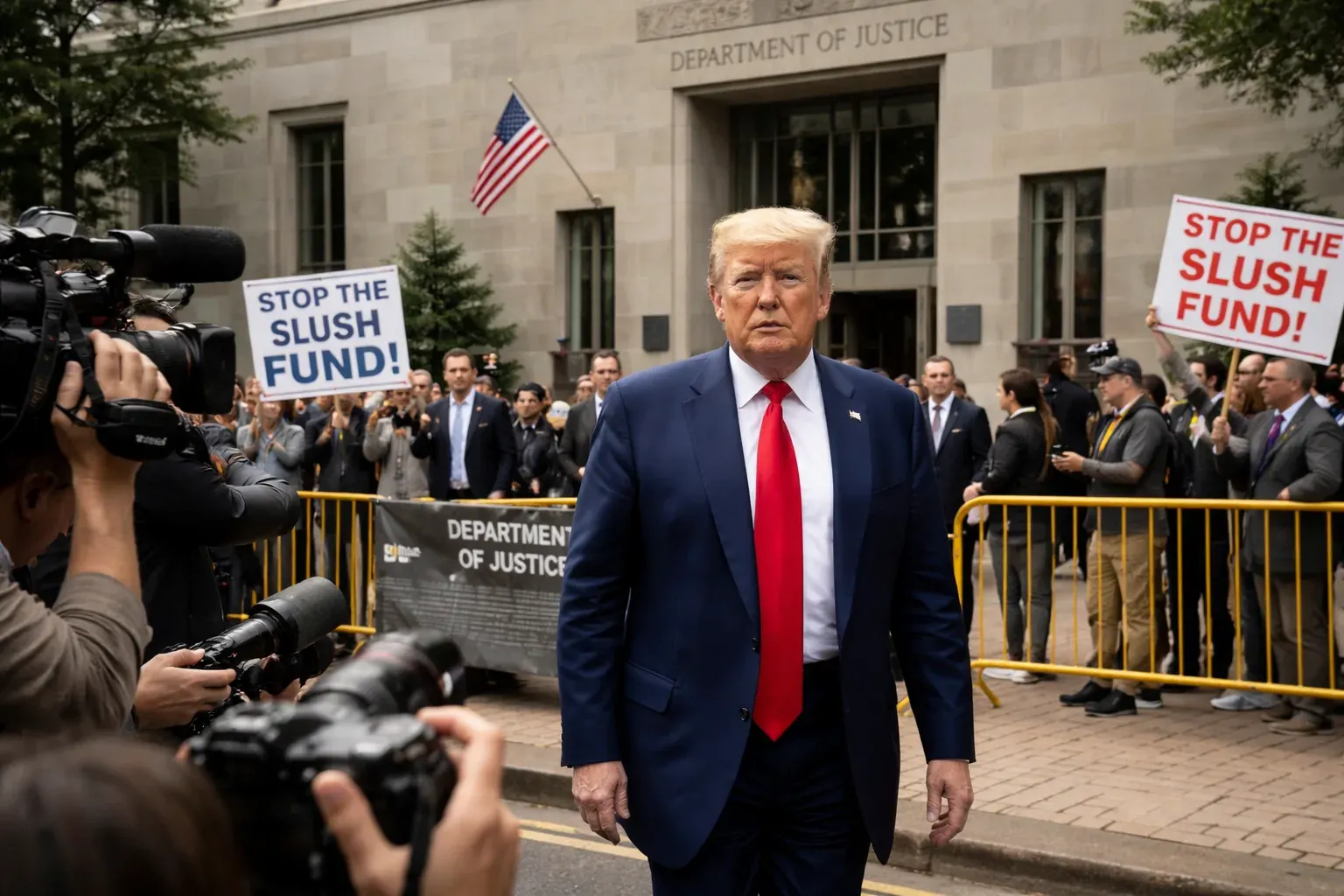
- House Democrats have filed a motion to block the settlement, labeling the taxpayer-funded initiative a 'slush fund' for political allies.
What happened
The US Justice Department has announced the creation of a $1.776 billion 'Anti-Weaponization Fund' intended to compensate allies of President Donald Trump who claim they were unfairly investigated by the previous administration. In a concurrent move, the president agreed to drop his $10 billion lawsuit against the Internal Revenue Service (IRS) which sought damages for the 2020 leak of his personal tax records.
What's new in this update
The settlement was finalized on Monday, just two days before a court deadline required both parties to address whether the lawsuit could continue now that the plaintiff oversees the agency he was suing. Acting Attorney General Todd Blanche stated the fund provides a systematic process to redress claims of those who suffered under 'lawfare,' with a five-member commission overseen by the Justice Department managing the payouts.
Key details
While the president, his sons, and the Trump Organization will receive a formal apology instead of direct monetary compensation from the fund, other claimants are eligible for payouts. This includes participants in the January 6 Capitol riot who received presidential pardons and others alleging partisan targeting by federal investigators. The fund's $1.776 billion budget allows the Justice Department to settle cases without further congressional approval for individual payments.
Background and context
The underlying lawsuit began after former IRS contractor Charles Littlejohn leaked Trump's tax data to the New York Times in 2020. That reporting revealed Trump paid only $750 in federal income taxes in 2016 and nothing in 10 of the previous 15 years. Littlejohn pleaded guilty in 2023 to stealing the data. Legal experts recently described Trump's lawsuit as 'unprecedented,' noting the conflict of interest in a sitting president seeking damages from an agency under his own control.
What to watch next
More than 90 Democrats in the House of Representatives have filed a motion to block the settlement, arguing it constitutes an abuse of the legal and tax system. Future developments will depend on whether the courts recognize the standing of these lawmakers to intervene in a settlement between the executive branch and a private plaintiff who now leads that same branch.
Why it matters
This settlement uses significant federal resources to settle a personal legal dispute for the president while creating a payout system for his political supporters and pardoned riot participants.
Read next
Follow this story through the topic hub, more world coverage, and the latest updates.
Weekly briefing
Get the week's key developments in one concise email.
Get a fast catch-up on the biggest stories, the context behind them, and the links worth your time.
Cadence
Weekly, for a quick catch-up
Coverage
AI, business, world, security, sports
Format
Clear takeaways and useful context
Request the briefing
Leave your email to open a prepared request and get on the list for the weekly briefing.
Author
See who assembled this story and follow more of their work.
Sources and methodology