Waymo Recalls Thousands of Robotaxis After Flood Incident in Texas
The voluntary recall affects nearly 3,800 vehicles following a software failure that allowed a driverless car to enter a flooded creek.

World correspondent
Reports on international affairs, diplomacy, and humanitarian developments with an emphasis on official statements, multilateral institutions, and regional context.
Editorial responsibility: Lead reviewer for geopolitics, international institutions, and crisis coverage
Primary source: BBC World News. Full source links and update notes are below.
Fast summary
Start here
- Waymo is recalling approximately 3,800 robotaxis equipped with its fifth and sixth-generation automated driving systems.
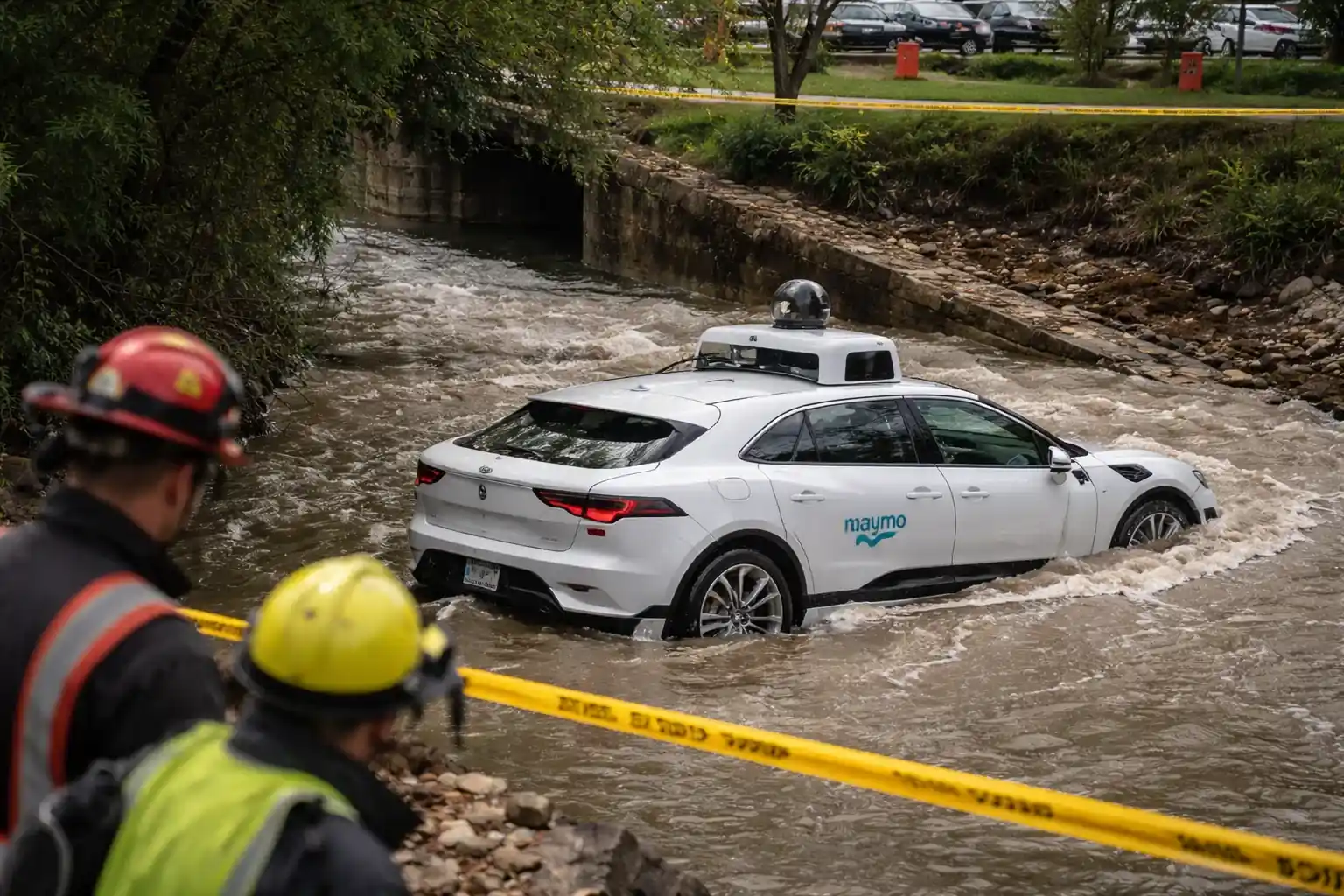
- The recall follows an April incident in San Antonio where an empty vehicle drove into a flooded road and was swept into a creek.
- Alphabet-owned Waymo has implemented temporary mitigations, including limiting access to areas prone to flash flooding, while a software fix is developed.
What happened
Waymo has recalled nearly 3,800 robotaxis after one of its autonomous vehicles entered a flooded roadway in San Antonio and was swept into a creek. The incident has become a sharp example of how even advanced autonomous driving systems can struggle with fast-changing weather conditions that human drivers themselves often find difficult to interpret safely.
The recall affects vehicles using Waymo's fifth- and sixth-generation automated driving systems and comes at a time when the company is trying to present its robotaxi model as mature, scalable, and safer than conventional driving in dense urban areas. A flood-related failure challenges that message because it exposes a category of risk that lies outside ordinary lane-following and traffic-navigation performance.
What's new in this update
Waymo says it is developing additional software protections so recalled robotaxis can better identify and avoid flooded roads. While that work continues, the company has imposed temporary geographic restrictions and paused service in San Antonio, signaling that the issue is serious enough to justify both a recall and an operational retreat.
That response matters because it shows Waymo is not treating the event as a single freak accident. By involving the National Highway Traffic Safety Administration and broadening the fix across thousands of vehicles, the company is effectively acknowledging a system-level vulnerability rather than a localized anomaly.
Key details
The San Antonio robotaxi involved in the incident was reportedly unoccupied, which prevented the event from turning into a direct passenger rescue emergency. Even so, the image of an autonomous vehicle being swept into a creek is likely to have outsize impact because it condenses abstract concerns about autonomy into a vivid and easily understood safety failure.
Waymo still carries significant commercial momentum, providing hundreds of thousands of trips each week in multiple US cities. But scale does not erase scrutiny. The larger the fleet, the more regulators and the public expect robust handling of edge cases such as floods, power failures, emergency conditions, and unexpected environmental hazards.
Background and context
The robotaxi industry has spent years arguing that autonomous vehicles can outperform human drivers by reducing distraction, fatigue, and poor judgment. Yet critics have consistently pointed out that unusual real-world scenarios remain a major challenge, especially when they combine weather, infrastructure ambiguity, and incomplete sensor interpretation.
Waymo is not the only company to face such questions. Autonomous mobility systems in both the United States and abroad have recently been tested by outages, stalling incidents, and situations where the software's understanding of the environment diverged from common human caution. Floodwater is a particularly difficult case because danger may not always be visible in a way software can easily classify without specific training and constraints.
What to watch next
The most important next step is whether Waymo's software update convincingly addresses flood risk and satisfies regulators that the recall is adequate. NHTSA and other policymakers will likely want clarity not only on how the robotaxi entered the flooded area, but on how the system will recognize similar hazards elsewhere.
Observers will also watch the broader industry impact. If this incident reshapes expectations around weather-handling requirements, other autonomous vehicle operators may face pressure to disclose more about their operational limits during flooding, storms, or other extreme conditions.
Why this matters
This matters because the Waymo recall is about more than one robotaxi in one creek. It highlights a basic challenge for autonomous vehicles: public trust depends not only on routine performance, but on what happens in rare, dangerous, and chaotic conditions. If robotaxis cannot reliably understand flood risk, the path to widespread acceptance becomes harder, and regulatory scrutiny of the entire autonomous vehicle sector becomes sharper.
Reader context
This story belongs to Northstar Herald's world coverage, with related entities including Waymo, Alphabet, NHTSA, Autonomous Vehicles. The report is based on BBC World News source material.
Related coverage
Why it matters
The incident underscores the technical limitations of autonomous driving systems in extreme weather and the regulatory scrutiny facing the burgeoning robotaxi industry.
Read next
Follow this story through the topic hub, more world coverage, and the latest updates.
Weekly briefing
Get the week's key developments in one concise email.
Get a fast catch-up on the biggest stories, the context behind them, and the links worth your time.
Cadence
Weekly, for a quick catch-up
Coverage
AI, business, world, security, sports
Format
Clear takeaways and useful context
Request the briefing
Leave your email to open a prepared request and get on the list for the weekly briefing.
About the byline
World correspondent
Leila Haddad covers world affairs, diplomacy, and humanitarian crises, with a focus on how fast-moving international developments affect public policy, conflict response, and cross-border institutions.
Sources and methodology