Heavy Gunfire Erupts in Mogadishu as Somalia’s Election Crisis Deepens
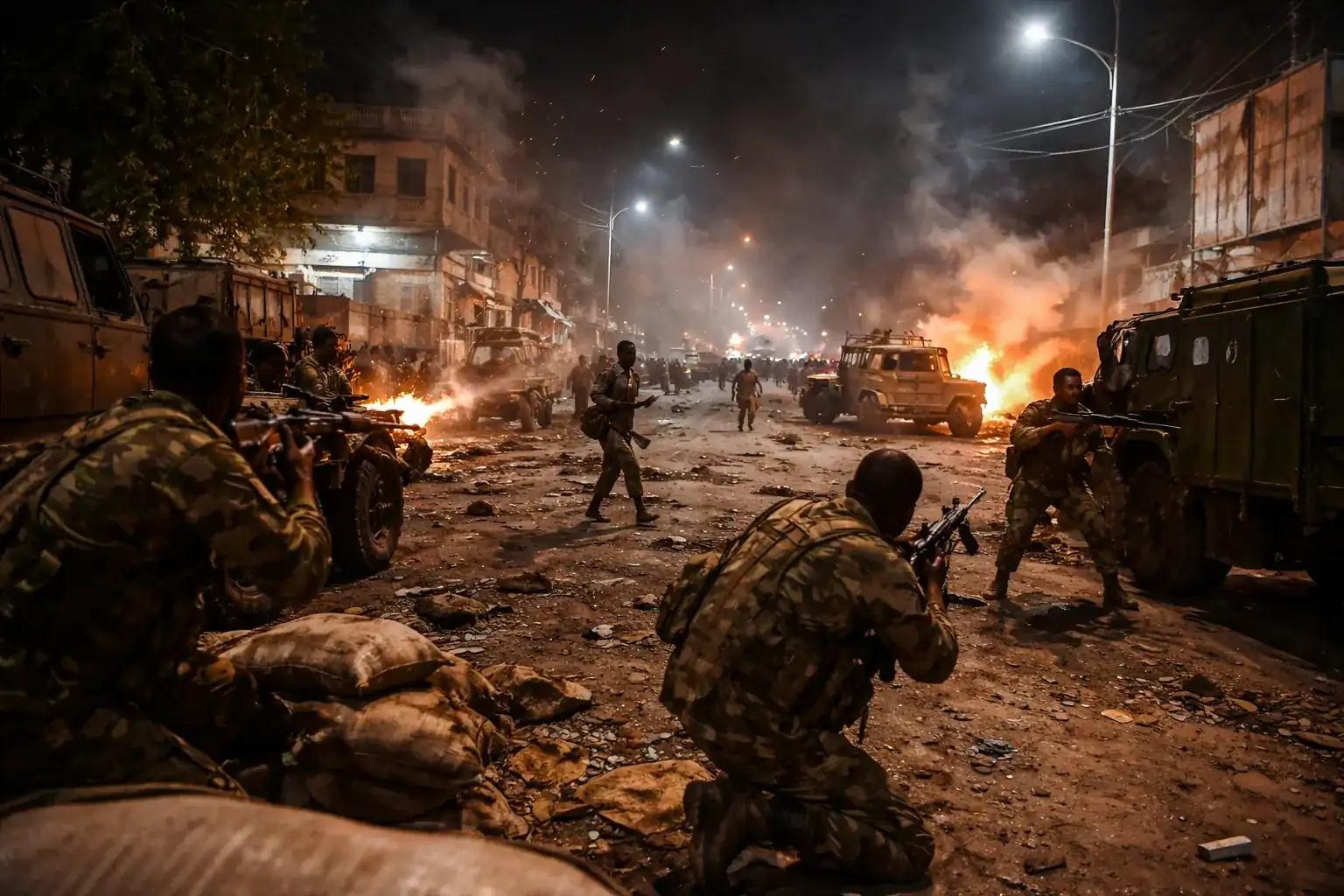
Government forces and opposition fighters exchanged fire overnight following a controversial decision to extend the president's term by one year.
Primary source: BBC World News. Full source links and update notes are below.
Fast summary
Start here
- Heavy gunfire persisted through the night in several Mogadishu neighborhoods following the expiration of President Mohamud's term.
- The opposition, including former Prime Minister Hassan Ali Khaire, accused government forces of attacking leaders preparing for protests.
- The US embassy has condemned the violence as reckless and urged both sides to preserve stability through peaceful means.
What happened
Violent clashes broke out in Mogadishu between Somali government security forces and fighters loyal to the opposition. The violence follows the expiration of President Hassan Sheikh Mohamud’s term on May 15, which was subsequently extended by a year. The opposition has rejected the extension as unconstitutional and called for mass protests.
What's new in this update
Former Prime Minister Hassan Ali Khaire reported that his group was targeted by government forces while preparing for planned peaceful demonstrations. In response, police stated they were conducting a large-scale security operation against heavily armed militias who allegedly launched mortar attacks within the capital.
Key details
Residents reported gunfire across multiple neighborhoods throughout Wednesday night and into Thursday. While official casualty figures have not been released, former President Sharif Sheikh Ahmed stated that the violence would not deter planned opposition demonstrations, indicating that political tensions remain at a breaking point.
Background and context
President Mohamud has been attempting to transition Somalia toward a one-person, one-vote democratic system, replacing the long-standing model where clan elders select members of parliament. Somalia has not held a direct election since 1969 and has faced more than three decades of civil war and internal instability.
What to watch next
The immediate focus remains on whether scheduled opposition demonstrations will proceed and if security forces will use additional force to suppress them. International diplomats, including the US embassy in Mogadishu, are calling for an immediate return to peaceful negotiations to resolve the electoral deadlock.
Why it matters
The escalation threatens to destabilize Somalia's fragile transition toward democratic elections and could reignite widespread civil conflict.
Read next
Follow this story through the topic hub, more world coverage, and the latest updates.
Weekly briefing
Get the week's key developments in one concise email.
Get a fast catch-up on the biggest stories, the context behind them, and the links worth your time.
Cadence
Weekly, for a quick catch-up
Coverage
AI, business, world, security, sports
Format
Clear takeaways and useful context
Request the briefing
Leave your email to open a prepared request and get on the list for the weekly briefing.
Author
See who assembled this story and follow more of their work.
Sources and methodology