Oil Tanker MT Eureka Hijacked off Yemen as Somali Piracy Surges
The Togo-flagged vessel was seized near the port of Qana and is being diverted toward Somalia, representing a significant escalation in regional maritime

World correspondent
Reports on international affairs, diplomacy, and humanitarian developments with an emphasis on official statements, multilateral institutions, and regional context.
Editorial responsibility: Lead reviewer for geopolitics, international institutions, and crisis coverage
Primary source: BBC World News. Full source links and update notes are below.
Fast summary
Start here
- The MT Eureka was boarded by armed pirates at 5:00 AM local time near the Yemeni port of Qana.
- This incident is the fourth successful hijacking in two weeks, following the seizure of the Honor 25 on April 22.
- Security experts believe a security lapse caused by naval focus on Houthi rebel attacks has allowed Somali piracy to resurge.
What happened
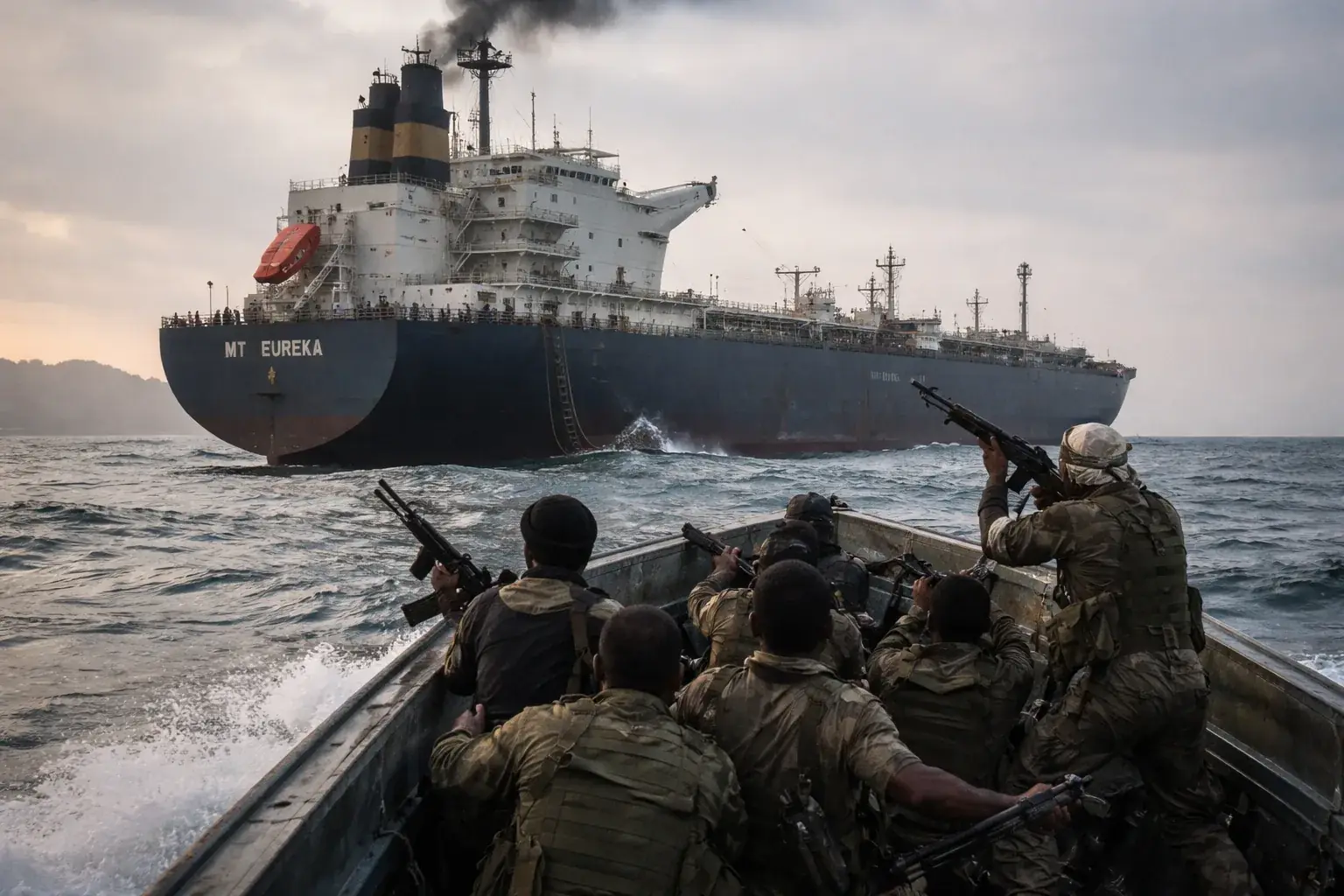
Somali pirates have hijacked the Togo-flagged oil tanker MT Eureka in the Gulf of Aden, seizing the vessel near Yemen and reportedly steering it toward the Somali coast. The attack marks another sharp escalation in a piracy resurgence that is once again putting one of the world's most important shipping corridors under pressure.
The hijacking matters because the Gulf of Aden is not an isolated maritime zone. It is a vital artery linking the Red Sea, the Suez route, and wider global trade networks. When Somali pirates successfully seize an oil tanker like the MT Eureka, the consequences spread quickly into insurance pricing, shipping risk, naval strategy, and commercial confidence.
What's new in this update
The seizure of the MT Eureka is now described as the fourth successful hijacking in roughly two weeks, reinforcing fears that Somali piracy is no longer a sporadic threat but a rapidly strengthening pattern. Security reporting also points to additional suspicious maritime activity near Yemen, suggesting pirate groups may be operating with renewed boldness along several stretches of coast.
That surge is being linked by analysts to a broader regional security shift. International naval resources that once focused heavily on deterring Somali pirates have increasingly been diverted toward the Houthi threat in the Red Sea. The result appears to be a thinning of anti-piracy deterrence at exactly the moment armed groups along the Somali coast have seen a new opportunity.
Key details
Officials in Puntland and other regional security sources say the MT Eureka was boarded early in the morning and is being taken toward Somali waters. The vessel's capture follows other recent incidents, including the seizure of the Honor 25, which heightened alarm among maritime security observers already watching the Gulf of Aden for signs of organized pirate reactivation.
Launch points reportedly include remote sections of the Puntland coast and other fishing settlements that can support small-boat operations. That geographic spread matters because Somalia's long coastline makes pirate interdiction difficult even under normal conditions. When naval coverage is diluted, attackers can exploit many possible staging areas.
Background and context
Somali piracy had declined dramatically after its peak years, largely because of sustained naval patrols, onboard security measures, and international coordination. But those gains were never guaranteed to last permanently. Piracy networks did not vanish as much as recede under pressure.
Now that wider regional instability has altered security priorities, the maritime environment is becoming more permissive again. The combination of weak coastal governance, armed actors, profitable ransom incentives, and reduced deterrent presence has recreated conditions under which Somali pirates can test and expand their operations.
What to watch next
The next question is whether the MT Eureka will be used in a ransom negotiation pattern familiar from earlier Somali piracy waves or whether the hijacking signals an even more aggressive phase involving repeat tanker targeting. Naval responses from EUNAVFOR and other maritime security bodies will be watched closely, especially for signs of a strategic shift back toward dedicated anti-piracy patrols.
Shipping companies will also be reassessing route security and onboard precautions. If Somali pirates continue to seize vessels successfully, the commercial response may come quickly in the form of higher premiums, rerouting, and stronger private security measures.
Why this matters
This matters because the hijacking of the MT Eureka suggests Somali piracy is becoming a serious systemic risk again, not just a residual threat. In a region already destabilized by conflict and maritime attacks, a revived pirate campaign can further disrupt global shipping security, raise costs across trade routes, and complicate already overstretched naval operations in the Gulf of Aden and beyond.
Reader context
This story belongs to Northstar Herald's Maritime Piracy and Global Shipping Security coverage, with related entities including Somali Pirates, MT Eureka, Gulf of Aden, Maritime Security. The report is based on BBC World News source material.
Related coverage
Why it matters
The resurgence of piracy in the Gulf of Aden threatens a critical global trade artery already destabilized by regional conflict, potentially increasing shipping costs and risks.
Read next
Follow this story through the topic hub, more world coverage, and the latest updates.
Weekly briefing
Get the week's key developments in one concise email.
Get a fast catch-up on the biggest stories, the context behind them, and the links worth your time.
Cadence
Weekly, for a quick catch-up
Coverage
AI, business, world, security, sports
Format
Clear takeaways and useful context
Request the briefing
Leave your email to open a prepared request and get on the list for the weekly briefing.
About the byline
World correspondent
Leila Haddad covers world affairs, diplomacy, and humanitarian crises, with a focus on how fast-moving international developments affect public policy, conflict response, and cross-border institutions.
Sources and methodology