Dozens Found Dead of Thirst in Remote Niger Desert After Vehicle Failure
At least 49 people perished in the Sahara desert after their truck broke down 50 miles from the nearest border crossing.
Primary source: BBC World News. Full source links, newsroom standards, and correction details are below.
Fast summary
Start here
- Forty-nine people died of thirst in northern Niger after their truck broke down west of Assamaka.
- Only two individuals survived the incident, trekking through the desert to alert authorities.
- A rescue team dispatched to the scene discovered and saved another 60 people stranded in a second broken-down vehicle.
What happened
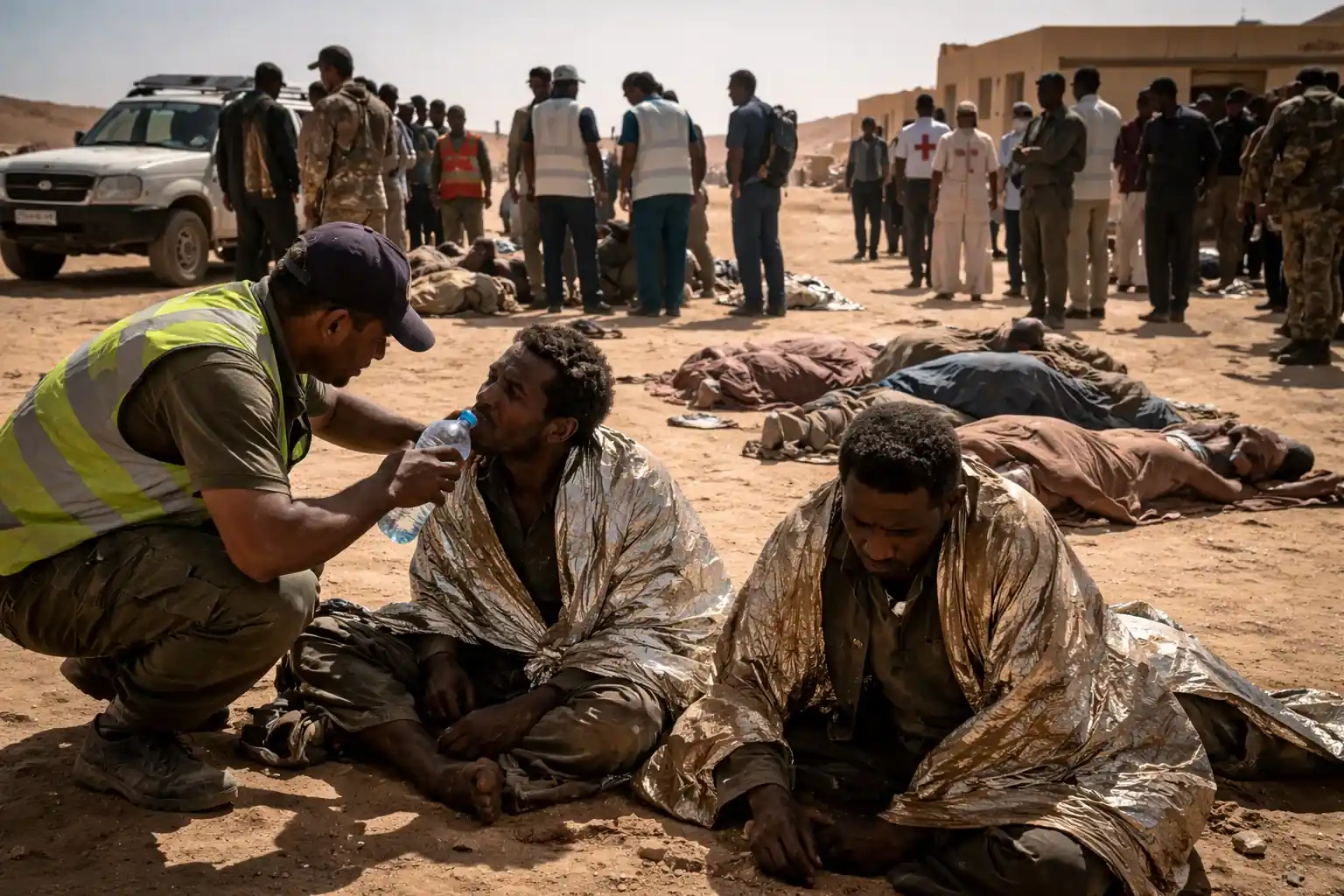
At least 49 people died from dehydration in a remote stretch of the Sahara desert in northern Niger. The group was traveling in a truck that suffered a mechanical failure approximately 80 kilometers (50 miles) west of Assamaka, a key border town near Algeria. Authorities confirmed that the victims were returning from a religious festival in Mali when the vehicle broke down in a hostile environment characterized by extreme heat and a lack of supply points.
What's new in this update
The Governor of Agadez confirmed that only two people survived the ordeal. These survivors managed to trek across the desert on foot to reach Assamaka and notify local officials. Upon arrival at the site, rescue teams discovered dozens of bodies under and around the immobile truck. The victims were buried in mass graves at the scene by the rescue team.
Key details
The lorry had originally departed from the Malian town of Telhandek but veered away from its intended route before the breakdown. According to official statements, the driver, his apprentice, and the passengers spent several days attempting to repair the vehicle without success. While responding to this incident, the rescue team encountered a second broken-down lorry carrying more than 60 people who had been stranded for three days due to a battery failure; these individuals were provided with water and assistance to resume their journey.
Background and context
The Nigerien desert remains a major transit corridor for West African migrants attempting to reach North Africa and Europe. While these specific travelers were reportedly returning from a festival, the region is notorious for its perilous conditions. The Agadez governor noted that such tragedies underscore the vulnerability of young people engaged in cross-border economic activities who must often pass through unstable areas to seek better living conditions.
What to watch next
Regional authorities are expected to maintain search and rescue capabilities in the area, as the successful discovery of the second stranded vehicle prevented another potential mass casualty event. The incident may lead to renewed calls for improved safety and monitoring along common transit routes in northern Niger.
Why this matters
The tragedy highlights the extreme risks faced by travelers and migrants in the Sahara, where mechanical failure in remote regions often proves fatal due to lack of water.
Reader context
This story belongs to Northstar Herald's Human Rights coverage, with related entities including Niger, Sahara Desert, Agadez, Migration. The report is based on BBC World News source material.
Related coverage
Why it matters
The tragedy highlights the extreme risks faced by travelers and migrants in the Sahara, where mechanical failure in remote regions often proves fatal due to lack of water.
Read next
Follow this story through the topic hub, more world coverage, and the latest updates.
Weekly briefing
Get the week's key developments in one concise email.
Get a fast catch-up on the biggest stories, the context behind them, and the links worth your time.
Cadence
Weekly, for a quick catch-up
Coverage
AI, business, world, security, sports
Format
Clear takeaways and useful context
Request the briefing
Leave your email to open a prepared request and get on the list for the weekly briefing.
Author

The world desk follows geopolitics, humanitarian crises, diplomacy, and major international developments with an emphasis on fast updates and public-interest context.
Sources and methodology