Somali Referee Barred From World Cup to Officiate UEFA Super Cup
UEFA names Omar Artan for the season-opening match between PSG and Aston Villa following his controversial exclusion from the North American tournament.

World correspondent
Reports on international affairs, diplomacy, and humanitarian developments with an emphasis on official statements, multilateral institutions, and regional context.
Editorial responsibility: Lead reviewer for geopolitics, international institutions, and crisis coverage
Primary source: BBC World News. Full source links and update notes are below.
Fast summary
Start here
- Omar Artan will become the first non-European official to referee the UEFA Super Cup in its history.
- The appointment follows Artan's removal from the 2026 World Cup roster after US border officials denied him entry in Miami.
- UEFA president Aleksander Ceferin stated the move shows respect for Artan's skills after his dream was deferred by immigration issues.
What happened
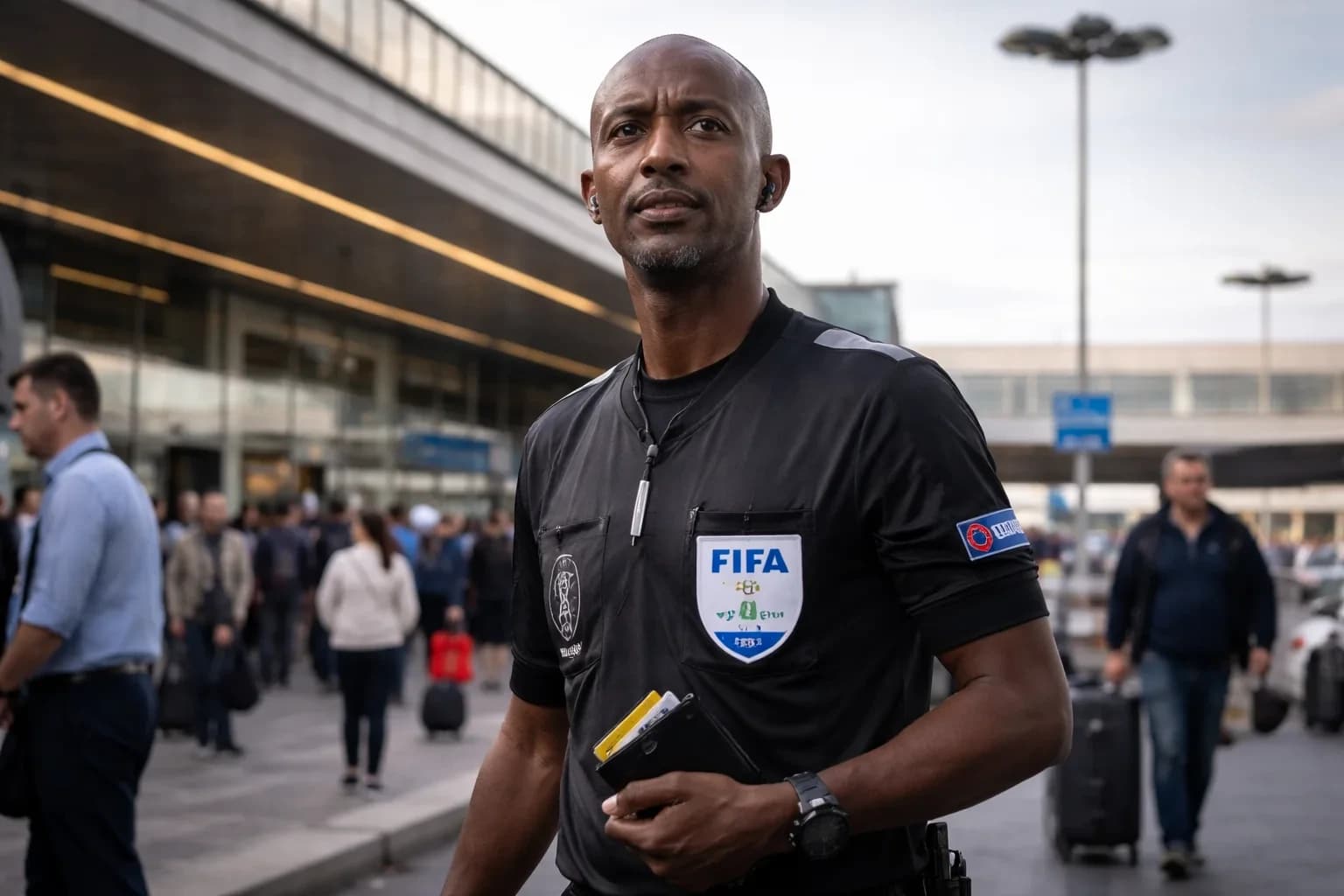
Somali referee Omar Artan has been appointed to officiate the UEFA Super Cup, a major European showpiece that will pit Paris Saint-Germain against Aston Villa in Salzburg. The selection is notable on its own because Artan becomes the first non-European official chosen for the fixture. It becomes more significant when viewed against the event that immediately preceded it: his exclusion from the 2026 World Cup in the United States.
UEFA's decision effectively restores Artan to one of the sport's biggest stages after a deeply public setback. Instead of being remembered only as the referee denied entry to a World Cup host nation, he is now being presented as an official worthy of one of UEFA's most visible appointments.
Why the appointment carries extra weight
The UEFA Super Cup is not just another international assignment. It is a high-profile match used to launch the European season and to showcase elite officiating standards. Referees selected for it are expected to command pressure, manage top-level stars, and represent the governing body's trust in their judgment.
That is why UEFA president Aleksander Ceferin's explanation matters. He said the appointment was coordinated with the Confederation of African Football and intended as a show of respect for Artan's ability. In other words, UEFA is not treating him as a consolation case. It is making a public statement that the Somali referee remains one of the game's most respected officials despite the political dispute that blocked his World Cup role.
The background to the World Cup controversy
Artan had been on track to make history as the first Somali referee to work at a men's World Cup. A FIFA-listed official since 2018 and the 2025 CAF Men's Referee of the Year, he had already become a symbol of how far African officiating had progressed on the global stage.
That made his rejection in Miami especially controversial. According to reports, Artan arrived with a diplomatic passport and a valid single-entry visa but was denied entry by US border officials. Authorities reportedly raised alleged security concerns and suggested possible links to extremist figures. Artan denied those claims and said he had done nothing beyond attempting to report for tournament duty.
The incident quickly moved beyond football. It became part of a broader debate about immigration screening, host-country responsibilities, and whether major tournaments can operate fairly when entry decisions are shaped by geopolitics as much as by sport.
Why this is also a diplomatic story
Because Artan is Somali and Somalia remains associated with heightened travel scrutiny in several jurisdictions, the case sits at the intersection of football governance and international politics. FIFA sells the World Cup as a universal event. When a match official selected on merit cannot enter the host country, that principle looks conditional rather than universal.
UEFA's move does not reverse US policy, but it does send a signal. It tells officials, fans, and other governing bodies that Artan's professional reputation remains intact. It also aligns with UEFA's broader effort to deepen ties with CAF and promote a more genuinely global officiating pool at the top of the game.
What to watch next
Attention now shifts to Salzburg. UEFA and Austrian authorities will want to ensure that Artan's travel and accreditation process is smooth, especially given the scrutiny surrounding the appointment. The match itself will also be watched more closely than a normal Super Cup, because every decision Artan makes is likely to be interpreted through the lens of what happened in the United States.
If he delivers a strong performance, the moment could become a landmark for African referees and a pointed reminder that elite talent can survive political obstruction. It may also raise tougher questions for FIFA and future tournament hosts about how to prevent immigration systems from overriding sporting merit.
Why this matters
The Omar Artan UEFA Super Cup appointment is bigger than one referee assignment. It shows how quickly global sport can collide with border policy, security claims, and institutional image management. It also offers a clear corrective. After being barred from the World Cup, Artan has been handed a match that publicly reaffirms his standing at the highest level of football.
Why it matters
The decision signals a symbolic rift between UEFA and FIFA's hosting partners while providing a high-profile platform for an official caught in geopolitical travel restrictions.
Read next
Follow this story through the topic hub, more world coverage, and the latest updates.
Weekly briefing
Get the week's key developments in one concise email.
Get a fast catch-up on the biggest stories, the context behind them, and the links worth your time.
Cadence
Weekly, for a quick catch-up
Coverage
AI, business, world, security, sports
Format
Clear takeaways and useful context
Request the briefing
Leave your email to open a prepared request and get on the list for the weekly briefing.
About the byline
World correspondent
Leila Haddad covers world affairs, diplomacy, and humanitarian crises, with a focus on how fast-moving international developments affect public policy, conflict response, and cross-border institutions.
Sources and methodology