Robotic Rescue Mission Begins for NASA's Falling Swift Space
A specialized three-armed robot has been launched to intercept the car-sized observatory before it hits a critical altitude threshold.

World correspondent
Reports on international affairs, diplomacy, and humanitarian developments with an emphasis on official statements, multilateral institutions, and regional context.
Editorial responsibility: Lead reviewer for geopolitics, international institutions, and crisis coverage
Primary source: BBC World News. Full source links and update notes are below.
Fast summary
Start here
- The LINK spacecraft was launched on a Pegasus XL rocket to intercept the Swift observatory, which is currently falling toward Earth due to solar-induced atmospheric drag.
- Engineers at Katalyst Space Technologies developed the rescue craft in just eight months to meet a deadline before the telescope reaches a non-recoverable altitude of 300 kilometers.
- Swift is a critical scientific tool for studying gamma-ray bursts, and scientists warn that no other existing instrument can replicate its high-energy observation capabilities.
What happened
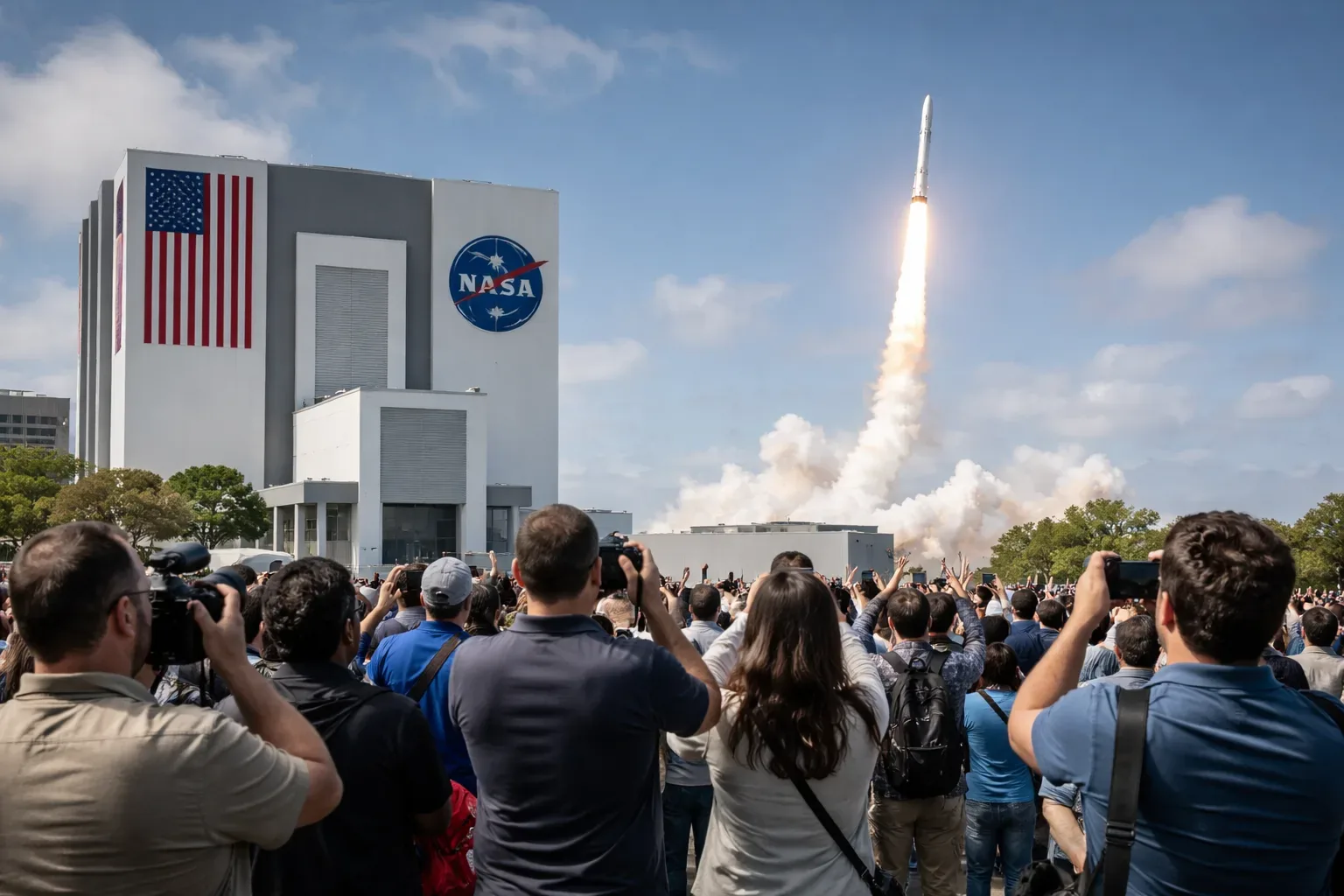
On Friday, a high-stakes rescue mission was successfully launched to save the Swift observatory, a vital NASA-funded space telescope that has been losing altitude at an alarming rate. The mission utilizes a specialized craft called LINK, developed by the Arizona-based firm Katalyst Space Technologies. This marks a significant moment in space exploration history, as it represents one of the first instances where a private commercial entity has been tasked with an orbital servicing mission of such extreme complexity and scientific urgency. The Swift telescope, which has been operational since 2004, is currently at risk of re-entering the Earth's atmosphere and burning up due to increased drag caused by recent solar activity. Scientists have described the rescue attempt as high-risk, but NASA officials believe the scientific value of the telescope makes the endeavor necessary.
What's new in this update
The most recent development in this orbital drama involves the successful deployment of the LINK spacecraft via a Pegasus XL rocket. Now that the craft has been flung into orbit, engineers from Katalyst Space Technologies are entering a critical phase of activating the robot’s core systems. Over the coming weeks, the mission team will perform sequential health checks on the craft's power supply, autonomous navigation arrays, and high-precision sensors to ensure they survived the rigors of launch. The LINK robot, which is roughly the size of a standard household refrigerator, is equipped with three robotic arms specifically designed to grapple the Swift observatory. Ghonhee Lee, the Chief Executive of Katalyst, highlighted the extraordinary feat of building and testing this spacecraft in just eight months, a rapid development timeline driven by the decaying orbit of the telescope it was built to save.
Key details
The technical challenge of the mission is rooted in the current state of the Earth's upper atmosphere, which has been impacted by heightened solar cycles. Increased solar activity has essentially pushed the atmosphere outward, increasing the density of the gas through which the Swift observatory travels. This atmospheric drag has slowed the car-sized telescope down, causing it to drop from its original altitude of 373 miles (600 km) to approximately 220 miles (360 km). The descent has accelerated significantly over the past two years. If the telescope falls below the 186-mile (300 km) threshold, the atmospheric density becomes too great for a rescue craft like LINK to safely maneuver and lift it back to safety. Consequently, the mission is a race against time, requiring the LINK craft to use its thrusters to match Swift’s velocity before attempting a physical intercept.
Background and context
Since its launch two decades ago, the Swift observatory has been a cornerstone of high-energy astrophysics. It was specifically designed to detect and observe gamma-ray bursts—the most energetic explosions known in the universe, which typically result from the violent deaths of massive stars or the collision of stellar remnants. These events are so powerful that they release more energy in a few seconds than our Sun will emit over its entire 10-billion-year lifespan. Because these cataclysmic moments are extremely brief, the observatory must be able to pivot and focus its three onboard telescopes with incredible speed, a trait that earned it the name 'Swift.' Dr. Simeon Barber of the Open University notes that there is currently no other instrument capable of replacing Swift’s specific data collection methods, which is why NASA deemed the aging satellite worth the risk of a private-sector rescue.
What to watch next
The coming month will be a period of intense activity and high tension for mission controllers in Arizona. After the initial systems check is completed, the LINK spacecraft will begin its complex approach sequence, a delicate orbital dance that will take three to four weeks to finalize. Because the Swift observatory’s altitude is shifting on a weekly basis, the LINK robot must constantly update its trajectory to home in on the moving target. Once it finally draws alongside the telescope, the craft will use its array of cameras to photograph Swift from every angle, allowing engineers to assess the observatory's physical condition before attempting to engage the three robotic arms. The final attempt to grab the telescope and boost it back to a safer, higher orbit will be the ultimate test of modern commercial orbital servicing technology and could set a precedent for future satellite maintenance.
Why it matters
This mission represents a pivotal moment for commercial space servicing and is essential for preserving a telescope that observes the universe's most powerful explosions.
Read next
Follow this story through the topic hub, more world coverage, and the latest updates.
Weekly briefing
Get the week's key developments in one concise email.
Get a fast catch-up on the biggest stories, the context behind them, and the links worth your time.
Cadence
Weekly, for a quick catch-up
Coverage
AI, business, world, security, sports
Format
Clear takeaways and useful context
Request the briefing
Leave your email to open a prepared request and get on the list for the weekly briefing.
About the byline
World correspondent
Leila Haddad covers world affairs, diplomacy, and humanitarian crises, with a focus on how fast-moving international developments affect public policy, conflict response, and cross-border institutions.
Sources and methodology