Myanmar Military Regains Momentum Through Forced Conscription Policy
Rebel groups are being forced onto the defensive as the junta leverages new manpower to retake critical townships and infrastructure.

World correspondent
Reports on international affairs, diplomacy, and humanitarian developments with an emphasis on official statements, multilateral institutions, and regional context.
Editorial responsibility: Lead reviewer for geopolitics, international institutions, and crisis coverage
Primary source: BBC World News. Full source links and update notes are below.
Fast summary
Start here
- Myanmar's military junta is using a 2024 conscription law to replenish its ranks with forced recruits, often detained without cause.
- Resistance forces, previously on the offensive, are now losing control of key roads and townships in the north and border regions.
- The influx of manpower has allowed the military to launch major offensives in Kachin, Chin, and Karen states.
What happened
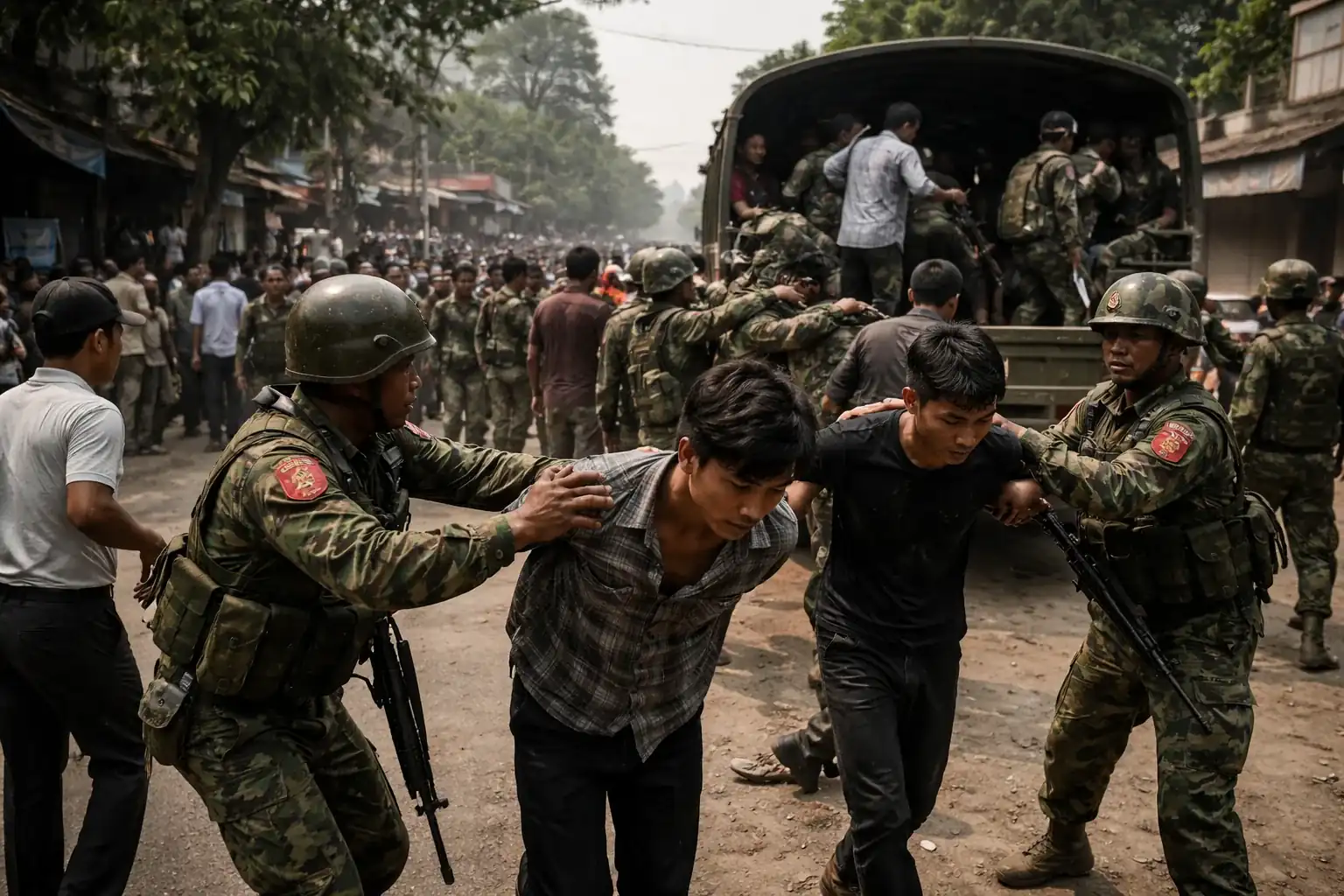
Myanmar's military is reclaiming ground in parts of the country's civil war by using forced conscription to replenish its ranks, changing the balance of a conflict that had previously seen major rebel advances. The junta's manpower shortage was one of its clearest vulnerabilities after the 2021 coup, especially as ethnic armed groups and pro-democracy resistance forces gained territory. The new conscription push appears to be helping the military absorb losses, reopen offensives, and contest ground it had struggled to hold.
That makes the Myanmar forced conscription story about more than battlefield movement. It is about how an authoritarian state under pressure is converting coercion into military capacity, even as that same strategy deepens fear, displacement, and human-rights abuse across the country.
How forced conscription is changing the war
The junta's biggest problem had been manpower. Civil wars are not won by aircraft and artillery alone; they also require bodies to hold roads, patrol towns, man checkpoints, and sustain repeated offensives. Forced conscription appears to be filling that gap, at least in the short term. Even poorly trained recruits can free up experienced soldiers for front-line operations or support roles that allow regular units to push forward.
That shift matters because resistance forces often depend on mobility, local terrain knowledge, and momentum. When the military can suddenly field larger numbers and press multiple fronts, the resistance loses some of the asymmetry that had previously helped it gain ground.
The human-rights cost
The manpower gain comes with a brutal human cost. Reports tied to this story describe young men being taken through coercive or arbitrary methods, then pushed into training and deployment with little real choice. Forced recruits are not simply being added to a national service system in the abstract. They are being funneled into an active civil war where desertion can bring severe punishment and battlefield survival is uncertain.
That is why the conscription law is central not only to the military story but also to the human-rights story. It expands the conflict's reach into ordinary civilian life and deepens the climate of fear that already defines much of Myanmar under junta rule.
Why resistance forces are losing momentum
Resistance groups had previously benefited from the military's overstretch. In some areas they were able to pressure garrisons, disrupt roads, and seize symbolic or practical control over local zones. If the junta can now flood contested regions with more manpower, even low-quality manpower, it becomes harder for rebels to maintain offensives and easier for the military to retake infrastructure that matters strategically.
Roads, townships, and logistical corridors are especially important. Control of these routes is not only symbolic. It affects supply movement, local taxation, aid access, and whether civilian populations feel the military or the resistance is the real governing force.
Background and context
Myanmar has been in civil war since the military coup that removed the elected government and triggered widespread armed resistance. The conflict has always involved both battlefield power and legitimacy. The military seeks to prove it still controls the state. Resistance forces seek to prove the junta cannot rule the country without constant violence.
In that context, forced conscription is more than a manpower fix. It is a political signal that the junta is willing to impose deeper control over society to avoid strategic collapse. It also reveals how fragile the military position had become before this new pool of coerced recruits began to arrive.
What to watch next
The next question is whether the junta can convert forced recruitment into lasting territorial recovery or whether the gains will remain shallow and costly. Watch also for desertion rates, pressure on border regions, and whether resistance groups change tactics to adapt to larger but less reliable military formations.
The humanitarian side is equally important. As more people are pulled into service and more towns become contested again, displacement, civilian abuse, and regional instability are likely to intensify.
Why this matters
Myanmar's forced conscription policy matters because it is helping the junta regain battlefield momentum while simultaneously worsening the country's human-rights crisis, extending the war's social damage, and putting recent resistance gains at greater risk.
Why it matters
The shift in military momentum threatens the gains made by pro-democracy and ethnic rebel groups since the 2021 coup, deepening a humanitarian crisis.
Read next
Follow this story through the topic hub, more world coverage, and the latest updates.
Weekly briefing
Get the week's key developments in one concise email.
Get a fast catch-up on the biggest stories, the context behind them, and the links worth your time.
Cadence
Weekly, for a quick catch-up
Coverage
AI, business, world, security, sports
Format
Clear takeaways and useful context
Request the briefing
Leave your email to open a prepared request and get on the list for the weekly briefing.
About the byline
World correspondent
Leila Haddad covers world affairs, diplomacy, and humanitarian crises, with a focus on how fast-moving international developments affect public policy, conflict response, and cross-border institutions.
Sources and methodology