Montreal Shooting Leaves Officer and Civilian Dead in Rare Fatal
A midday shooting in Montreal's most populated neighborhood killed an officer and a civilian before police fatally shot the suspect.

World correspondent
Reports on international affairs, diplomacy, and humanitarian developments with an emphasis on official statements, multilateral institutions, and regional context.
Editorial responsibility: Lead reviewer for geopolitics, international institutions, and crisis coverage
Primary source: BBC World News. Full source links and update notes are below.
Fast summary
Start here
- Officer Mohamed Lamine Benredouane and civilian Michael Moshe Mizrahi were killed in the attack.
- The unidentified suspect, dressed in military clothing, was shot and killed by police at the scene.
- Authorities are investigating potential links between the gunman and the misogynistic 'incel' movement.
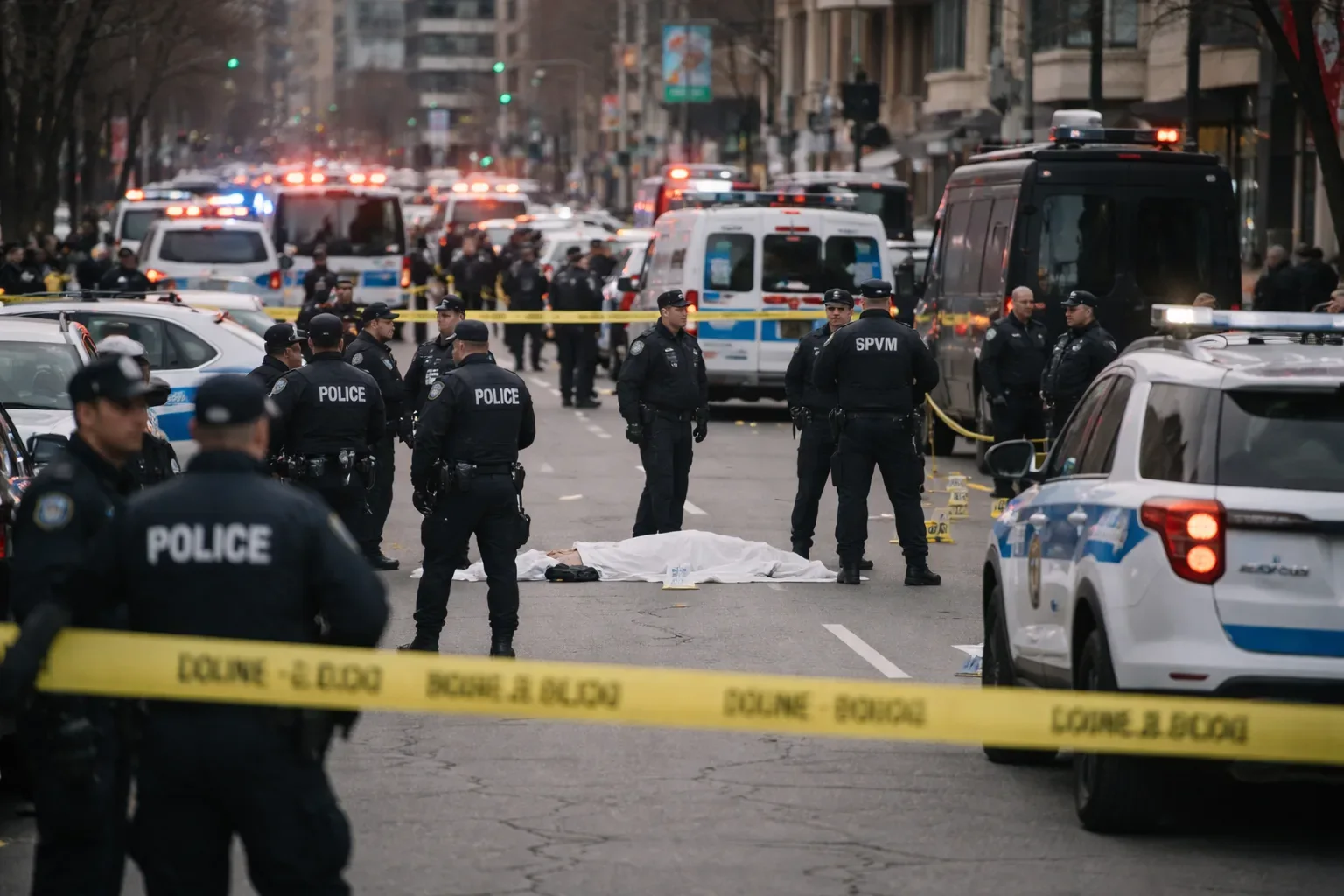
What happened
A shooting in Montreal's Cote-des-Neiges neighborhood left a police officer, a civilian, and the suspect dead, shocking a city where fatal attacks on law enforcement are rare enough to feel historically significant. Authorities say the suspect was killed by police at the scene, while a second officer was seriously injured and remains under medical care.
The basic facts alone make this a major public-safety story. But the deeper significance comes from who was killed, where it happened, and what investigators are now examining about motive and ideology.
Why the deaths of the victims matter
The identification of Officer Mohamed Lamine Benredouane and civilian Michael Moshe Mizrahi gives the incident a human and communal weight that goes beyond raw casualty numbers. In cases like this, the victims are not abstractions in a crime bulletin. They become focal points for grief, memory, and political response.
That is especially true when a police officer is killed in the line of duty in a city where such incidents are exceptionally uncommon. The death of an officer can reshape the public mood around policing, vulnerability, and targeted violence very quickly.
Why this stands out in Montreal
The Montreal shooting matters in part because of its rarity. Reports indicate this was the first line-of-duty death of a Montreal police officer in nearly a quarter-century. That kind of interval matters because it shapes how the city understands the event. It is not being processed as routine urban violence. It is being experienced as a rupture.
That raises the stakes of the investigation. People want to know whether this was a targeted anti-police attack, a broader extremist incident, or something with more personal but still lethal origins.
The possible ideological angle
Authorities are reportedly examining whether the gunman had ties to the incel movement, a misogynistic online subculture that has previously been associated with real-world violence. That possibility is significant because it would place the shooting within a wider pattern of extremist radicalization rather than treating it as a purely local event.
At this stage, motive investigations are often messy, and caution is warranted. But even the possibility of ideological influence matters because it changes how the public interprets risk. If the attack was tied to extremist grievance or anti-police incitement, then the case becomes part of a broader security challenge.
Why public safety response will be closely watched
The immediate police response appears to have ended the attack, but the aftermath now shifts to investigation, community reassurance, and narrative control. Public officials will need to explain not only what happened, but what warning signs may have existed and whether the attack was foreseeable in any way.
That response matters because incidents like this tend to provoke multiple anxieties at once:
- Fear of targeted violence against police
- Fear of ideological lone-actor attacks
- Concern about community-specific targeting
- Questions about intelligence, prevention, and emergency preparedness
In a dense urban neighborhood, all of those concerns become highly visible very quickly.
Why the investigation matters beyond the scene
The inquiry will not only identify motive. It will shape how the event is remembered and what policy conversation follows. If extremist content, manifestos, or online influence are confirmed, the case may lead to renewed debate in Canada over digital radicalization, policing threats, and violent misogyny. If the facts point elsewhere, that will change the emphasis but not the significance.
Either way, this is no longer only a local crime story. It is a broader security event.
What to watch next
The key next developments are the release of the suspect's identity, confirmation or rejection of extremist links, and further updates on the injured officer's condition. Watch too for how Montreal, Quebec, and federal officials frame the incident publicly, because that will influence whether it is understood as an isolated shooting or part of a wider threat pattern.
Why this matters
The Montreal shooting leaves officer, civilian, and suspect dead story matters because it combines rare anti-police lethality, civilian loss, and the possibility of extremist motive in one of Canada's biggest cities. The facts are already serious. The unanswered questions may make the incident even more consequential.
Why it matters
This incident represents the first line-of-duty death for a Montreal police officer in nearly 25 years and raises concerns regarding targeted violence against law enforcement.
Read next
Follow this story through the topic hub, more world coverage, and the latest updates.
Weekly briefing
Get the week's key developments in one concise email.
Get a fast catch-up on the biggest stories, the context behind them, and the links worth your time.
Cadence
Weekly, for a quick catch-up
Coverage
AI, business, world, security, sports
Format
Clear takeaways and useful context
Request the briefing
Leave your email to open a prepared request and get on the list for the weekly briefing.
About the byline
World correspondent
Leila Haddad covers world affairs, diplomacy, and humanitarian crises, with a focus on how fast-moving international developments affect public policy, conflict response, and cross-border institutions.
Sources and methodology