Japan’s Defence Minister Rebuts China’s ‘New Militarism’ Label in Singapore
Shinjiro Koizumi defended Tokyo’s military buildup as a transparent response to regional threats, pointing to China’s own arsenal as the primary concern.
Primary source: BBC World News. Full source links, newsroom standards, and correction details are below.
Fast summary
Start here
- Defence Minister Shinjiro Koizumi dismissed Beijing's claims of "new militarism" as "nothing further from the truth" during the Shangri-la Dialogue.
- Koizumi argued that China's "huge arsenal" of nuclear weapons and strategic bombers, coupled with a lack of transparency, poses the real threat to regional peace.
- Japan’s defense budget has reached a record 9 trillion yen ($57 billion), part of a 12-year consecutive increase toward a 2% GDP spending target.
What happened
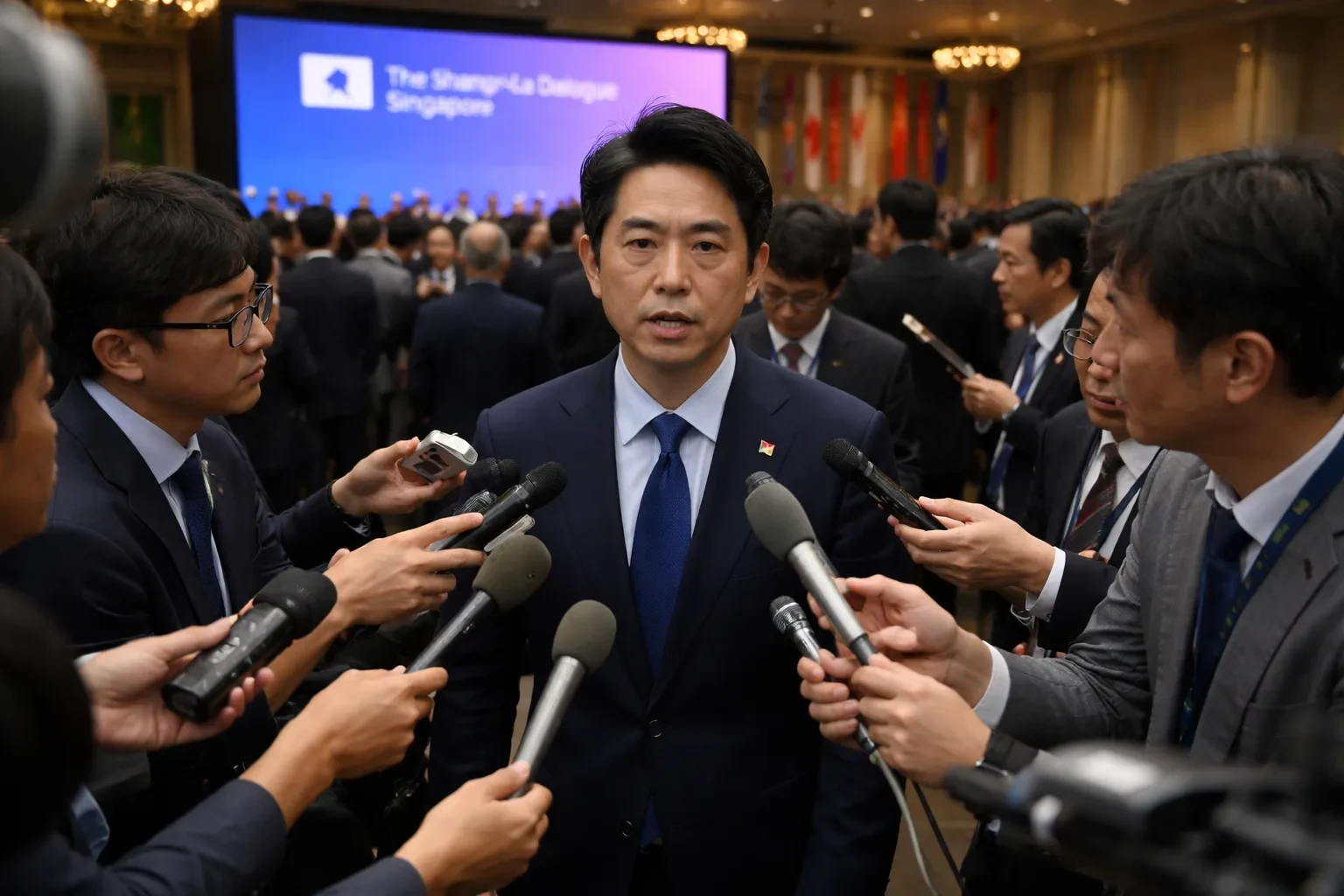
During the final day of the Shangri-la Dialogue defense summit in Singapore, Japanese Defence Minister Shinjiro Koizumi forcefully rebutted accusations from Beijing that Japan is engaging in "new militarism." Koizumi framed Japan's military expansion as a necessary and transparent evolution to meet modern security challenges, while simultaneously criticizing China's own rapid military buildup and lack of public disclosure regarding its strategic capabilities.
What's new in this update
The remarks served as a direct counter-offensive to recent statements from China's national defence ministry spokesperson Jiang Bin, who warned that a "remilitarised Japan is gathering speed." Koizumi pointed out the disparity in military hardware between the two nations, noting that Japan lacks the nuclear weapons and strategic bombers that China currently maintains, making the label of "militarism" ill-suited for Tokyo.
Key details
Japan’s military posture has shifted significantly under Prime Minister Sanae Takaichi, with the latest budget reaching more than 9 trillion yen ($57 billion). This funding is directed toward new surface-to-ship missiles and unmanned land and underwater drones. Additionally, Japan has recently relaxed its regulations on the sale of lethal weapons, a move intended to strengthen its domestic defense industrial base while maintaining what Koizumi described as a "high degree of transparency."
Background and context
Tensions between Japan and China are deeply rooted in Japan's invasion of China during World War II. For 75 years, Japan maintained a pacifist stance, but rising regional threats have prompted a re-evaluation of its defense limits. While Chinese officials have demanded further apologies for wartime atrocities, Japanese leaders like Koizumi emphasize that their current military trajectory is focused solely on deterrence and contributing to regional stability.
What to watch next
As Japan moves closer to its target of spending 2% of its GDP on the military, observers will monitor how Tokyo balances its defense buildup with diplomatic efforts. Koizumi stated that "Japan's door is always open" for communication with Beijing, suggesting that despite the sharp rhetoric, Tokyo seeks to maintain a dialogue to prevent accidental escalation in the Asia-Pacific region.
Why this matters
The exchange underscores the deepening rift between Tokyo and Beijing as Japan shifts away from decades of pacifist constraints in response to regional security challenges.
Reader context
This story belongs to Northstar Herald's International Relations coverage, with related entities including Japan, China, Shinjiro Koizumi, Shangri-la Dialogue. The report is based on BBC World News source material.
Related coverage
Why it matters
The exchange underscores the deepening rift between Tokyo and Beijing as Japan shifts away from decades of pacifist constraints in response to regional security challenges.
Read next
Follow this story through the topic hub, more world coverage, and the latest updates.
Weekly briefing
Get the week's key developments in one concise email.
Get a fast catch-up on the biggest stories, the context behind them, and the links worth your time.
Cadence
Weekly, for a quick catch-up
Coverage
AI, business, world, security, sports
Format
Clear takeaways and useful context
Request the briefing
Leave your email to open a prepared request and get on the list for the weekly briefing.
Author

The world desk follows geopolitics, humanitarian crises, diplomacy, and major international developments with an emphasis on fast updates and public-interest context.
Sources and methodology