Iran Evaluates 14-Point US Proposal Amid Trump's Predictions of a
Tehran is reviewing a one-page memorandum of understanding while President Trump warns of intensified strikes if a deal is not reached.

World correspondent
Reports on international affairs, diplomacy, and humanitarian developments with an emphasis on official statements, multilateral institutions, and regional context.
Editorial responsibility: Lead reviewer for geopolitics, international institutions, and crisis coverage
Primary source: BBC World News. Full source links and update notes are below.
Fast summary
Start here
- Iran is currently reviewing a 14-point US proposal mediated by Pakistan to end the current conflict.
- The memorandum reportedly includes provisions for suspending nuclear enrichment and lifting economic sanctions.
- President Trump has threatened to escalate bombing campaigns to a 'much higher level' if negotiations fail.
What happened
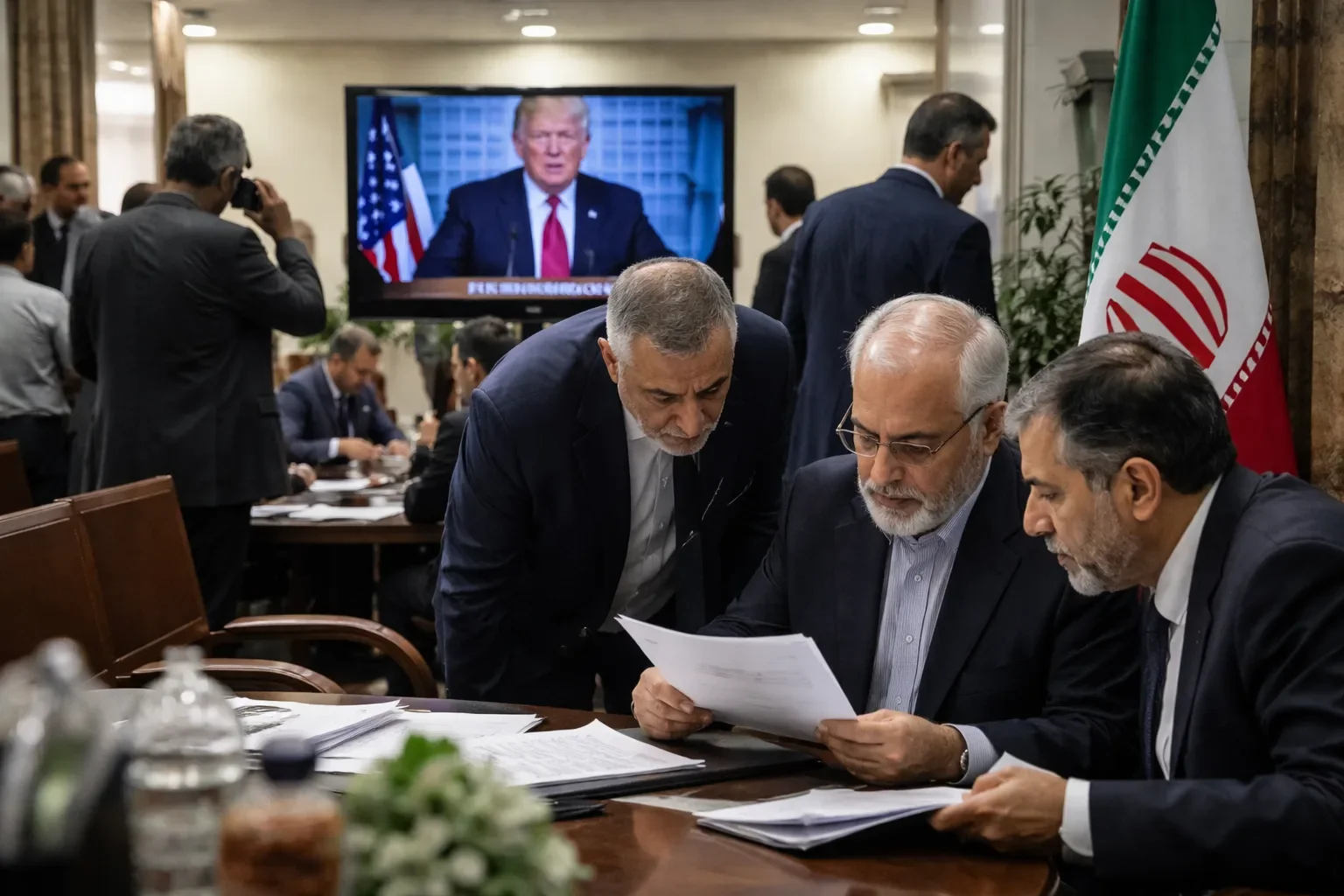
Iran says it is reviewing a 14-point U.S. proposal intended to end the current war and create a pathway back toward nuclear and regional de-escalation. The review comes as President Donald Trump publicly predicts the conflict will end quickly, while also warning that American bombing could intensify if Tehran rejects the terms. That combination of optimism and threat captures the real shape of the moment: diplomacy is active, but it is being conducted under open coercive pressure.
The proposal reportedly includes familiar core trade-offs, including constraints on Iranian nuclear enrichment and some form of sanctions relief, along with provisions meant to stabilize maritime traffic and wider regional security. Even without the full text, the structure is clear enough. Washington wants a broad de-escalation framework that rolls military pressure into nuclear leverage. Tehran is weighing whether the offer is serious diplomacy or merely a pause before renewed coercion.
Why the 14-point proposal matters
The fact that a formal U.S. proposal exists is important in itself because it suggests the conflict has reached the stage where both sides see some value in a written framework, not just indirect messaging. A one-page memorandum may sound modest, but it can function as a political map of priorities: what Washington wants first, what Tehran may be expected to concede, and how quickly either side believes a ceasefire could be converted into a broader arrangement.
That matters especially in a crisis involving nuclear diplomacy. In these settings, even a partial written outline can become the baseline against which escalation or compromise is judged.
Trump's dual message
Trump's rhetoric combines two impulses that often define his foreign policy style. On one hand, he wants to project confidence that a deal is close and that his pressure tactics are working. On the other, he wants to preserve maximum leverage by reminding Iran that refusal could mean heavier strikes. This creates a volatile negotiating environment. The White House can describe momentum toward peace while simultaneously increasing the perceived cost of delay.
For Iran, that creates a trust problem. Tehran may believe that negotiating under public threat weakens its position domestically and regionally, even if some of the terms are attractive.
Iran's internal split
Tehran's public posture already shows signs of internal tension. Officials such as foreign ministry spokespersons may speak in cautious diplomatic language, while parliamentary or security figures dismiss the proposal as unrealistic or insulting. That split is common in Iranian crisis diplomacy. It allows the state to preserve room for negotiation without signaling weakness too early.
It also means that the final Iranian response will depend not only on the text of the U.S. offer, but on whether Iranian decision-makers believe it can be sold internally as a reciprocal agreement rather than a dictated settlement.
Pakistan's role as mediator
Pakistan's emergence as the central intermediary is another important detail. Mediation through a third party allows both Washington and Tehran to communicate without the political cost of visibly direct engagement at every stage. It also gives each side a channel for clarification, sequencing, and deniability. In a conflict this tense, a mediator can be useful not just for relaying terms, but for testing how much flexibility actually exists behind public statements.
That said, mediation cannot solve the core problem if the underlying positions remain too far apart on enrichment, sanctions, and military posture.
The wider stakes
This is not only about ending a specific round of war. It is also about whether the United States and Iran can prevent direct military confrontation from hardening into a more permanent regional crisis. The Strait of Hormuz, oil prices, shipping security, and nuclear proliferation all sit in the background. That is why market observers and allied governments are watching so closely.
If the proposal fails, the likely result is not a simple return to the status quo. It could mean broader strikes, tighter sanctions, and deeper instability across the Gulf.
What comes next
The next decisive moment is Iran's formal response through Pakistani channels. If Tehran signals that the proposal is a workable basis for negotiation, the war could move toward a more structured de-escalation phase. If it rejects the document as unacceptable, Trump's threats about stronger bombing may become more than negotiating language.
For now, Iran's review of the U.S. proposal marks a critical hinge point. The 14-point framework may be imperfect, coercive, and politically fragile, but it is still the clearest available route away from a direct U.S.-Iran confrontation. That is why this stage matters so much: it will help determine whether diplomacy can still outrun escalation.
Why it matters
This development marks a critical shift toward potential de-escalation in a direct military conflict between two heavily armed powers, with global energy markets and nuclear proliferation at stake.
Read next
Follow this story through the topic hub, more world coverage, and the latest updates.
Weekly briefing
Get the week's key developments in one concise email.
Get a fast catch-up on the biggest stories, the context behind them, and the links worth your time.
Cadence
Weekly, for a quick catch-up
Coverage
AI, business, world, security, sports
Format
Clear takeaways and useful context
Request the briefing
Leave your email to open a prepared request and get on the list for the weekly briefing.
About the byline
World correspondent
Leila Haddad covers world affairs, diplomacy, and humanitarian crises, with a focus on how fast-moving international developments affect public policy, conflict response, and cross-border institutions.
Sources and methodology