MV Hondius En Route to Canary Islands Following Hantavirus Medical
Two passengers are in serious condition in the Netherlands after being removed from the vessel. The outbreak, involving the rare Andes strain, has already

World correspondent
Reports on international affairs, diplomacy, and humanitarian developments with an emphasis on official statements, multilateral institutions, and regional context.
Editorial responsibility: Lead reviewer for geopolitics, international institutions, and crisis coverage
Primary source: BBC World News. Full source links and update notes are below.
Fast summary
Start here
- Three individuals-British, Dutch, and German-were evacuated from the ship while it was anchored near Cape Verde.
- Health authorities have identified eight total cases, consisting of three confirmed and five suspected hantavirus infections.
- A KLM flight attendant has been hospitalized with symptoms after contact with a passenger who disembarked and later died.
What happened
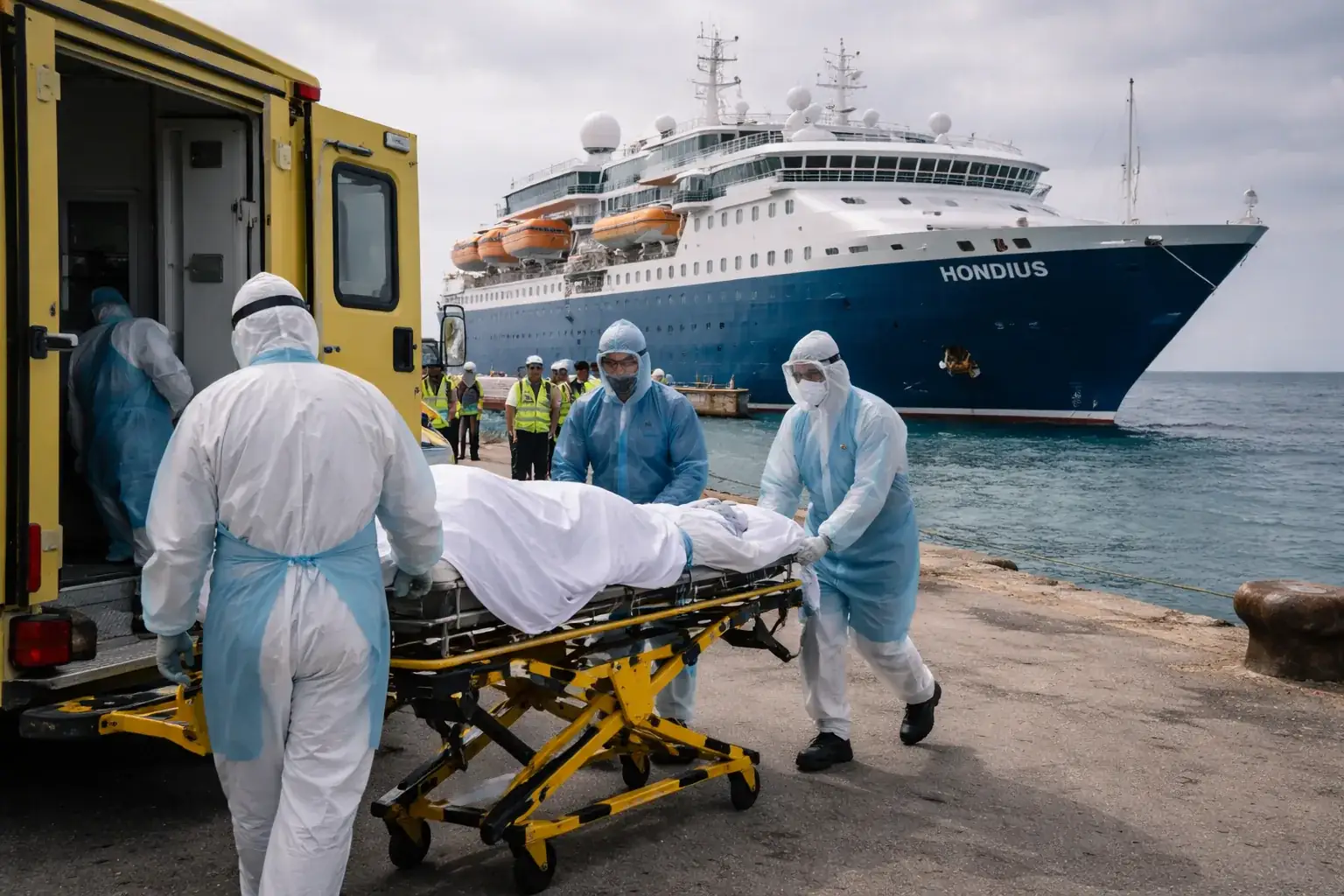
The cruise ship MV Hondius is sailing toward the Canary Islands after three medical evacuations linked to a hantavirus outbreak that has already been associated with multiple deaths. Health authorities say the ship is connected to several confirmed or suspected cases involving the Andes strain of hantavirus, a form that is especially concerning because it has documented potential for human-to-human transmission. That feature makes the outbreak more alarming than a routine onboard illness cluster and has triggered monitoring across countries, airlines, and public health agencies.
This matters because cruise outbreaks usually prompt concerns about containment in a closed travel environment. In this case, the concern extends further: passengers have disembarked across multiple jurisdictions, one airline employee has developed symptoms after exposure, and the disease involved is rare enough to create uncertainty even as case tracing expands.
Why the Andes strain changes the story
Most hantavirus discussions involve rodent exposure and do not automatically imply sustained person-to-person spread. The Andes strain is different. It is one of the few hantavirus strains known to be capable of human transmission under some conditions. That distinction is crucial. It means health officials cannot treat the ship solely as the site of a common-source exposure event. They must also consider secondary transmission between passengers, crew, caregivers, or transport workers.
That is why the mention of the Andes strain immediately raises the stakes for the MV Hondius case.
A cruise ship is a difficult setting for outbreak control
Cruise ships create exactly the kind of containment challenge public health agencies worry about: shared ventilation zones, close quarters, repeated social contact, and multi-country passenger movement once disembarkation begins. Even when the number of cases is relatively small, the operational complexity is high. Once suspected cases are flown, evacuated, or transferred through different systems, contact tracing becomes harder and the risk of delayed identification rises.
The MV Hondius outbreak illustrates that dynamic clearly. The problem is no longer confined to the deck plan of one ship.
Why the medical evacuations matter
The evacuation of sick passengers indicates that onboard capacity was not sufficient for the severity of the illnesses involved. Two evacuees reportedly arrived in serious condition in the Netherlands, while a third was left awaiting delayed onward transport. Serious condition in infectious disease incidents often alters the political and medical response because it raises questions about early detection, onboard preparedness, and whether the operator acted quickly enough.
It also increases media and government attention, especially once fatalities are already linked to the voyage.
International spillover and monitoring
The reported hospitalization of a KLM flight attendant after contact with a passenger who later died shows how quickly such an incident can move from a shipboard problem to an international public health story. Once air travel, airport transfers, and cross-border care are involved, outbreak response requires coordination among multiple governments and institutions. That is especially true when some cases remain suspected rather than fully confirmed.
The World Health Organization and national agencies will therefore be focused not just on those still aboard, but on the wider web of contacts already created by the voyage.
What comes next
The immediate priorities are diagnosis, isolation where needed, and aggressive contact tracing across passengers, crew, healthcare workers, and recent travel links. Officials will also need to determine whether the outbreak originated through common exposure earlier in the journey, through limited onboard transmission, or through a combination of both. The answer will shape how serious the wider public health risk becomes.
For now, the MV Hondius hantavirus outbreak remains concerning because of the Andes strain, the deaths already linked to the voyage, and the possibility that the chain of exposure now extends beyond the ship itself. The cruise industry is familiar with outbreaks, but not all outbreaks are equal. This one has become a multi-country infectious disease alert with rare and worrying characteristics, and that is why the Canary Islands leg of the voyage is being watched so closely.
Why it matters
The outbreak involves the Andes strain of hantavirus, which is particularly concerning to health officials because of its documented ability to spread between humans.
Read next
Follow this story through the topic hub, more world coverage, and the latest updates.
Weekly briefing
Get the week's key developments in one concise email.
Get a fast catch-up on the biggest stories, the context behind them, and the links worth your time.
Cadence
Weekly, for a quick catch-up
Coverage
AI, business, world, security, sports
Format
Clear takeaways and useful context
Request the briefing
Leave your email to open a prepared request and get on the list for the weekly briefing.
About the byline
World correspondent
Leila Haddad covers world affairs, diplomacy, and humanitarian crises, with a focus on how fast-moving international developments affect public policy, conflict response, and cross-border institutions.
Sources and methodology