Ghana's President Signals Legal Review for New Anti-LGBTQ+ Legislation
President John Mahama states his legal team and the Council of State will review the private members' bill following its passage in parliament.
Primary source: BBC World News. Full source links, newsroom standards, and correction details are below.
Fast summary
Start here
- The bill proposes up to three years in prison for identifying as LGBTQ+ and mandates reporting of prohibited acts to the police.
- President Mahama clarified the bill is a private members' motion, not a government-sponsored bill, requiring thorough vetting by his legal counsel.
- The current version includes exemptions for healthcare and media professionals, though 'allies' of LGBTQ+ people still face potential imprisonment.
What happened
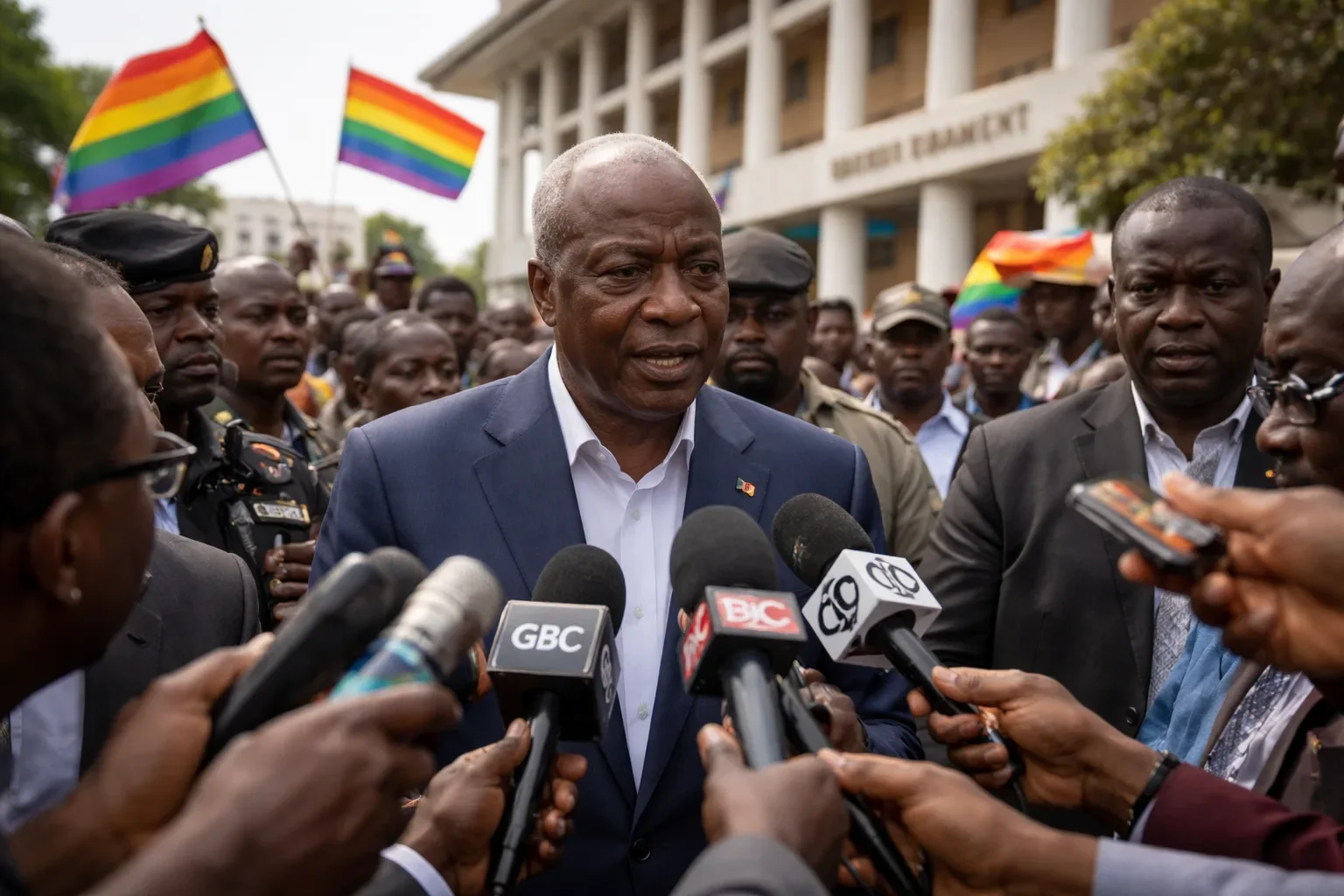
Ghanaian President John Mahama announced that the recently passed anti-LGBTQ+ bill will undergo extensive legal scrutiny before he decides whether to sign it into law. Speaking during a visit to the UK, Mahama noted that because the legislation was a private members' motion rather than a government-sponsored bill, it must be referred to his legal counsel and the Attorney General to ensure constitutional compliance.
What's new in this update
The President identified specific 'procedural lapses' in the bill's passage that are currently being addressed by the Speaker of Parliament. Mahama indicated that if problems are identified during the legal review, the bill would be referred to the Council of State, his senior advisory body. This measured approach comes as Mahama faces significant pressure from religious leaders in Ghana to enact stricter anti-gay measures.
Key details
The legislation criminalizes identifying as lesbian, gay, bisexual, transgender, or queer with sentences of up to three years. It also imposes a 'duty to report' prohibited acts to the authorities. Notably, the current version exempts legal, healthcare, and media professionals from punishment for providing services or reporting on LGBTQ+ news—an amendment that minority party members claim has 'watered down' the bill's intended deterrence.
Background and context
This is the second time Ghana's parliament has backed such a bill. A previous version introduced in 2021 was never signed by Mahama's predecessor, Nana Akufo-Addo, who cited pending Supreme Court challenges. The move follows a regional trend of tightening restrictions on sexual minorities, with countries like Uganda and Senegal recently passing their own versions of highly restrictive legislation.
What to watch next
The bill's fate now depends on the findings of the Attorney General and the Council of State. Human rights organizations, including Human Rights Watch, continue to advocate for the bill to be abandoned, while the Ghanaian Supreme Court may still play a role if the legislation is challenged on constitutional grounds once the executive review is complete.
Why this matters
The bill's progression highlights a growing trend of restrictive LGBTQ+ legislation in Africa and tests Ghana's commitment to international human rights standards.
Reader context
This story belongs to Northstar Herald's Human Rights coverage, with related entities including Ghana, LGBTQ+ Rights, John Mahama, Legislation. The report is based on BBC World News source material.
Related coverage
Why it matters
The bill's progression highlights a growing trend of restrictive LGBTQ+ legislation in Africa and tests Ghana's commitment to international human rights standards.
Read next
Follow this story through the topic hub, more world coverage, and the latest updates.
Weekly briefing
Get the week's key developments in one concise email.
Get a fast catch-up on the biggest stories, the context behind them, and the links worth your time.
Cadence
Weekly, for a quick catch-up
Coverage
AI, business, world, security, sports
Format
Clear takeaways and useful context
Request the briefing
Leave your email to open a prepared request and get on the list for the weekly briefing.
Author

The world desk follows geopolitics, humanitarian crises, diplomacy, and major international developments with an emphasis on fast updates and public-interest context.
Sources and methodology