Activists Deported From Israel Allege Systematic Abuse and Sexual Violence
Following the interception of a Gaza-bound aid flotilla, returning activists and foreign governments report injuries and 'appalling' treatment in detention.
Primary source: BBC World News. Full source links and update notes are below.
Fast summary
Start here
- Over 400 activists were deported after Israeli forces intercepted the Global Sumud Flotilla in international waters.
- Officials from Canada, Germany, and Spain have expressed grave concern over documented injuries and 'appalling' abuse of their citizens.
- Israel's prison service has dismissed all allegations of mistreatment as false and legally baseless.
What happened
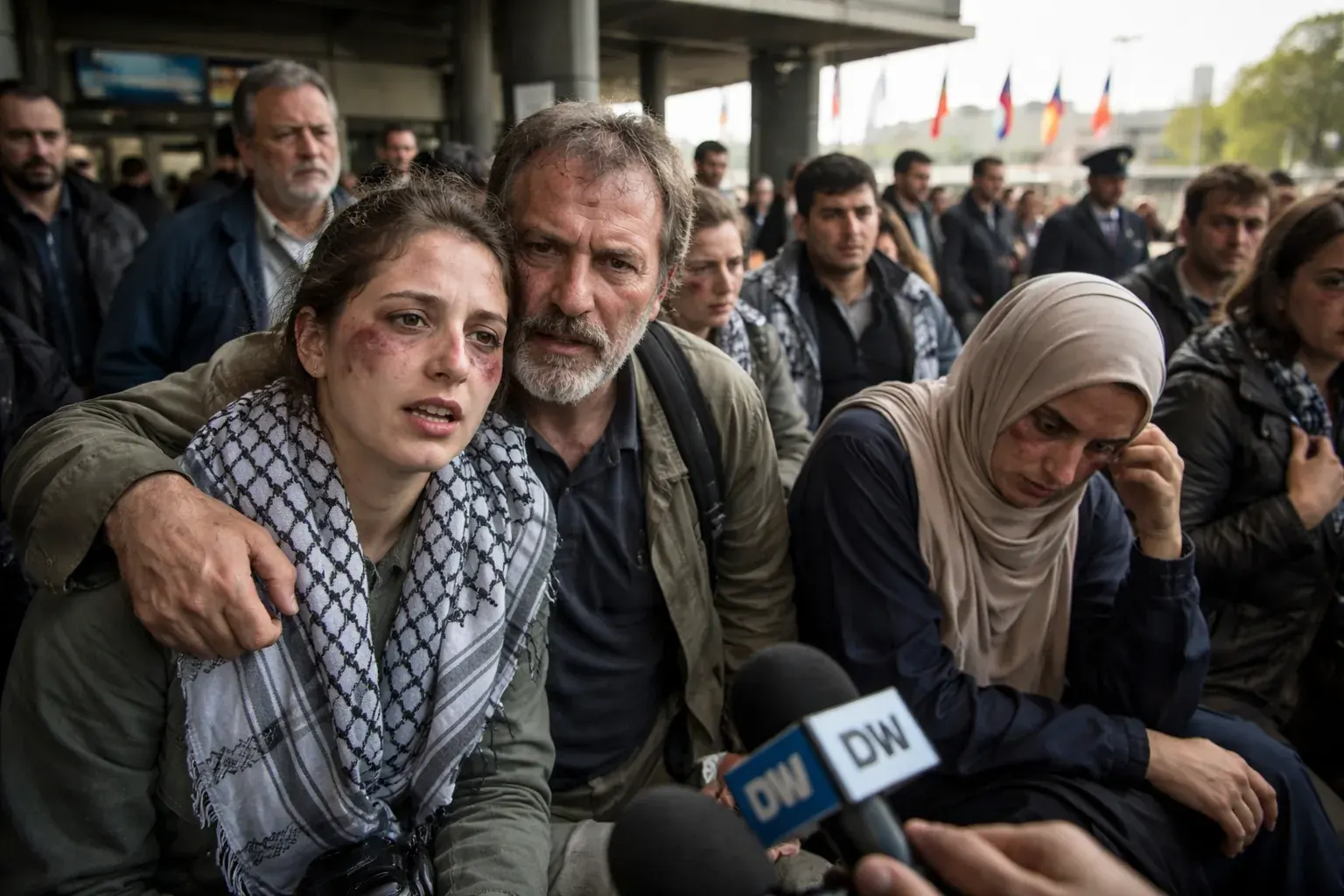
Activists who were part of the Global Sumud Flotilla (GSF) have returned to their home countries following deportation from Israel, bringing with them accounts of severe physical and sexual abuse. The flotilla, consisting of over 50 boats carrying food and medical aid, was intercepted by Israeli commandos on Monday and Tuesday. Following their arrival in ports like Rome, Istanbul, and Paris, dozens of activists from various nations have alleged they were mistreated while held in Israeli custody.
What's new in this update
Several national governments have now weighed in on the allegations. Canadian Foreign Minister Anita Anand stated she received information detailing the 'appalling abuse' of Canadian citizens and called for accountability. Similarly, the foreign ministries of Germany and Spain confirmed that a number of their nationals returned with injuries requiring medical treatment. These diplomatic reactions add a layer of state-level validation to the personal testimonies being shared by the 422 deported individuals.
Key details
Organizers of the flotilla claim there were at least 15 cases of sexual assault, including rape, along with reports of activists being shot with rubber bullets at close range and suffering broken bones. Individual testimonies include French activist Meriem Hadjal, who reported being subjected to groping and physical violence, and Italian journalist Alessandro Mantovani, who alleged he was beaten by Israeli forces. Israel's prison service has issued a categorical denial, maintaining that all detainees were held in accordance with the law.
Background and context
The Global Sumud Flotilla set sail from Turkey last week with the intent to break Israel’s maritime blockade of Gaza. Israel has long maintained the blockade is necessary to prevent arms from reaching Hamas, and government officials dismissed the flotilla as a 'PR stunt.' The interception took place in international waters west of Cyprus, after which the activists were taken to the port of Ashdod and subsequently transferred to a prison facility before their mass deportation on Thursday.
What to watch next
International pressure is likely to mount as more activists share their testimonies. Watch for whether Canada, Germany, or Spain formalize demands for an independent investigation into the detention conditions. Additionally, the Israeli military's response to specific allegations of violence during the boarding process remains pending, which may clarify the chain of events that led to the reported injuries.
Why it matters
The reported treatment of international activists could lead to increased diplomatic pressure on Israel and raises significant human rights concerns regarding detention practices.
Read next
Follow this story through the topic hub, more world coverage, and the latest updates.
Weekly briefing
Get the week's key developments in one concise email.
Get a fast catch-up on the biggest stories, the context behind them, and the links worth your time.
Cadence
Weekly, for a quick catch-up
Coverage
AI, business, world, security, sports
Format
Clear takeaways and useful context
Request the briefing
Leave your email to open a prepared request and get on the list for the weekly briefing.
Author
See who assembled this story and follow more of their work.
Sources and methodology