France Intercepts Sanctioned Russian 'Shadow Fleet' Tanker With UK Support
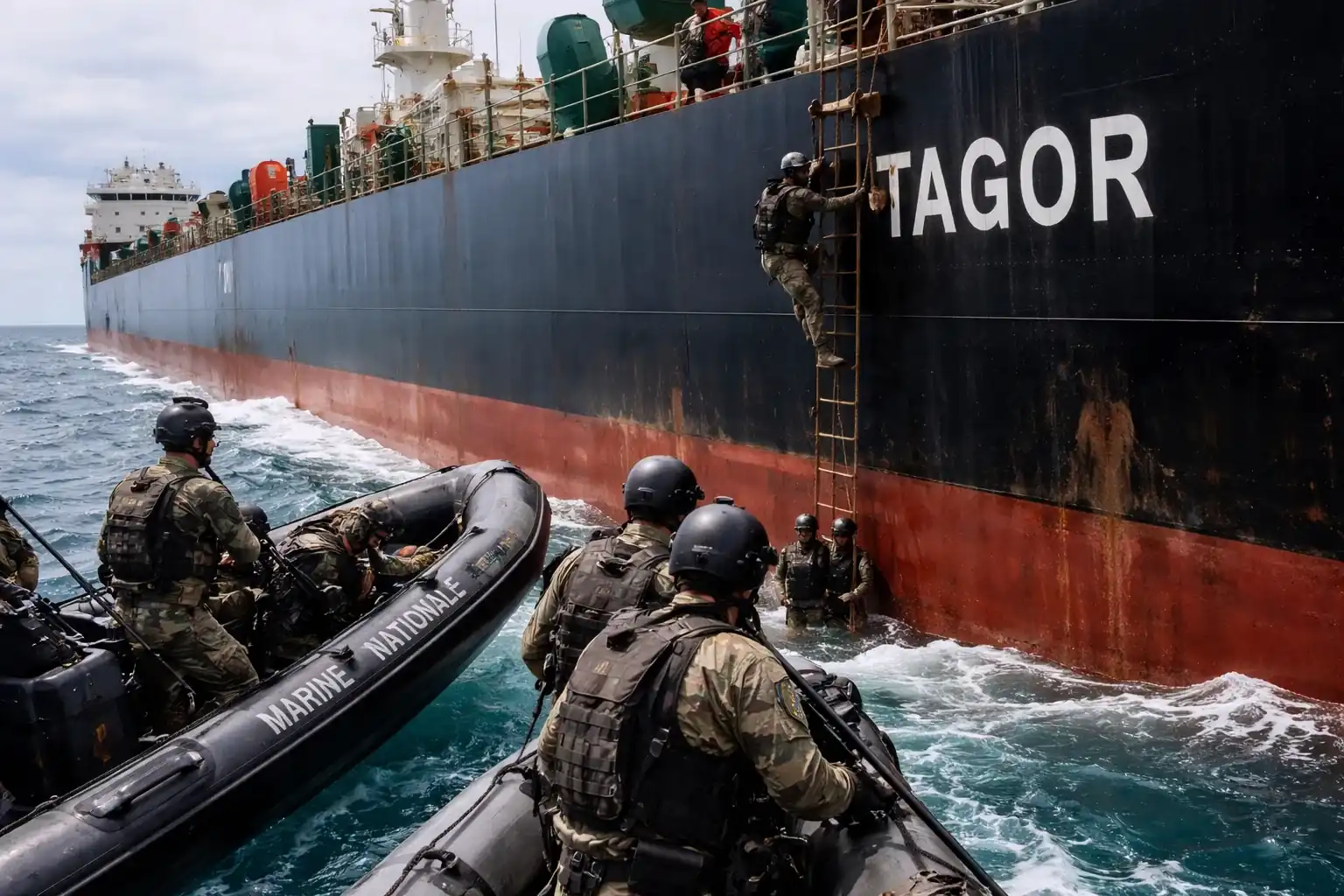
President Emmanuel Macron announced the seizure of the Tagor, a vessel flying a false flag to circumvent international sanctions.
Primary source: BBC World News. Full source links, newsroom standards, and correction details are below.
Fast summary
Start here
- French Navy personnel boarded the Tagor approximately 400 nautical miles west of Brittany in international waters.
- The vessel was allegedly part of Russia's 'shadow fleet' and was operating under a false flag to evade oil export sanctions.
- The Kremlin condemned the seizure as 'international piracy' and vowed to take measures to ensure cargo safety.
What happened
French authorities intercepted and boarded the Russian-linked oil tanker Tagor in the Atlantic Ocean on Sunday. The operation, conducted with UK intelligence and support, took place roughly 400 nautical miles west of Brittany. President Emmanuel Macron confirmed the boarding was carried out by naval personnel deployed via helicopter while the ship was in international waters.
What's new in this update
This seizure represents the fourth time the French Navy has boarded a sanctioned vessel since September 2025. Unlike previous incidents where French authorities allowed ships to continue after paying fines, they have now committed to blocking these vessels. President Macron stated the Tagor was flying a false flag, which he described as an unacceptable violation of the law of the sea used to fund the invasion of Ukraine.
Key details
The Tagor is identified as part of the 'shadow fleet'—a network of vessels with obscure ownership structures used by Moscow to bypass international oil sanctions. French officials noted that such ships often fail to adhere to basic maritime navigation rules, posing significant environmental and safety threats. In response to the boarding, Kremlin spokesman Dmitry Peskov labeled the move 'illegal' and claimed it bordered on international piracy.
Background and context
The UK and France have recently ramped up maritime enforcement against Russian exports. In March, UK Prime Minister Sir Keir Starmer granted permission for the British military to board sanctioned ships. However, data from BBC Verify suggests that despite these threats, nearly 200 shadow fleet vessels have entered UK waters since mid-March, highlighting the ongoing difficulty of containing these maritime operations.
What to watch next
The detention of the Tagor may lead to further legal and diplomatic confrontations between Russia and Western allies. Observers are monitoring whether the UK will follow France's lead with its own active interceptions in British waters and how Russia intends to carry out its promised 'measures to ensure the safety' of its sanctioned cargo in transit.
Why this matters
The seizure marks an escalation in Western efforts to physically disrupt the maritime networks Russia uses to fund its war effort. It signals closer military cooperation between France and the UK in enforcing oil sanctions.
Reader context
This story belongs to Northstar Herald's International Relations and Russia-Ukraine War coverage, with related entities including Shadow Fleet, Sanctions, Oil Industry, French Navy. The report is based on BBC World News source material.
Related coverage
Why it matters
The seizure marks an escalation in Western efforts to physically disrupt the maritime networks Russia uses to fund its war effort. It signals closer military cooperation between France and the UK in enforcing oil sanctions.
Read next
Follow this story through the topic hub, more world coverage, and the latest updates.
Weekly briefing
Get the week's key developments in one concise email.
Get a fast catch-up on the biggest stories, the context behind them, and the links worth your time.
Cadence
Weekly, for a quick catch-up
Coverage
AI, business, world, security, sports
Format
Clear takeaways and useful context
Request the briefing
Leave your email to open a prepared request and get on the list for the weekly briefing.
Author

The world desk follows geopolitics, humanitarian crises, diplomacy, and major international developments with an emphasis on fast updates and public-interest context.
Sources and methodology