Six Confirmed Dead in Antwerp Residential Tower Blaze
A technical fault on the ground floor is suspected of triggering a deadly fire that trapped residents on balconies and forced mass evacuations in the

World correspondent
Reports on international affairs, diplomacy, and humanitarian developments with an emphasis on official statements, multilateral institutions, and regional context.
Editorial responsibility: Lead reviewer for geopolitics, international institutions, and crisis coverage
Primary source: BBC World News. Full source links and update notes are below.
Fast summary
Start here
- At least six fatalities have been confirmed after a fire broke out in a 10-storey apartment building in Antwerp.
- More than 80 flats were evacuated and over 200 residents were affected by the blaze and thick smoke.
- Preliminary police reports suggest the fire was caused by a technical problem originating on the ground floor.
What happened
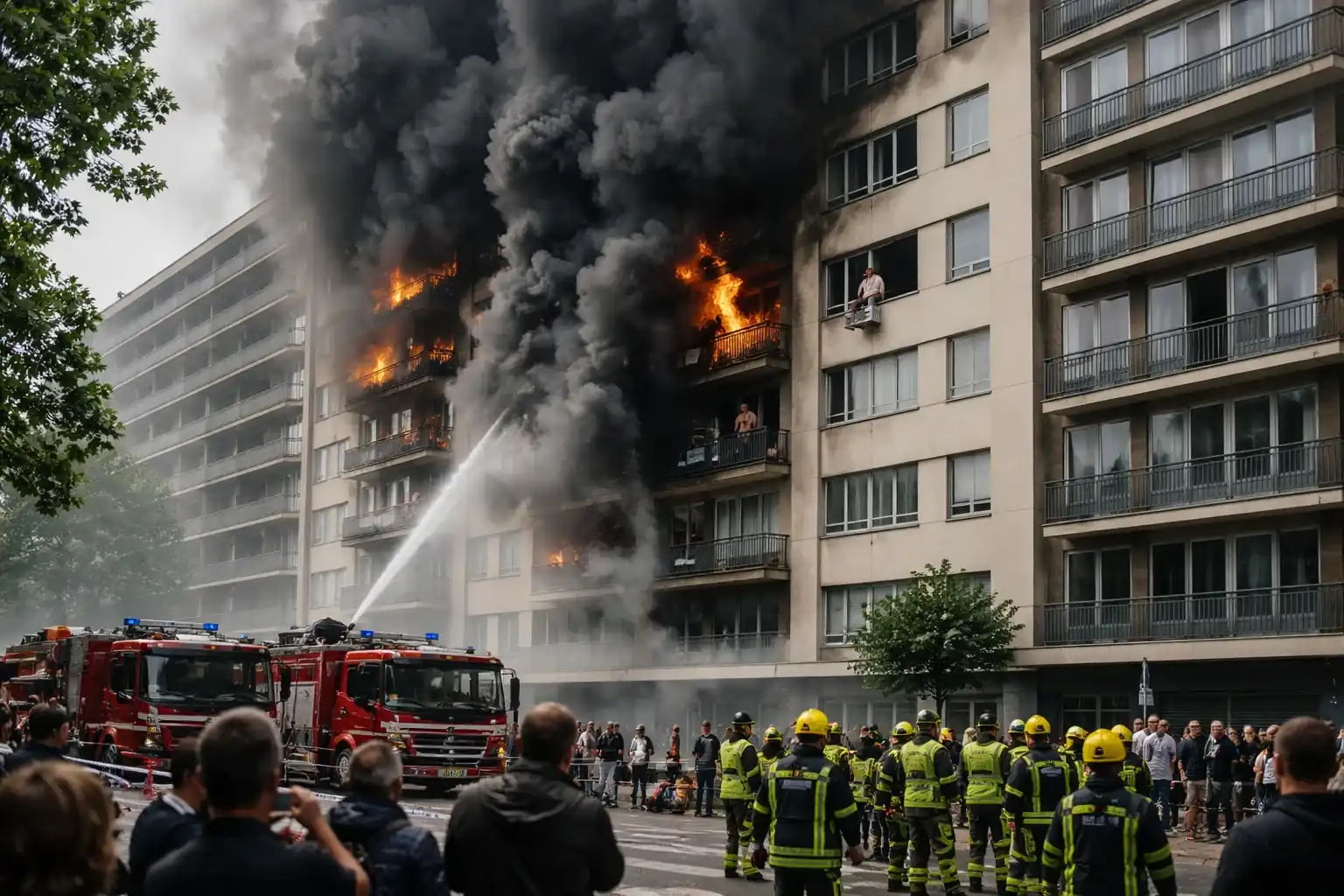
A devastating fire broke out on Wednesday morning in a 10-storey block of flats located in the Linkeroever district of Antwerp, Belgium. The blaze, which began shortly before 10:00 local time, resulted in the deaths of at least six individuals. Witnesses described a terrifying scene as thick, black smoke billowed from the upper floors, specifically concentrated around the eighth, ninth, and tenth levels. Emergency services responded with a massive presence, deploying ladder trucks to rescue residents who had been forced onto their balconies. Police have confirmed that approximately 80 flats within the building were evacuated as firefighters worked to contain the flames and search for survivors. The rapid accumulation of smoke throughout the stairwells made standard evacuation routes impassable for many of the building's 200 registered residents.
What's new in this update
By mid-afternoon on Wednesday, Antwerp police spokeswoman Kim Bastiaens confirmed that the fire was nearly under control, though the human cost has been significant. Beyond the six confirmed deaths, several other residents are being treated for a range of serious and minor injuries at local hospitals. In a somber response to the tragedy, the Flemish parliament opened its afternoon session with a minute of silence to honor the victims. Belgian Prime Minister Bart De Wever issued a formal statement expressing his condolences to those affected by the 'terrible fire' and thanking first responders for their efforts in a highly complex environment. Search teams continue to conduct a room-by-room sweep of the building to ensure no other victims remain trapped in the heavily damaged upper floors.
Key details
Survival stories have emerged from the chaos, including dramatic footage of a man climbing from his balcony into a neighbor’s window to escape the encroaching smoke. Resident Geert Dewulf told reporters that he and his family were forced to barricade themselves in their flat and wait on the balcony for ten minutes until a fire brigade ladder could reach them. Among those successfully evacuated were former Antwerp mayor Bob Cools and his wife, who were taken to the hospital as a precautionary measure. Fire officials noted that the technical difficulty of the operation was compounded by the speed at which the black smoke moved through the structure. While many residents were saved, some personal tragedies were recorded, including a family who was unable to rescue their pet during the urgent scramble to reach safety.
Background and context
The Linkeroever district is a residential area of Antwerp known for its high-rise apartment complexes and proximity to the Scheldt river. The building involved in Wednesday's fire is a 10-storey structure that houses over 200 people, typical of the high-density housing developments in the region. Antwerp fire brigade spokeswoman Marie de Clercq explained that the fire was classified as 'complex' because of the poor visibility and the way smoke funneled through the building’s layout. This specific incident has sparked immediate discussions regarding the safety of similar aging residential blocks and the reliability of technical systems on ground floors. In recent years, European fire safety regulations have tightened, yet the rapid spread of smoke in older high-rise designs remains a primary concern for urban fire departments during emergency response scenarios.
What to watch next
The focus of the investigation now turns to the exact nature of the technical fault on the ground floor that is believed to have sparked the disaster. Forensic teams will analyze the building's electrical and mechanical systems to determine how the fire began and why the smoke reached the upper floors so quickly. Displaced residents from the 80 evacuated flats will require temporary housing, and city officials are expected to provide updates on relocation efforts in the coming days. Additionally, a full report from the Antwerp fire brigade will likely be released to assess the building's compliance with modern safety standards. The health status of those currently hospitalized with serious smoke inhalation will also be closely monitored by local authorities as the community begins the long process of recovery.
Why it matters
This incident represents one of the deadliest residential fires in recent Belgian history, highlighting the critical risks of rapid smoke spread in high-density urban housing blocks.
Read next
Follow this story through the topic hub, more world coverage, and the latest updates.
Weekly briefing
Get the week's key developments in one concise email.
Get a fast catch-up on the biggest stories, the context behind them, and the links worth your time.
Cadence
Weekly, for a quick catch-up
Coverage
AI, business, world, security, sports
Format
Clear takeaways and useful context
Request the briefing
Leave your email to open a prepared request and get on the list for the weekly briefing.
About the byline
World correspondent
Leila Haddad covers world affairs, diplomacy, and humanitarian crises, with a focus on how fast-moving international developments affect public policy, conflict response, and cross-border institutions.
Sources and methodology