Everest Guide's Survival Triggers Negligence Investigation into Tourism Industry
Hillary Dawa Sherpa was found alive six days after disappearing on Mount Everest, prompting a government probe into labor practices and rescue protocols.
Primary source: BBC World News. Full source links, newsroom standards, and correction details are below.
Fast summary
Start here
- Hillary Dawa Sherpa survived six days in Everest's upper reaches by eating chocolate and chewing ice after being presumed dead.
- The guide's family filed a police report alleging negligence and delayed rescue efforts by Himalayan Traverse Adventure (HTA).
- Nepal's tourism department is investigating why a worker hired as a cook was assigned as a lead climbing guide for summit clients.
What happened
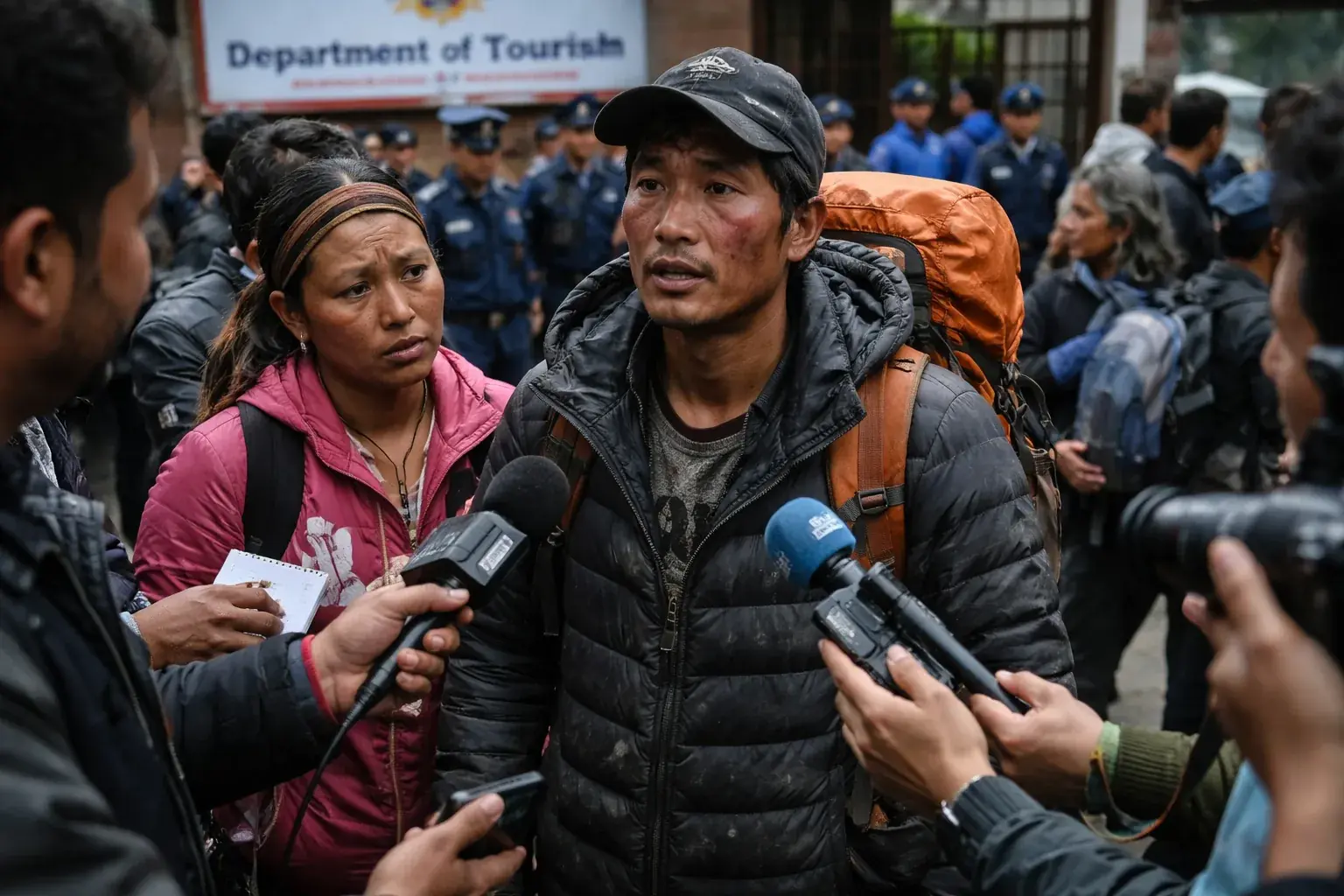
Hillary Dawa Sherpa, a 57-year-old climbing guide who was presumed dead, was discovered crawling near the foot of the Khumbu Icefall last Thursday. He had been missing for six days following a descent from the world's highest peak. A cleaning team spotted him in a blue summit suit, appearing six days after his family had already commenced funeral rites in Kathmandu. Despite severe frostbite and exhaustion, Sherpa was able to communicate with rescuers before being airlifted to a hospital.
What's new in this update
Nepal's tourism department has launched an official investigation into Himalayan Traverse Adventure (HTA), the company that employed Sherpa. The guide's family has filed a police report accusing the firm of negligence. Central to the investigation are questions regarding the timing of the search-and-rescue mission, which reportedly did not begin until three days after Sherpa was first separated from his group on the southern route.
Key details
Sherpa's survival in the 'Death Zone' was maintained by consuming small amounts of chocolate and chewing on ice. Significant controversy has emerged regarding his role; while HTA initially hired him as a camp cook, he was moved into a guide role as a substitute for a sick staff member. Industry observers are questioning whether budget-rate expedition companies are placing staff in high-risk roles without adequate support or insurance coverage typically afforded to summit guides.
Background and context
The disappearance occurred on May 29 during a descent from Camp 4 at 7,920m. Sherpa was accompanying British climber Chris Thrall and Polish climber Mariusz Chmielewski. Thrall reported that Sherpa stopped to rest around 7,500m and encouraged the rest of the group to continue. HTA manager Angfurba Sherpa stated that the assignment change was spontaneous and intended to help the worker earn extra money, while maintaining that poor weather conditions were the primary factor in the delayed search.
What to watch next
The findings of the tourism department's probe will determine if HTA faces professional sanctions or the loss of its operating license. This case is expected to fuel a larger debate within the mountaineering community regarding the disparity in rescue priority given to paying clients versus local guides, and may lead to stricter enforcement of labor roles for high-altitude expeditions.
Why it matters
The incident exposes systemic labor disparities and safety risks faced by Sherpas, potentially forcing a regulatory overhaul of Nepal’s high-altitude tourism industry.
Read next
Follow this story through the topic hub, more world coverage, and the latest updates.
Weekly briefing
Get the week's key developments in one concise email.
Get a fast catch-up on the biggest stories, the context behind them, and the links worth your time.
Cadence
Weekly, for a quick catch-up
Coverage
AI, business, world, security, sports
Format
Clear takeaways and useful context
Request the briefing
Leave your email to open a prepared request and get on the list for the weekly briefing.
Author

The Northstar Herald editorial desk assembles wire-driven and source-linked coverage, verifies core facts against published materials, and updates stories as new reporting becomes available.
Sources and methodology