Christian Eriksen Conscious and Stable After Second On-Field
The Danish midfielder's ICD responded as intended after he lost consciousness during a match in Odense. He was able to walk from the pitch before being

World correspondent
Reports on international affairs, diplomacy, and humanitarian developments with an emphasis on official statements, multilateral institutions, and regional context.
Editorial responsibility: Lead reviewer for geopolitics, international institutions, and crisis coverage
Primary source: BBC World News. Full source links and update notes are below.
Fast summary
Start here
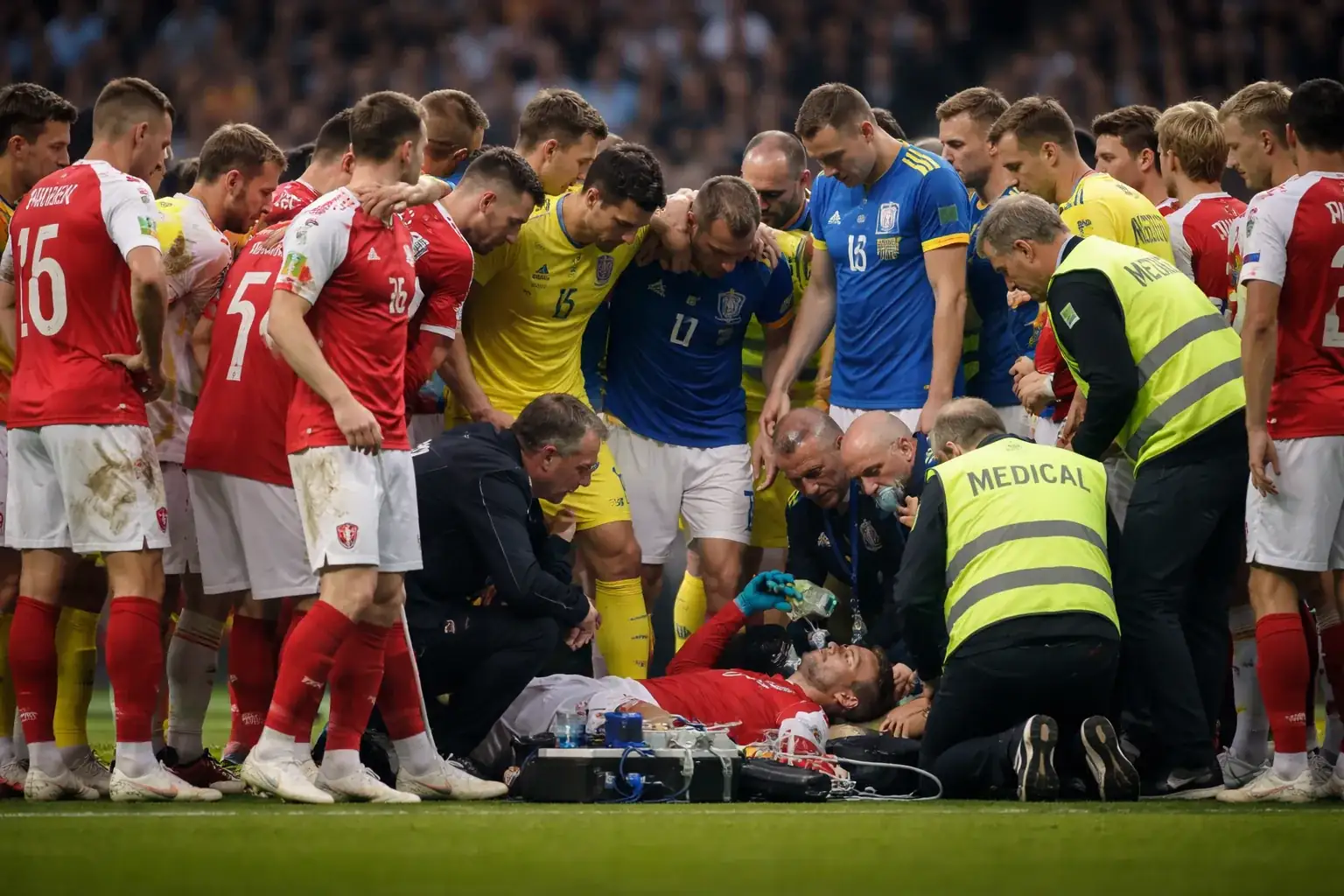
- Eriksen collapsed during the 65th minute of a friendly against Ukraine but regained consciousness quickly.
- The Danish team doctor confirmed the player's Implantable Cardioverter Defibrillator (ICD) worked as designed.
- The match was abandoned after players from both teams formed a protective ring during medical treatment.
What happened
Christian Eriksen is conscious and stable after collapsing during a Denmark friendly, with team doctors confirming that his implantable cardiac device responded as intended. The update brings immediate relief because any on-field collapse involving Eriksen inevitably recalls the terrifying cardiac emergency that reshaped his career and football's global memory of vulnerability in plain sight.
That is why the Christian Eriksen collapse story carries such emotional force. Even though he regained consciousness quickly and was able to leave the field with assistance, the event instantly raised urgent questions about his safety, his future, and the limits of elite sport for athletes living with serious heart conditions.
Why the ICD detail matters
The confirmation that Eriksen's ICD worked properly is one of the most important facts in the story. An implantable cardioverter defibrillator exists precisely to respond to dangerous cardiac episodes, and the fact that it appears to have functioned correctly suggests the protective mechanism performed its core purpose. In human terms, that is deeply reassuring.
It also matters medically and symbolically. Eriksen's return to high-level football after his earlier cardiac emergency depended on the credibility of that device and the medical protocols around it.
Why this collapse hits differently
Any player collapsing during a match is alarming, but Eriksen's history makes the moment uniquely loaded. He is one of the most visible modern examples of an athlete returning to the highest levels of the game after a life-threatening cardiac event. Because of that, every subsequent scare is interpreted through a much heavier lens than a routine injury stoppage.
This is why the update that he is conscious and stable, while essential, does not end the concern. It simply shifts the question from immediate survival to medical explanation and future risk.
The human and team response
The reaction from teammates, opponents, and staff also matters. When players form a protective ring and a match is abandoned, it reflects the seriousness of the moment and the collective instinct to protect dignity as much as safety. Football often feels commercial and relentless, but scenes like this cut through that immediately.
For Denmark, the emotional impact is especially profound. Teammates who lived through the 2021 trauma are not encountering this event in isolation. They are experiencing a renewed shock tied to an older one.
What this means for sports medicine
The Eriksen case continues to sit at the intersection of elite sport and cardiac medicine. On one hand, it demonstrates the value of monitoring, emergency preparedness, and advanced implanted devices. On the other, it forces the uncomfortable reality that even with those protections, risk does not vanish completely.
That tension matters beyond football. Sports medicine has made remarkable advances in allowing athletes with certain conditions to return, but public understanding often mistakes "cleared to play" for "free from danger." Eriksen's collapse is a reminder that those are not the same thing.
Why future-playing questions are unavoidable
Even though the immediate news is positive relative to the worst-case fear, questions about Eriksen's playing future will inevitably follow. Doctors will need to determine what triggered the collapse, whether the device needs adjustment, and whether his risk profile has changed. Those are medically technical questions, but their practical meaning is simple: can he continue safely?
That question is difficult not because Eriksen lacks courage, but because elite sport can only justify return if the underlying medical judgment remains sound.
The broader significance
This event also reminds the football world how much emergency readiness matters at every level of the sport. Quick recognition, trained staff, functioning medical equipment, and decisive interruption of play are not optional luxuries. They are what separate terrifying incidents from even worse outcomes.
In Eriksen's case, the presence of those systems appears to have mattered again.
What comes next
The next critical stage is hospital evaluation and a clearer medical explanation of what caused the collapse despite the ICD. Only after that will there be any serious basis for discussing timelines, return prospects, or possible career implications.
For now, the most important fact is that Christian Eriksen is conscious and stable after collapsing in Denmark's friendly match. That is the immediate relief. The harder questions about long-term safety, medical causation, and the future of his playing career are still ahead.
Why it matters
This event raises questions about the long-term safety of elite athletes playing with heart conditions and highlights the efficacy of modern cardiac monitoring technology.
Read next
Follow this story through the topic hub, more world coverage, and the latest updates.
Weekly briefing
Get the week's key developments in one concise email.
Get a fast catch-up on the biggest stories, the context behind them, and the links worth your time.
Cadence
Weekly, for a quick catch-up
Coverage
AI, business, world, security, sports
Format
Clear takeaways and useful context
Request the briefing
Leave your email to open a prepared request and get on the list for the weekly briefing.
About the byline
World correspondent
Leila Haddad covers world affairs, diplomacy, and humanitarian crises, with a focus on how fast-moving international developments affect public policy, conflict response, and cross-border institutions.
Sources and methodology