Deadliest Private Aviation Disaster in French History Kills Eleven
A light aircraft carrying skydivers crashed almost vertically near the Nancy-Essey airfield on Sunday, claiming the lives of the pilot and ten passengers.

World correspondent
Reports on international affairs, diplomacy, and humanitarian developments with an emphasis on official statements, multilateral institutions, and regional context.
Editorial responsibility: Lead reviewer for geopolitics, international institutions, and crisis coverage
Primary source: BBC World News. Full source links and update notes are below.
Fast summary
Start here
- Eleven people were killed, including a pilot, five skydiving instructors, and five first-time jumpers.
- The aircraft crashed in Tomblaine, narrowly missing residential homes and a local shopping center.
- A formal investigation has been launched by the Paris prosecutor to determine the cause of the vertical fall.
What happened
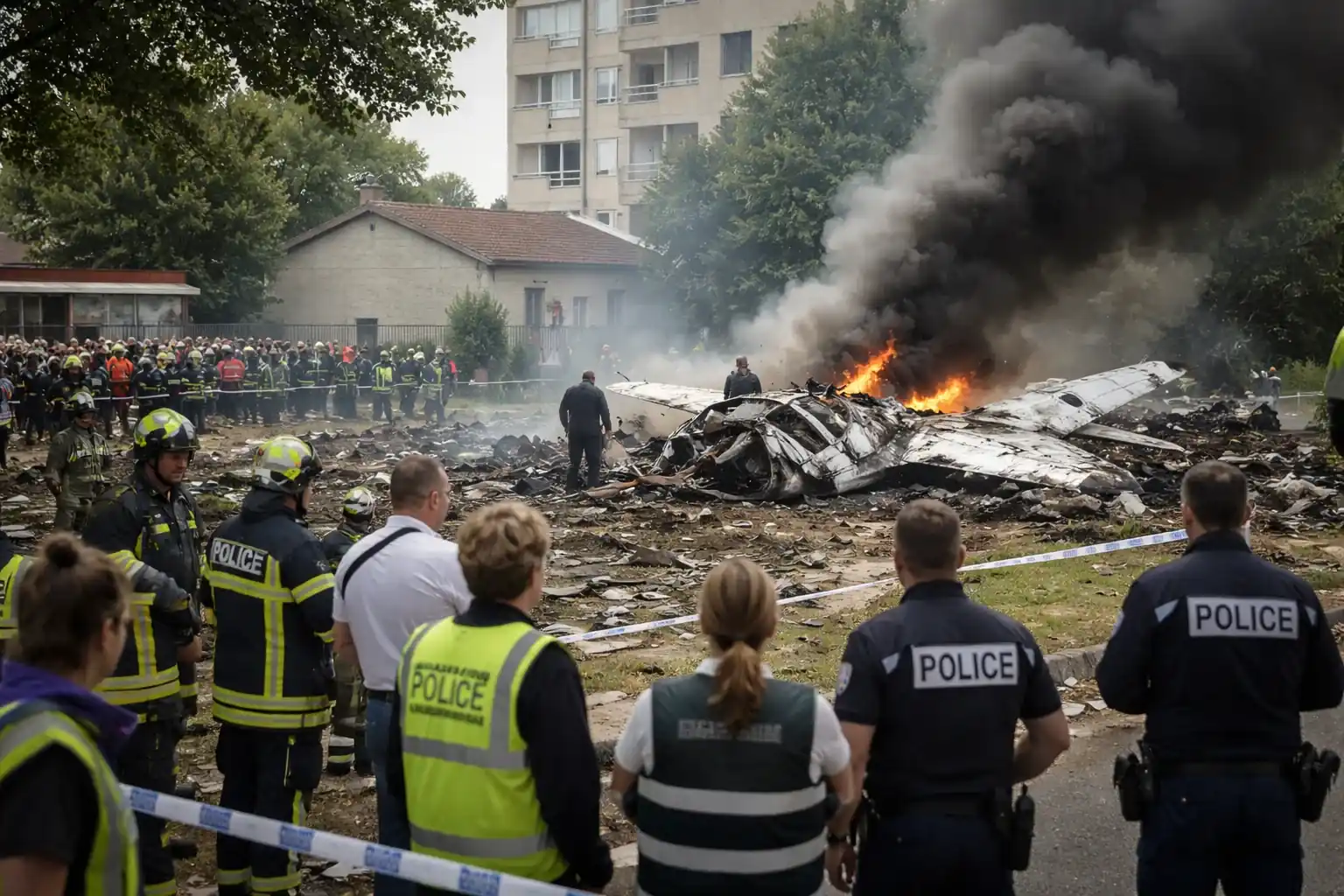
On Sunday morning, a routine skydiving excursion turned into a national tragedy in the town of Tomblaine, located in eastern France. A light civilian aircraft, operated by a local parachutist school, crashed shortly after taking off from the Nancy-Essey airfield. Local officials confirmed that all eleven individuals on board perished in the impact. The victims included the pilot and ten passengers, specifically five experienced skydiving instructors and five individuals who were preparing for their very first tandem jumps. The crash occurred around 11:00 local time, unfolding in horrific fashion before the eyes of relatives and witnesses who had gathered at the airfield to watch the jumpers descend. The sudden loss has sent shockwaves through the region, as emergency services cordoned off the wreckage site for immediate forensic analysis.
What's new in this update
As investigators begin their work, new details regarding the victims and the flight's final moments have been disclosed. Thierry Pechey, president of a local nursing organization, revealed that five of the deceased passengers were nurses. These healthcare professionals had reportedly booked the skydiving session as a way to decompress during a particularly grueling period marked by a regional heatwave. Witness accounts from the scene describe a chaotic and brief flight path; one witness driving near the airfield reported seeing the aircraft veer sharply to the right before it disappeared behind an embankment. Bystanders attempted to reach the wreckage to extinguish flames, but they quickly realized the impact had been too violent for any survivors to remain. The French Interior Minister, Laurent Nuñez, visited the site to offer support to families who suffered 'considerable psychological trauma' from witnessing the event.
Key details
The geography of the crash site highlights the potential for even greater loss of life. The plane hit the ground near the edge of the airfield, falling 'almost vertically' in the immediate vicinity of a residential housing estate and a shopping center. Yves Seguy, the prefect of Meurthe-et-Moselle, noted that the aircraft narrowly missed houses, stating that a few meters in either direction could have resulted in significant collateral casualties on the ground. The Paris prosecutor’s office has officially opened an investigation into the cause of the crash, focusing on why the aircraft fell from the sky in such an unexplained manner. Medical and psychological support teams have been stationed at the Nancy-Essey airfield to assist the families of the victims, many of whom were present at the takeoff and saw the aircraft go down.
Background and context
According to the BEA, France's aviation safety agency, this crash is the deadliest private plane accident in the country's history when excluding military and commercial airline flights. The incident took place during a period of extreme weather across much of Europe. France has been gripped by a searing heatwave, and an amber weather warning for high temperatures was in effect for the Meurthe-et-Moselle department on the day of the disaster. While it remains unclear if the weather played a direct role in the mechanical failure or aerodynamic stall of the aircraft, investigators frequently examine atmospheric conditions during light aircraft accidents. The parachutist school involved is a established institution at the Nancy airfield, and the loss of five instructors represents a catastrophic blow to the local aviation and skydiving community.
What to watch next
The primary focus moving forward will be the technical probe led by the BEA and the criminal investigation spearheaded by the Paris prosecutor. Experts will examine the wreckage for signs of engine failure, structural fatigue, or flight control issues. While Tomblaine Mayor Hervé Feron suggested that weather conditions might have played a role, Interior Minister Nuñez has declined to speculate, citing the need for factual evidence. Over the coming weeks, a preliminary report is expected to shed light on the aircraft's maintenance history and the pilot's final communications. Meanwhile, the local nursing community and the residents of Nancy are expected to organize tributes for the victims. The results of this investigation could potentially lead to updated safety regulations for recreational parachuting schools across France, particularly regarding operations during extreme temperature events.
Why it matters
This incident marks the deadliest private aviation accident in French history, raising urgent questions about safety protocols during extreme heatwaves and recreational flight operations.
Read next
Follow this story through the topic hub, more world coverage, and the latest updates.
Weekly briefing
Get the week's key developments in one concise email.
Get a fast catch-up on the biggest stories, the context behind them, and the links worth your time.
Cadence
Weekly, for a quick catch-up
Coverage
AI, business, world, security, sports
Format
Clear takeaways and useful context
Request the briefing
Leave your email to open a prepared request and get on the list for the weekly briefing.
About the byline
World correspondent
Leila Haddad covers world affairs, diplomacy, and humanitarian crises, with a focus on how fast-moving international developments affect public policy, conflict response, and cross-border institutions.
Sources and methodology