Colombia Votes in Presidential Race as Tensions with US Reach Peak
Voters will decide whether to continue the left-wing policies of Gustavo Petro or return to a traditional security alliance with Washington.
Primary source: BBC World News. Full source links, newsroom standards, and correction details are below.
Fast summary
Start here
- Iván Cepeda leads polling but is expected to face a run-off against right-wing challengers who favor a military crackdown.
- A drone attack in the northern Cesar region injured a soldier just hours before polls opened, highlighting persistent security risks.
- The election follows years of friction between President Petro and the US over record-high cocaine production and regional intervention.
What happened
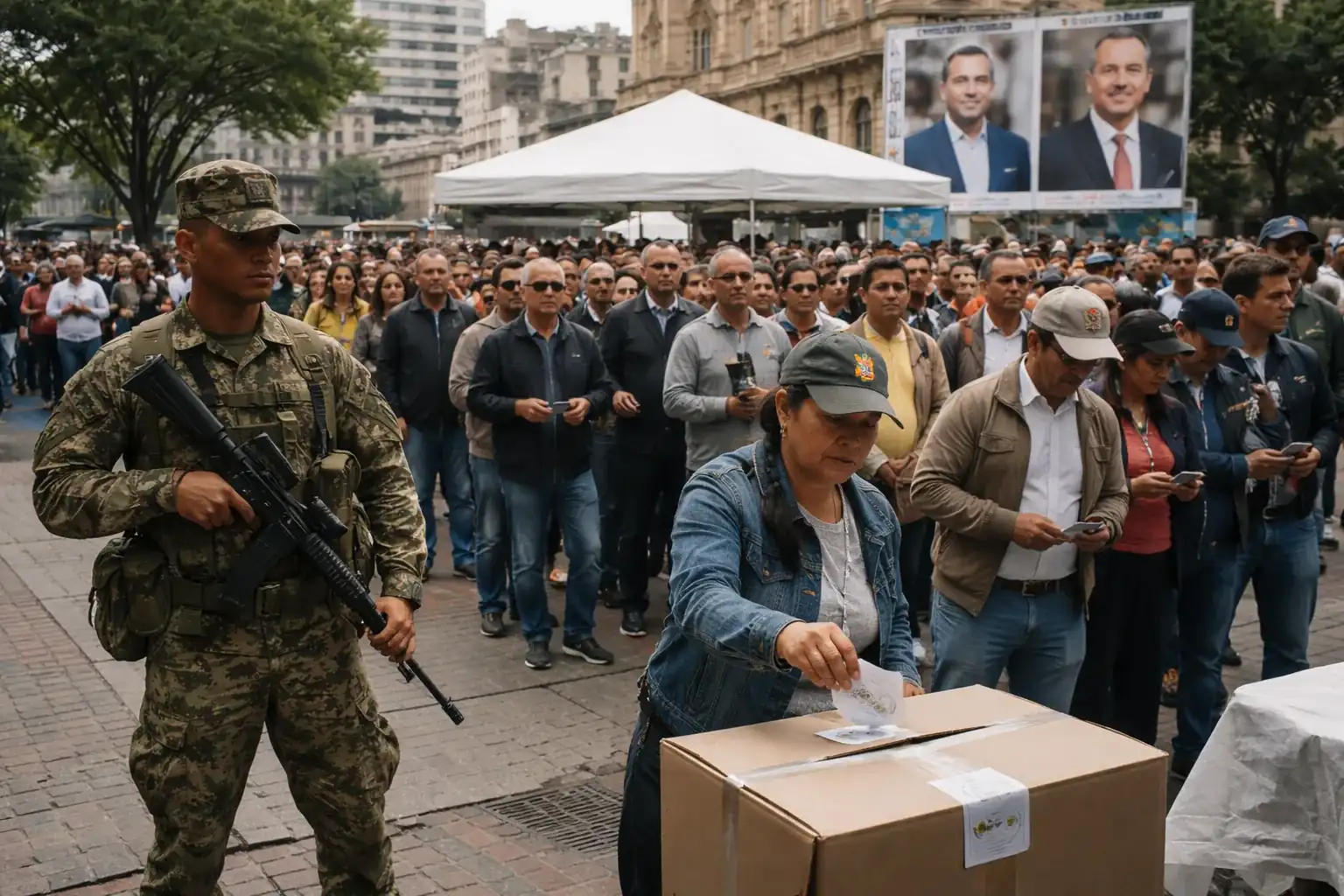
Colombia opened polls on Sunday to elect a successor to President Gustavo Petro, whose term has been defined by a pivot away from traditional US-led security strategies. As the constitution prohibits Petro from seeking re-election, he has endorsed Iván Cepeda to carry forward his agenda. Cepeda faces significant opposition from right-wing candidate Abelardo de la Espriella and conservative senator Paloma Valencia, both of whom have campaigned on promises to restore a close security alliance with the United States.
What's new in this update
Voting began at 08:00 local time under heavy guard, with 408,000 security personnel deployed across the country. The election is taking place against a backdrop of renewed violence; just hours before the start of the vote, authorities were forced to relocate a polling station in the Cesar region following a drone strike on security forces. Despite Cepeda's lead in the polls, current data suggests he will not reach the outright majority required to avoid a run-off election on June 21.
Key details
The candidates represent fundamentally different visions for Colombia’s security. Cepeda advocates for 'total peace,' a policy centered on negotiated settlements with drug-trafficking insurgent groups. In contrast, De la Espriella and Valencia have vowed to launch military crackdowns to curb violence. This ideological split comes as the United Nations' World Drug Report 2025 shows cocaine production has soared to record levels, despite President Petro's claims of record drug seizures during his tenure.
Background and context
Relations between Bogotá and Washington have become increasingly polarized under the Petro administration, marked by public recriminations with Donald Trump over drug trafficking. Petro has resisted what he terms 'vassal state' status, while Trump has accused the Colombian government of failing to prevent cocaine from reaching American streets. The regional dynamic was further complicated in January by the US capture of former Venezuelan President Nicolás Maduro, leaving Petro as one of the few remaining left-wing leaders in the region not aligned with the current US administration's ideology.
What to watch next
Polls are set to close at 16:00 local time. If the expected run-off occurs, the coming weeks will likely see intense coalition-building as right-wing and conservative factions attempt to consolidate the opposition against Cepeda. Observers will also be monitoring the Electoral Observation Mission's reports, as more than a quarter of Colombia's municipalities remain at high risk for election-day violence.
Why this matters
The outcome will dictate whether Latin America's historic security partner maintains its current path of strategic independence or restores deep-rooted military cooperation with the US.
Reader context
This story belongs to Northstar Herald's International Relations and Diplomacy coverage, with related entities including Colombia, Presidential Election, Iván Cepeda, Abelardo de la Espriella. The report is based on BBC World News source material.
Related coverage
Why it matters
The outcome will dictate whether Latin America's historic security partner maintains its current path of strategic independence or restores deep-rooted military cooperation with the US.
Read next
Follow this story through the topic hub, more world coverage, and the latest updates.
Weekly briefing
Get the week's key developments in one concise email.
Get a fast catch-up on the biggest stories, the context behind them, and the links worth your time.
Cadence
Weekly, for a quick catch-up
Coverage
AI, business, world, security, sports
Format
Clear takeaways and useful context
Request the briefing
Leave your email to open a prepared request and get on the list for the weekly briefing.
Author

The world desk follows geopolitics, humanitarian crises, diplomacy, and major international developments with an emphasis on fast updates and public-interest context.
Sources and methodology