Violent Clashes Erupt at Venezuelan Prison Amid Allegations of Torture and Mistreatment
Inmates at the Injuba jail in Barinas staged a rooftop protest against a new director, citing solitary confinement and a lack of medical care.
Primary source: BBC World News. Full source links, newsroom standards, and correction details are below.
Fast summary
Start here
- Inmates at Injuba prison in Barinas state burned mattresses and occupied the roof to protest alleged abuse and poor conditions.
- The Venezuelan Prison Observatory (OVP) reported hearing explosions and gunfire as security forces were deployed to the facility.
- Protesters are demanding the resignation of the prison director and access to essential medicine for inmates with tuberculosis.
What happened
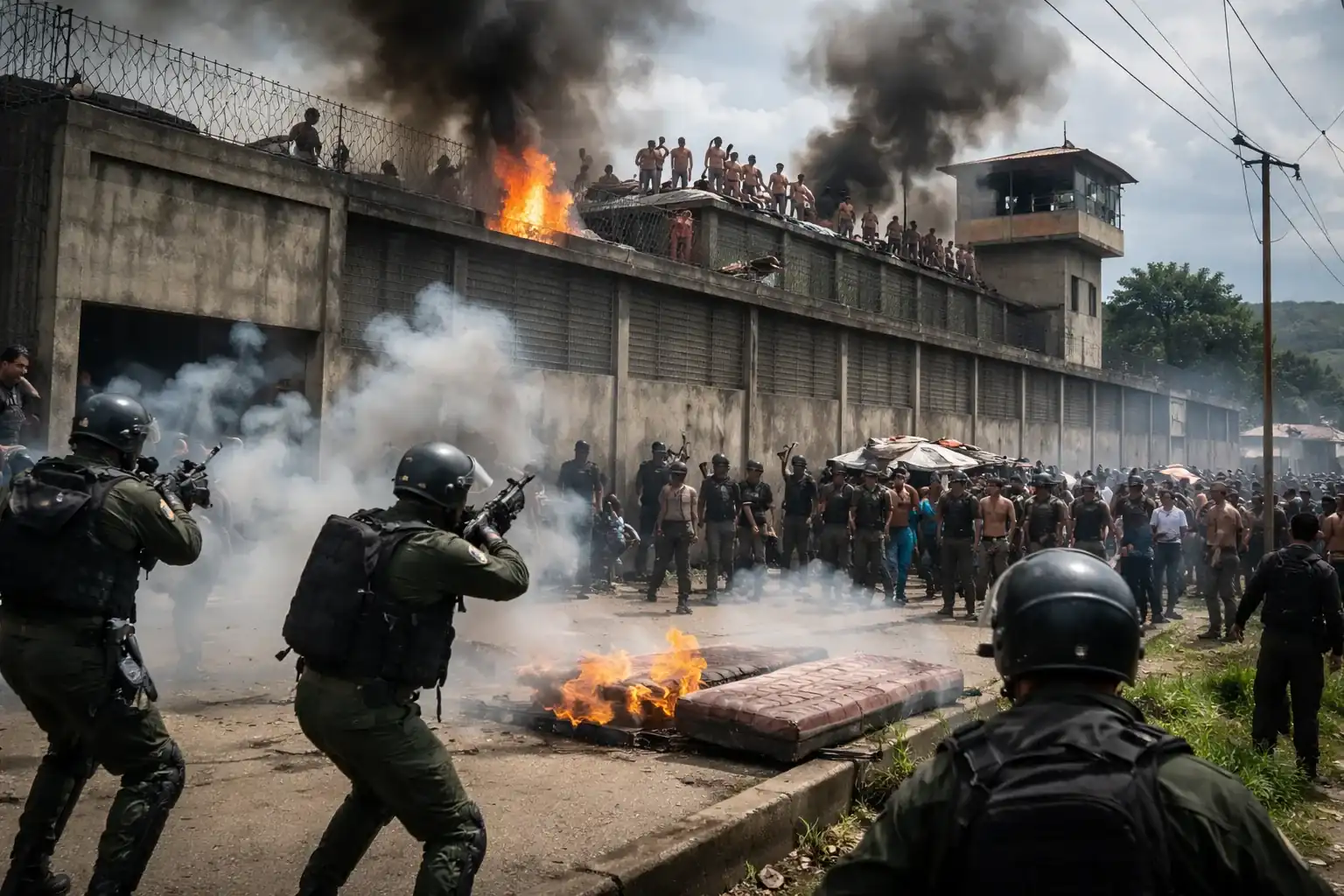
Violent clashes broke out between inmates and security personnel at the Injuba prison in the Venezuelan state of Barinas. Inmates took to the facility's roof, burning mattresses and chanting for justice in a visible protest against their treatment. Extra security forces were subsequently deployed to the jail to regain control as the situation escalated.
What's new in this update
New footage and reports from the Venezuelan Prison Observatory (OVP) indicate that the protest turned violent, with witnesses reporting sounds of explosions and inmates claiming they were fired upon by security forces. Video evidence shared by the NGO shows inmates with physical wounds, while others demand the immediate resignation of the prison's director and the national minister of prisons.
Key details
The inmates' grievances specifically center on the actions of the prison's new director, who they allege has implemented violent searches and used solitary confinement as a primary tool of control. Beyond the treatment, prisoners are demanding basic humanitarian aid, including medicine for those suffering from tuberculosis, citing that current conditions do not meet legal minimum standards.
Background and context
This unrest occurs during a period of transition in Venezuela following the removal of Nicolás Maduro by U.S. forces on January 3. While interim President Delcy Rodríguez's administration has overseen the release of hundreds of political prisoners under U.S. pressure, more than 400 remain behind bars. The UN High Commissioner for Human Rights has recently noted continued reports of torture and inhumane conditions within the country's penitentiaries.
What to watch next
The interim government and the prison director have yet to issue a formal public response to the clashes or the specific allegations of torture. Monitoring groups are focused on whether these protests will trigger similar actions in other Venezuelan prisons and how the current administration will address the reported use of lethal force during the Injuba incident.
Why this matters
The unrest highlights persistent human rights concerns in Venezuela's penal system following the ouster of Nicolás Maduro and tests the interim government's reform efforts.
Reader context
This story belongs to Northstar Herald's International Relations and Human Rights coverage, with related entities including Venezuela, Barinas, Prison Reform, Delcy Rodriguez. The report is based on BBC World News source material.
Related coverage
Why it matters
The unrest highlights persistent human rights concerns in Venezuela's penal system following the ouster of Nicolás Maduro and tests the interim government's reform efforts.
Read next
Follow this story through the topic hub, more world coverage, and the latest updates.
Weekly briefing
Get the week's key developments in one concise email.
Get a fast catch-up on the biggest stories, the context behind them, and the links worth your time.
Cadence
Weekly, for a quick catch-up
Coverage
AI, business, world, security, sports
Format
Clear takeaways and useful context
Request the briefing
Leave your email to open a prepared request and get on the list for the weekly briefing.
Author

The world desk follows geopolitics, humanitarian crises, diplomacy, and major international developments with an emphasis on fast updates and public-interest context.
Sources and methodology