Eriksen Stable and Conscious After On-Pitch Collapse in Odense
The 34-year-old Danish midfielder was able to walk from the field after his implanted pacemaker responded to a brief period of unconsciousness.

World correspondent
Reports on international affairs, diplomacy, and humanitarian developments with an emphasis on official statements, multilateral institutions, and regional context.
Editorial responsibility: Lead reviewer for geopolitics, international institutions, and crisis coverage
Primary source: BBC World News. Full source links and update notes are below.
Fast summary
Start here
- Christian Eriksen collapsed during the 65th minute of Denmark's friendly against Ukraine and was briefly unconscious.
- Team doctor Morten Boesen confirmed Eriksen's Implantable Cardioverter Defibrillator (ICD) functioned correctly during the incident.
- The match in Odense was abandoned as players from both nations formed a protective ring around the midfielder during treatment.
What happened
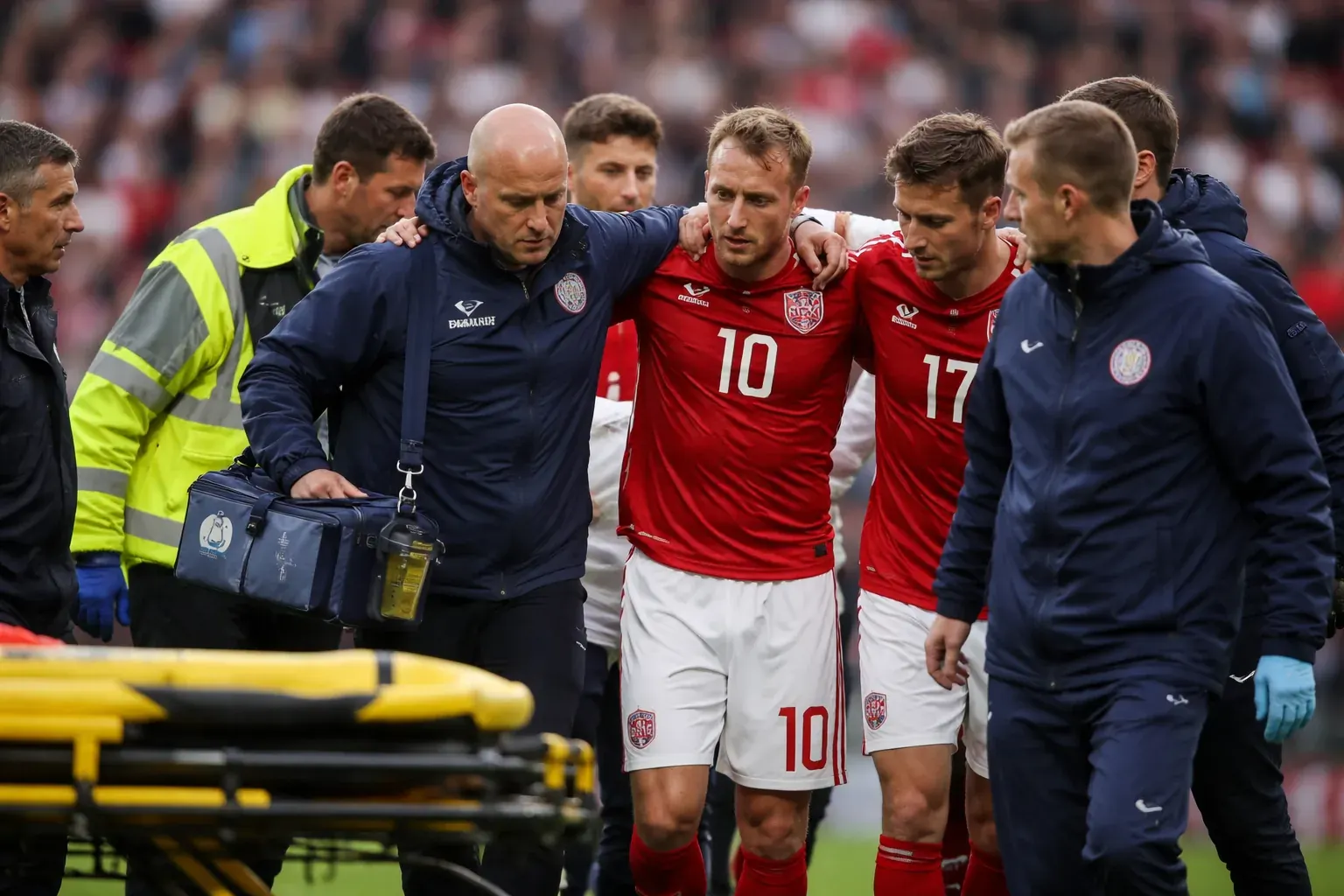
Christian Eriksen is conscious and in stable condition after collapsing during Denmark's friendly against Ukraine in Odense. The midfielder was briefly unconscious on the pitch before medical personnel treated him, and he was later able to walk from the field before being taken to hospital for further examination.
That immediate update brought relief, but it did not remove the seriousness of the moment. Any on-field collapse involving Eriksen carries exceptional emotional and medical weight because of his earlier cardiac arrest at Euro 2020 and the high-profile return he made to elite football afterward.
Why this incident resonated so strongly
The scene inevitably recalled the most traumatic episode of Eriksen's career. Since his 2021 collapse, he has become one of the most visible examples in world football of a player returning to the professional level after a major cardiac event. That history means even a brief recurrence of distress immediately becomes bigger than a routine injury bulletin.
The fact that Denmark and Ukraine players formed a protective circle around him underscored how quickly the gravity of the situation was understood. Football has seen this image before, and in Eriksen's case the symbolism is unavoidable.
The role of the ICD
Denmark's team doctor said Eriksen's Implantable Cardioverter Defibrillator, or ICD, functioned as intended. That detail matters because the device exists precisely to detect and respond to dangerous irregular heart rhythms. In practical terms, it appears to have played the protective role it was designed for.
This does not mean the incident was minor. It means the emergency safeguards worked at a critical moment. The next step is understanding what triggered the episode, whether the event was isolated, and what the device data shows about Eriksen's heart rhythm at the time.
Why the medical follow-up matters
The immediate concern has shifted from survival to diagnosis. Doctors will examine what caused the collapse, whether further treatment is required, and what it means for Eriksen's short-term and long-term playing future. In these cases, the most important information often comes after detailed review rather than from the first hospital bulletin.
That is especially true because Eriksen's situation sits at the intersection of elite sport and cardiac risk management. His recovery since 2021 has already been closely watched by players, doctors, and governing bodies. Any new incident will be studied not only for his sake, but for what it may reveal about return-to-play standards and emergency preparedness.
A football story with wider significance
The Christian Eriksen collapse is not only a Denmark team story. It is also part of a larger conversation about sports medicine, emergency response, and how modern football manages player health in high-intensity competition. The quick reaction from medical staff and surrounding players will rightly be noted as an example of preparedness, but it also highlights how narrow the margins can be.
Eriksen's return to football after 2021 had come to symbolize resilience and medical possibility. This latest incident does not erase that, but it does reintroduce the question of how much certainty is ever possible in cases involving cardiac history.
What to watch next
The next update that matters will be clinical rather than emotional. Observers will look for clarity from Danish team staff, hospital physicians, and possibly Eriksen's club about the cause of the collapse and any restrictions placed on his activity. Until then, speculation about future appearances would be premature.
Why this matters
The Christian Eriksen health update matters because he is not only a star player. He is one of the most closely watched cases in modern football when it comes to cardiac recovery and return to competition. A stable condition is reassuring, but the incident is still significant for Denmark, for the sport, and for the broader discussion around player safety.
Why it matters
Eriksen is one of football's most prominent figures to return to professional play after a major cardiac event, making any recurrence a significant concern for sports safety and player health.
Read next
Follow this story through the topic hub, more world coverage, and the latest updates.
Weekly briefing
Get the week's key developments in one concise email.
Get a fast catch-up on the biggest stories, the context behind them, and the links worth your time.
Cadence
Weekly, for a quick catch-up
Coverage
AI, business, world, security, sports
Format
Clear takeaways and useful context
Request the briefing
Leave your email to open a prepared request and get on the list for the weekly briefing.
About the byline
World correspondent
Leila Haddad covers world affairs, diplomacy, and humanitarian crises, with a focus on how fast-moving international developments affect public policy, conflict response, and cross-border institutions.
Sources and methodology