Extreme Heat Forces Cancellation of Historic Fourth of July
Organizers in Washington DC and Philadelphia have called off marquee parades for the nation's 250th birthday as record temperatures leave over 165 million

World correspondent
Reports on international affairs, diplomacy, and humanitarian developments with an emphasis on official statements, multilateral institutions, and regional context.
Editorial responsibility: Lead reviewer for geopolitics, international institutions, and crisis coverage
Primary source: BBC World News. Full source links and update notes are below.
Fast summary
Start here
- Major Independence Day parades in Washington DC and Philadelphia were cancelled to ensure the safety of spectators and staff amid dangerous, record-breaking temperatures.
- The US National Weather Service reports that more than 165 million people are currently affected by heat warnings across the East Coast and Midwest.
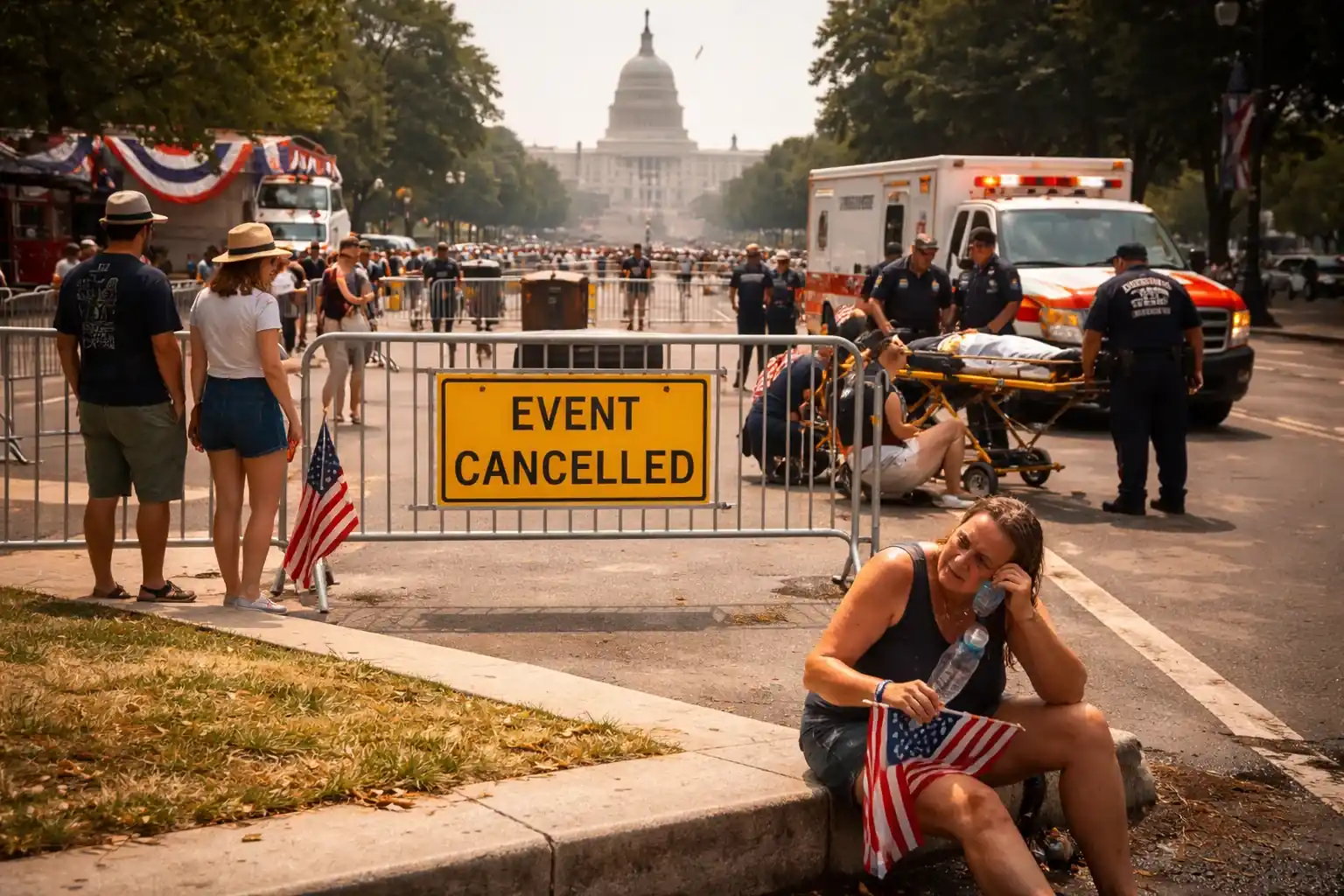
- Emergency responders at the Great American State Fair in the capital treated multiple individuals for heat-related illnesses, leading to a temporary site closure.
What happened
The 250th anniversary of the United States, a milestone intended to be marked by massive outdoor celebrations, has been severely disrupted by a historic heatwave. In the nation’s capital, an Independence Day morning parade was cancelled following extensive evaluations of the health risks posed to participants and the public. Similarly, Philadelphia—the city where the nation was founded—cancelled its Salute to Independence Semiquincentennial Parade. This event had been expected to be one of the largest gatherings in the country, but Michael DelBene, CEO of parade organiser Wawa Welcome America, stated that the organization simply could not host an event of such scale under the current 'dangerous heat conditions.' The cancellations represent a major shift for a holiday traditionally defined by large-scale outdoor activities, community parades, and fireworks.
What's new in this update
New reports from the National Mall in Washington DC reveal the immediate physical toll the heat is taking on holiday visitors. The Great American State Fair was forced to shut down for several hours on Friday after multiple attendees were treated for heat-related illnesses. The DC Fire and EMS Department confirmed that at least 11 people were transported by ambulance from the fairgrounds. Witnesses described seeing staff tending to distressed fairgoers with ice buckets to lower their body temperatures. While the fair managed to reopen at 17:00 local time as conditions slightly improved, public safety officials remain on high alert. The US Capitol Police also took the preventative step of delaying public entry for the 'A Capitol Fourth' concert, pushing the opening back by four hours to avoid the most intense afternoon sun.
Key details
According to data from the National Weather Service, the heatwave is currently impacting more than 165 million people across the US East Coast and Midwest. Record-breaking temperatures have been recorded in several states, including New Jersey, Pennsylvania, Maryland, and as far west as Colorado. The timing of this weather event is particularly challenging, as it coincides not only with the country’s 250th birthday but also with several outdoor World Cup matches. Public health officials are urging residents and tourists to take significant precautions, noting that 'record-breaking temperatures' at crowded events can lead to rapid-onset heat exhaustion. The DC Fire and EMS Department warned that the holiday weekend will remain extremely busy for emergency services as people continue to gather on and off the National Mall.
Background and context
The Fourth of July, or Independence Day, is the premier national holiday in the United States, and the 2026 celebrations are particularly significant as they mark the 'Semiquincentennial.' These celebrations typically involve years of logistical planning and serve as a major driver of domestic tourism. However, the increasing frequency of extreme summer heat has created a recurring conflict between national traditions and public safety. This year’s heatwave is among the most severe in recent memory, forcing officials to prioritize human life over the completion of historic ceremonies. The disruption of such a landmark anniversary highlights the difficulties of managing large-scale public events during an era of increasingly unpredictable and extreme weather patterns, which are now affecting even the most established American traditions.
What to watch next
The focus now shifts to the remaining scheduled events for the holiday weekend, including a planned outdoor address by President Donald Trump. Despite the extreme heat, the President has maintained his desire to hold the celebration outside on Saturday, though his staff is expected to implement additional safety measures for those in attendance. Meteorologists suggest that the heat dome may persist through the weekend, which could impact travel and the logistics of late-night fireworks displays across the affected regions. Local authorities are continuing to monitor power grid stability and are encouraging the use of cooling centers. As the 250th anniversary festivities conclude, there will likely be a national discussion regarding the future of outdoor summer celebrations and how cities can better prepare for the reality of dangerous seasonal heat.
Why it matters
The disruption of the United States' 250th-anniversary celebrations underscores the growing impact of extreme weather on significant national milestones and public safety infrastructure.
Read next
Follow this story through the topic hub, more world coverage, and the latest updates.
Weekly briefing
Get the week's key developments in one concise email.
Get a fast catch-up on the biggest stories, the context behind them, and the links worth your time.
Cadence
Weekly, for a quick catch-up
Coverage
AI, business, world, security, sports
Format
Clear takeaways and useful context
Request the briefing
Leave your email to open a prepared request and get on the list for the weekly briefing.
About the byline
World correspondent
Leila Haddad covers world affairs, diplomacy, and humanitarian crises, with a focus on how fast-moving international developments affect public policy, conflict response, and cross-border institutions.
Sources and methodology