Japanese Authorities Capture Black Bear After Multi-Day Pursuit in
A 100kg bear was sedated following dozens of sightings that forced school closures. Meanwhile, a second bear remains at large in Fukushima after injuring

World correspondent
Reports on international affairs, diplomacy, and humanitarian developments with an emphasis on official statements, multilateral institutions, and regional context.
Editorial responsibility: Lead reviewer for geopolitics, international institutions, and crisis coverage
Primary source: BBC World News. Full source links and update notes are below.
Fast summary
Start here
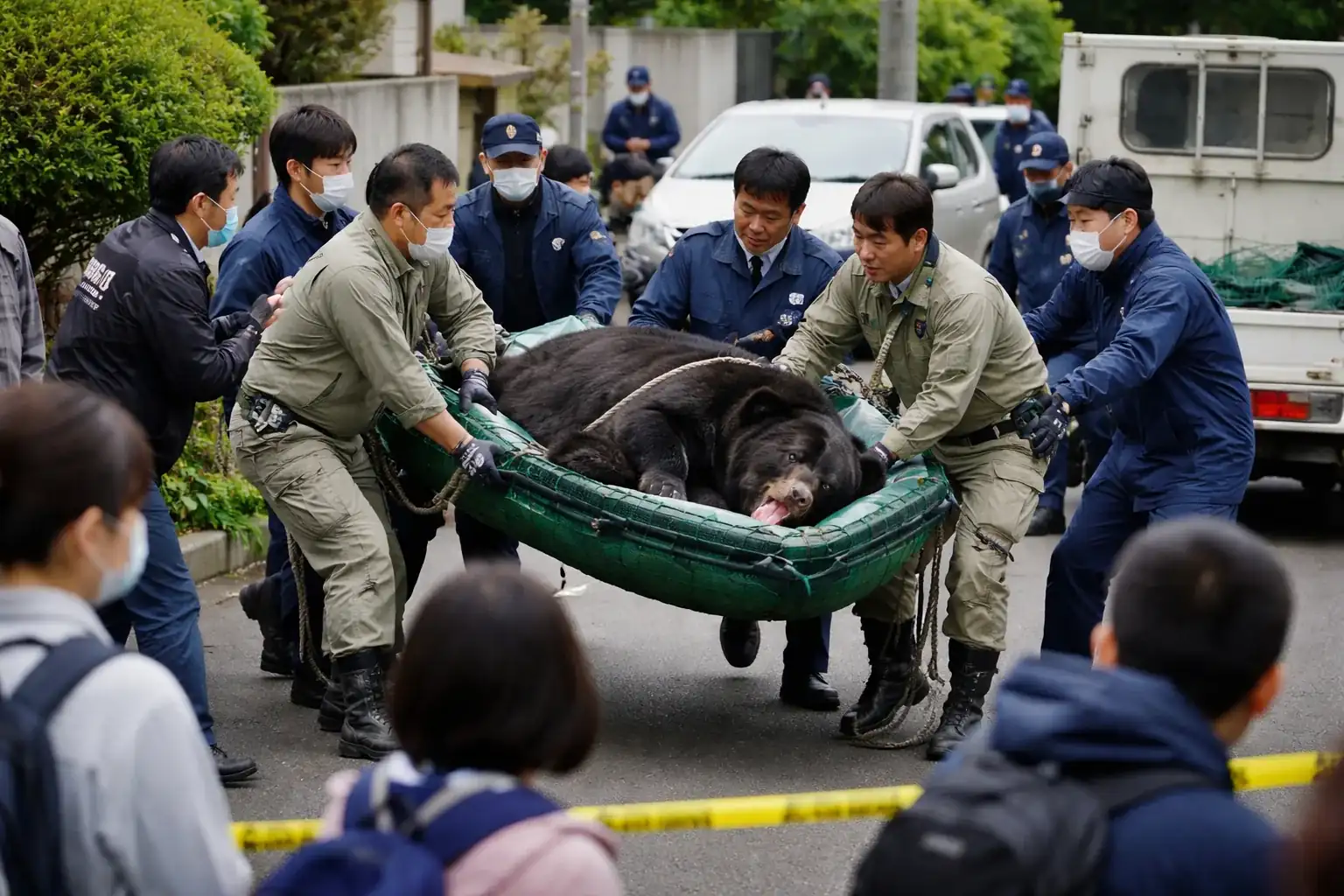
- Veterinarians in Utsunomiya captured a 100kg bear using tranquilizers after 20 reported sightings near homes and schools.
- A separate bear in Fukushima remains at large after injuring four people and reportedly unlocking a window to escape police.
- Japan recorded a record 238 bear attack victims in 2025, driven by poor harvests and an aging rural population.
What happened
Authorities in Utsunomiya, Japan, have captured a 100kg black bear after several days of sightings that unsettled residents, closed dozens of schools, and prompted a sustained local search effort. The animal was eventually subdued with tranquilizers, ending an episode that had become a symbol of a wider public-safety problem now facing parts of Japan.
The capture matters because it was not an isolated wildlife sighting in a remote area. The bear had been seen near homes, schools, rivers, and neighborhood spaces, which pushed the encounter into the center of urban and suburban daily life. At the same time, officials in Fukushima were dealing with another bear case involving injuries, reinforcing that Japan's bear problem is becoming more frequent, more dangerous, and more politically visible.
Why the Utsunomiya case drew so much attention
Bear sightings happen in Japan every year, but the Utsunomiya incident gained unusual attention because of how long it persisted and how close it came to ordinary civic routines. When schools close, families receive warnings, and authorities spend days tracking a single animal in populated areas, the event stops feeling like a wildlife curiosity and starts looking like a local emergency.
That is why the sedated capture became headline news. It represented a direct intervention to restore public confidence as much as a wildlife control operation.
Why encounters are rising in Japan
Japan has seen an increase in bear encounters in recent years, and experts have pointed to several overlapping causes. Food shortages in forest habitats, including weak acorn and nut harvests, can push bears toward residential zones in search of calories. At the same time, demographic change matters. Rural depopulation and aging communities can reduce the human activity that once created stronger informal boundaries between wildlife and settled areas.
Those pressures help explain why sightings are becoming more common and why bears may linger longer in places where they previously would have retreated.
The Fukushima case adds urgency
The continuing search for another bear in Fukushima adds a second layer to the story. Reports that the animal injured multiple people and appeared unusually resourceful have made the wider issue feel harder to control. Whether or not every dramatic detail becomes central to official findings, the public impression is already clear: these are not minor nuisance incidents.
That perception matters because policy responses often accelerate when separate events begin to look like part of a national pattern rather than disconnected local accidents.
Why technology is entering the response
One of the more striking features of Japan's wildlife-management conversation is the use of technology. Local governments are experimenting with AI-supported trail cameras, thermal drones, and even robotic deterrents such as the so-called "Super Monster Wolf." These tools reflect a practical reality: monitoring wildlife across shrinking rural communities is difficult, and traditional patrol-based responses are expensive and inconsistent.
Technology alone will not solve the bear problem, but it may become a more visible part of the public-safety toolkit as encounters rise.
The public-safety challenge
Managing bear encounters is difficult because authorities have to balance animal welfare, resident safety, school access, and public communication all at once. A delayed response risks injuries. An overly aggressive response can trigger backlash from people concerned about wildlife treatment. That leaves local officials operating in a narrow space where every decision is scrutinized.
In Utsunomiya, the school closures and repeated sightings showed how disruptive even a single bear can become when it moves unpredictably through populated areas.
What comes next
The next step for officials is not just handling the immediate incidents in Utsunomiya and Fukushima. It is building a more durable response to a recurring national issue. That will likely mean more warning systems, more monitoring technology, and more debate over how communities near bear habitats should adapt.
For now, the black bear captured in Utsunomiya has become part of a larger warning about rising human-wildlife encounters in Japan. The episode ended without the worst possible outcome, but it underscored how quickly these situations can escalate and how difficult they are becoming for local governments to manage.
Why it matters
The surge in bear encounters is prompting Japanese local governments to deploy advanced technology, including AI drones and robotic wolves, to protect residential areas.
Read next
Follow this story through the topic hub, more world coverage, and the latest updates.
Weekly briefing
Get the week's key developments in one concise email.
Get a fast catch-up on the biggest stories, the context behind them, and the links worth your time.
Cadence
Weekly, for a quick catch-up
Coverage
AI, business, world, security, sports
Format
Clear takeaways and useful context
Request the briefing
Leave your email to open a prepared request and get on the list for the weekly briefing.
About the byline
World correspondent
Leila Haddad covers world affairs, diplomacy, and humanitarian crises, with a focus on how fast-moving international developments affect public policy, conflict response, and cross-border institutions.
Sources and methodology