Major 7.8 Magnitude Earthquake Hits Mindanao, Killing at Least 19
A powerful earthquake struck off the coast of the southern Philippines, triggering regional tsunami alerts and destroying buildings across several

World correspondent
Reports on international affairs, diplomacy, and humanitarian developments with an emphasis on official statements, multilateral institutions, and regional context.
Editorial responsibility: Lead reviewer for geopolitics, international institutions, and crisis coverage
Primary source: BBC World News. Full source links and update notes are below.
Fast summary
Start here
- A magnitude 7.8 earthquake struck Mindanao on Monday morning, killing at least 19 people.
- Tsunami alerts were issued across the Pacific, including Japan and Indonesia, with minor waves recorded in several locations.
- Over 130 aftershocks have been registered, and President Marcos Jr has suspended classes in affected areas.
What happened
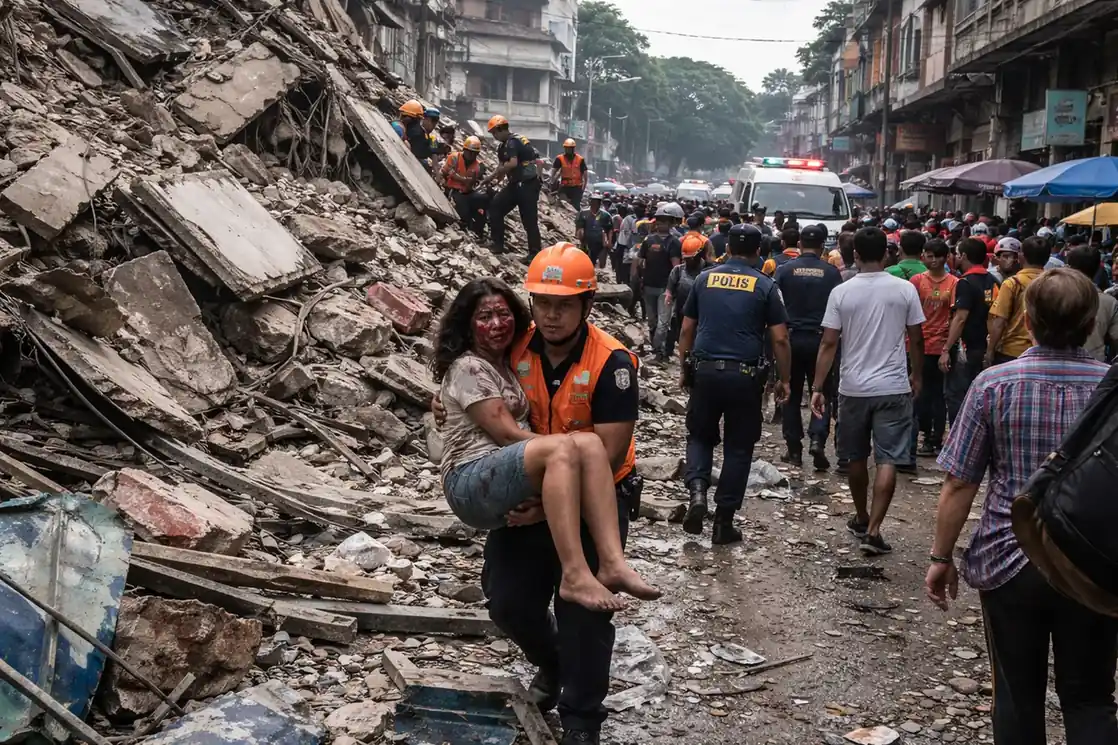
A magnitude 7.8 earthquake struck off Mindanao in the southern Philippines, killing at least 19 people and injuring many more as buildings collapsed, aftershocks spread through the region, and tsunami warnings rippled across parts of the Pacific. The quake hit in the morning as people were beginning the day, magnifying the disruption to homes, schools, roads, and emergency response operations. Local officials reported serious damage in provinces including South Cotabato, Sultan Kudarat, Sarangani, and General Santos.
The immediate toll is severe enough on its own, but the broader danger after a major Philippines earthquake is that the first casualty count rarely captures the full picture. Search, access, communications, and infrastructure checks often take time.
Why this earthquake is especially dangerous
A 7.8-magnitude earthquake is powerful anywhere, but in the southern Philippines the risk is heightened by dense communities, vulnerable structures, and the cascading effects that follow major seismic shocks. Strong ground movement can destroy buildings directly, but it can also trigger landslides, power outages, transport disruption, and fear-driven evacuations that complicate rescue work.
The more than 130 aftershocks reported after the main quake matter because they keep people in danger even after the initial shock has passed. Damaged buildings can collapse later, roads can fail, and rescue crews may be forced to stop and restart operations repeatedly.
The tsunami warning factor
One reason this earthquake drew attention beyond the Philippines is that offshore quakes of this size can raise immediate tsunami concerns across a wider region. Even when waves turn out to be modest, the warning window itself is disruptive. Authorities must make fast decisions, coastal communities must move quickly, and governments cannot afford to assume the threat is minor until more data is available.
That is why tsunami alerts in places such as Japan and Indonesia were a major part of the early response. The event was not only a domestic disaster. It briefly became a regional emergency planning problem.
Why Mindanao remains vulnerable
The Philippines sits on the Pacific Ring of Fire, making large earthquakes a recurring national risk rather than a rare anomaly. But that geological fact does not make each event routine. Regions such as Mindanao still face sharp differences in building quality, preparedness, and access to rapid emergency support. A strong quake becomes more lethal when communities are exposed unevenly to those structural weaknesses.
The timing near the start of the school year also increased the sensitivity of the response, with authorities suspending classes and assessing whether school facilities remained safe.
What the government response will be judged on
President Ferdinand Marcos Jr's administration is likely to be judged on speed, clarity, and logistics. In the first phase, the priorities are obvious: rescue, medical care, temporary shelter, and verified damage reporting. But as the hours pass, public scrutiny usually shifts toward coordination between local and national agencies, the accuracy of public warnings, and the reliability of relief distribution.
Disaster response in the Philippines is tested not just by nature, but by whether institutions can move quickly enough across widely affected terrain.
What comes next
Officials are expected to keep updating the casualty count, infrastructure assessments, and aftershock warnings as information improves. Engineers will inspect schools, transport links, and damaged structures, while emergency teams continue search and relief work in the hardest-hit communities. The possibility of more deaths or broader displacement cannot be ruled out while aftershocks continue.
For now, the Mindanao earthquake stands as another harsh reminder of the Philippines' exposure to major natural disasters. With at least 19 dead, widespread damage reported, and tsunami alerts briefly stretching across the region, the 7.8-magnitude earthquake has become not just a local tragedy, but a national test of resilience and disaster response.
Why it matters
The Philippines sits on the volatile 'Ring of Fire,' and this major seismic event tests the region's disaster response infrastructure during the start of the school year.
Read next
Follow this story through the topic hub, more world coverage, and the latest updates.
Weekly briefing
Get the week's key developments in one concise email.
Get a fast catch-up on the biggest stories, the context behind them, and the links worth your time.
Cadence
Weekly, for a quick catch-up
Coverage
AI, business, world, security, sports
Format
Clear takeaways and useful context
Request the briefing
Leave your email to open a prepared request and get on the list for the weekly briefing.
About the byline
World correspondent
Leila Haddad covers world affairs, diplomacy, and humanitarian crises, with a focus on how fast-moving international developments affect public policy, conflict response, and cross-border institutions.
Sources and methodology