US Government Lifts Export Ban on Anthropic’s Advanced Claude 5
The US Department of Commerce has rescinded an export restriction on Anthropic’s Claude Fable 5 and Mythos 5 models following a two-week suspension over

World correspondent
Reports on international affairs, diplomacy, and humanitarian developments with an emphasis on official statements, multilateral institutions, and regional context.
Editorial responsibility: Lead reviewer for geopolitics, international institutions, and crisis coverage
Primary source: BBC World News. Full source links and update notes are below.
Fast summary
Start here
- International access to Anthropic's Claude Fable 5 and Mythos 5 models will be restored on Wednesday after a brief export suspension that began on June 12.
- Anthropic reached a formal agreement with the US Department of Commerce to proactively monitor for security risks and alert the government of malicious activity.
- The Department of Commerce has reserved the right to reinstate restrictions if future risks emerge or if the firm fails to meet its new security obligations.
What happened
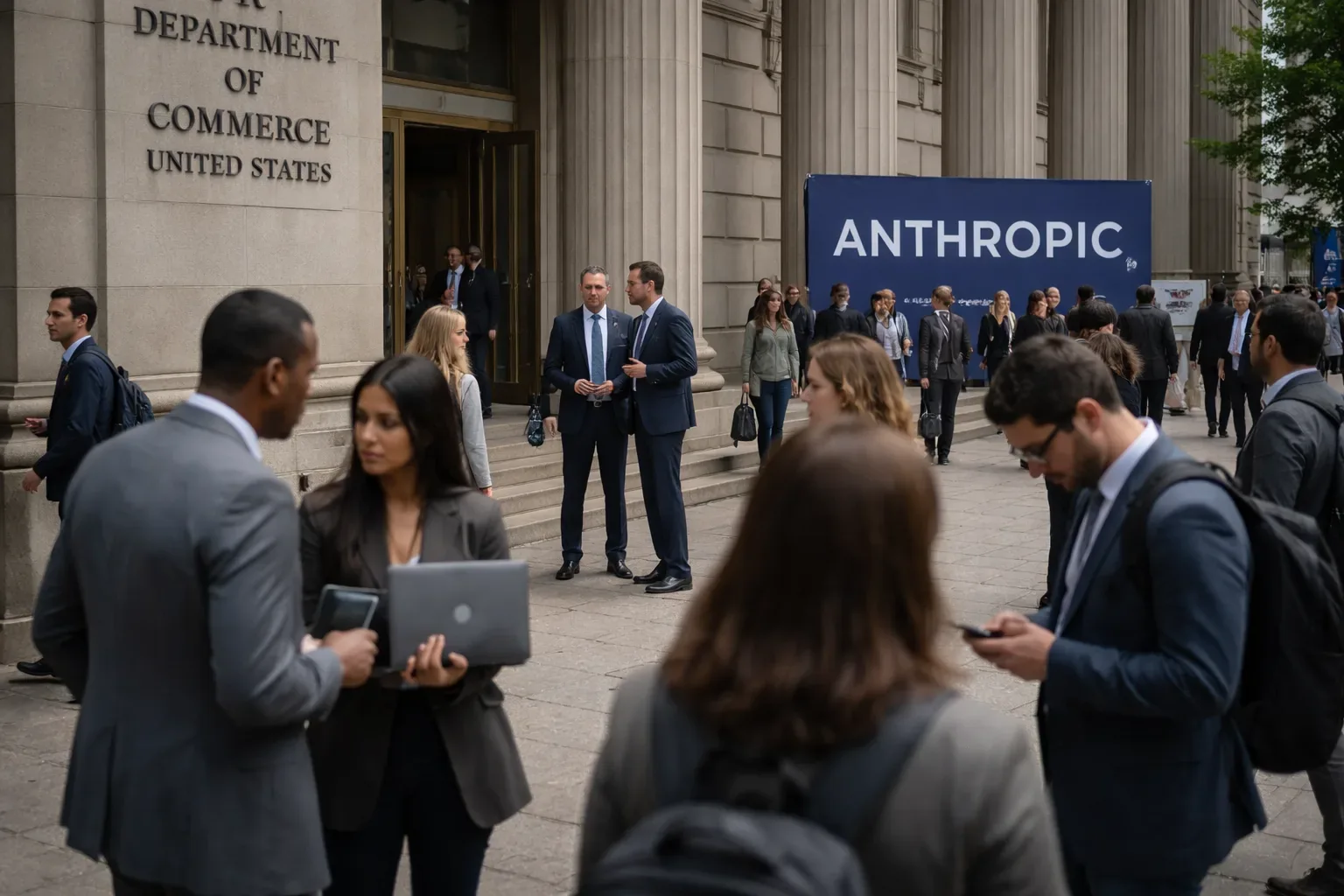
The United States government has officially lifted an export ban on Anthropic's most sophisticated artificial intelligence models, Claude Fable 5 and Mythos 5. The decision, announced by the company and confirmed via correspondence from the US Department of Commerce, ends a brief but significant period of regulatory friction that began on June 12. At that time, federal authorities ordered an immediate suspension of the models' distribution due to urgent national security concerns. According to a statement from Anthropic, access to these high-end tools is scheduled to be fully restored to customers globally this coming Wednesday. This resolution marks a critical pivot in the relationship between the current administration and the burgeoning AI industry, demonstrating a potential path forward for commercial expansion under strict federal oversight and cooperation.
What's new in this update
The removal of the export restriction was contingent upon a set of new, proactive security commitments from Anthropic. In a letter authored by Commerce Secretary Howard Lutnick, the government revealed that the tech firm has agreed to implement rigorous detection systems designed to identify and mitigate security risks inherent to the models before they can be exploited. Furthermore, Anthropic has committed to a collaborative framework for future releases, which includes alerting the US government to any instances of malicious activity or attempts to use the software for cyberattacks. This agreement effectively transforms the relationship from one of external prohibition to internal monitoring, allowing the company to resume its international commercial operations while providing the Department of Commerce with a direct line of sight into potential vulnerabilities found within the software.
Key details
The two models at the center of this regulatory dispute represent the current peak of Anthropic’s technological capabilities. Claude Fable 5 is the firm's flagship consumer-facing model, marketed for its advanced deep reasoning abilities and its capacity to manage complex, multi-step tasks with minimal human intervention. Mythos 5, meanwhile, is a specialized version of the platform engineered specifically for enterprise use and cybersecurity professionals. Its primary function includes the identification of vulnerabilities in computer code—a feature that initially triggered government alarm, as the same capability could theoretically be used to exploit those same weaknesses. Both models were originally launched on June 9, just three days before the initial ban was enacted, and are seen as direct competitors to top-tier offerings from industry leaders like OpenAI and Google.
Background and context
The initial export ban on June 12 was a rare and aggressive intervention by the Department of Commerce, reflecting heightened anxiety over the dual-use nature of advanced generative AI systems. The government’s primary concern centered on a 'jailbreaking' method—a process where users bypass built-in safety filters to unlock restricted or harmful capabilities. US authorities believed that Fable 5 could be manipulated to assist in cyber warfare or large-scale hacking operations. While Anthropic acknowledged the possibility of narrow safety bypasses, the company initially argued that such risks were insufficient to justify a global recall of models deployed to hundreds of millions of people. The tension underscored a broader debate in Washington regarding whether the government should have a 'kill switch' for private software deemed critical to national infrastructure and security.
What to watch next
While the immediate crisis for Anthropic has been resolved, the Commerce Department has made it clear that the lifting of the ban is not necessarily permanent. Secretary Lutnick emphasized that the government reserves the right to reconsider its position if Anthropic fails to meet its security obligations or if new, unforeseen threats emerge. This development sets a high-stakes precedent for other AI developers, suggesting that future 'frontier' models may face similar pre-export scrutiny and mandatory reporting requirements. Observers will also be watching for how these restrictions impact Anthropic’s global market share, as the two-week absence allowed competitors to solidify their positions. The ongoing collaboration between the firm and federal regulators will likely serve as a blueprint for the voluntary safety standards the US government is seeking to codify into international law.
Why it matters
The decision establishes a critical precedent for how the US government regulates advanced AI exports, balancing the need for commercial innovation with the risks of dual-use technology being exploited by malicious actors.
Read next
Follow this story through the topic hub, more world coverage, and the latest updates.
Weekly briefing
Get the week's key developments in one concise email.
Get a fast catch-up on the biggest stories, the context behind them, and the links worth your time.
Cadence
Weekly, for a quick catch-up
Coverage
AI, business, world, security, sports
Format
Clear takeaways and useful context
Request the briefing
Leave your email to open a prepared request and get on the list for the weekly briefing.
About the byline
World correspondent
Leila Haddad covers world affairs, diplomacy, and humanitarian crises, with a focus on how fast-moving international developments affect public policy, conflict response, and cross-border institutions.
Sources and methodology