Anger Mounts in China After Deadliest Coal Mine Disaster in Years
At least 82 people died in a gas explosion at a Shanxi coal mine, sparking public outrage over reports of unregistered workers and systemic safety failures.
Primary source: BBC World News. Full source links, newsroom standards, and correction details are below.
Fast summary
Start here
- At least 82 people were killed and more than 120 injured following an explosion at the Liushenyu coal mine in Shanxi province.
- Initial findings indicate the operator, Tongzhou Group, had twice as many workers underground as officially reported and used inaccurate blueprints.
- Chinese authorities have placed company officials under control measures and halted operations at all four of the group's mines in the region.
What happened
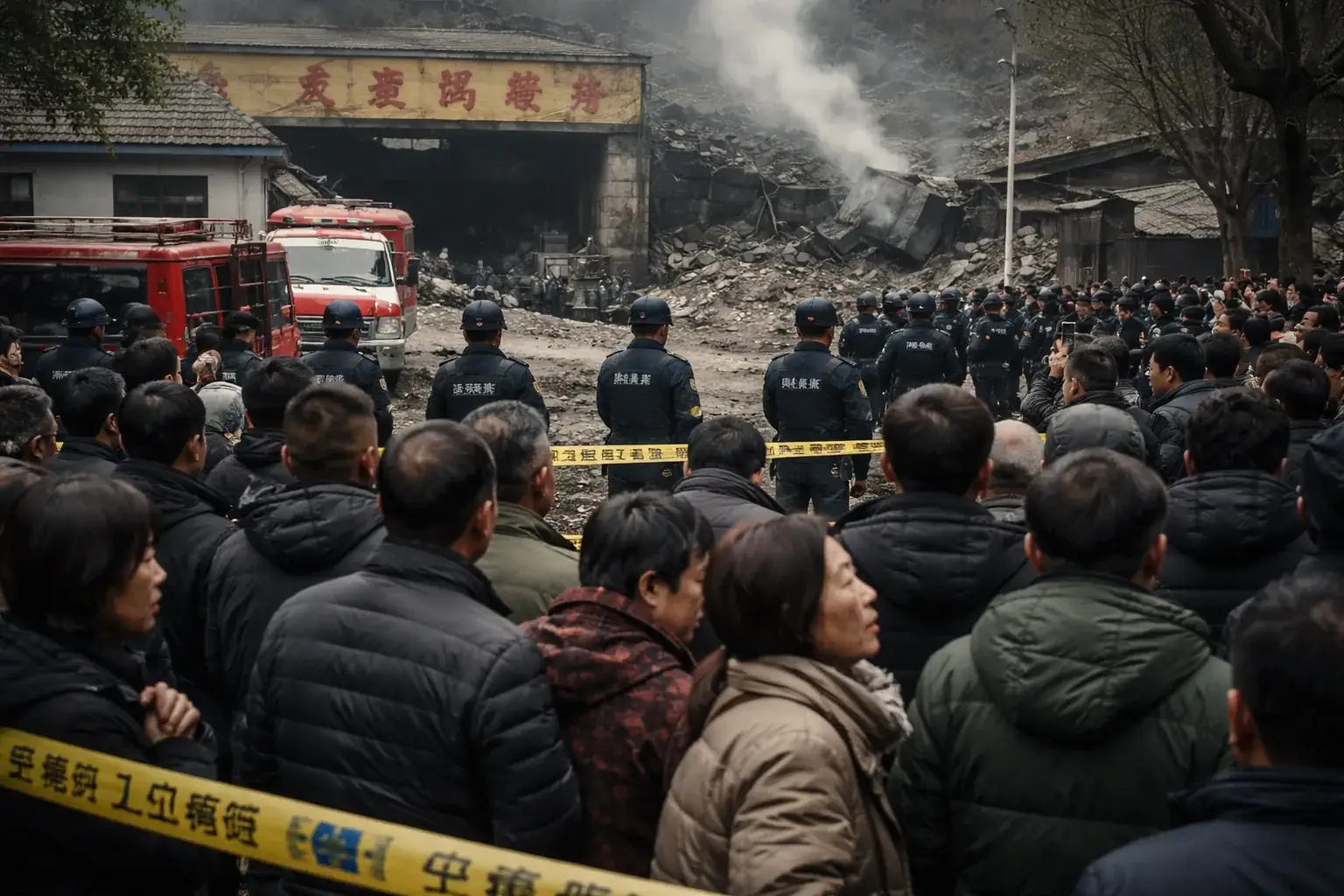
At least 82 people were killed and more than 120 others injured following a massive gas explosion at the Liushenyu coal mine in China's Shanxi province on Friday. The disaster is being described as the country's worst mining incident in more than 15 years, striking at the heart of the nation's primary coal-producing region.
What's new in this update
Public anger is mounting on social media platforms like Weibo as reports emerge of severe safety violations by the operator, Tongzhou Group. State media reported that the number of people inside the mine at the time of the blast was double the company's official registry, prompting questions about whether the firm was attempting to bypass production limits or hide labor costs.
Key details
Investigators discovered that workers were not carrying mandatory tracking devices and that the mine's blueprints did not match actual underground conditions, which significantly hampered early rescue efforts. Tongzhou Group had already received two administrative penalties for safety violations in 2025, and the Liushenyu mine was previously identified as a site with severe hazards by the National Mine Safety Administration.
Background and context
The tragedy recalls the frequent mining disasters of the early 2000s, an era the Chinese government has spent years trying to move past through stricter regulations and the closure of illegal operations. While authorities have pledged a rigorous investigation and placed company officials under control measures, the incident has reignited concerns about the superficiality of local supervision and the low cost of safety violations.
What to watch next
Rescue operations continue as hundreds of personnel search for those still missing. Authorities have ordered Tongzhou Group to suspend operations at all four of its coal mines in Shanxi province pending further investigation. Future developments will likely focus on the specific charges against company leadership and potential shifts in national mine safety enforcement policies.
Why this matters
This disaster is the deadliest in China in over 15 years, raising urgent questions about whether safety regulations are being effectively enforced in the nation's coal industry.
Reader context
This story belongs to Northstar Herald's world coverage, with related entities including China, Shanxi Province, Coal Mining, Mining Safety. The report is based on BBC World News source material.
Related coverage
Why it matters
This disaster is the deadliest in China in over 15 years, raising urgent questions about whether safety regulations are being effectively enforced in the nation's coal industry.
Read next
Follow this story through the topic hub, more world coverage, and the latest updates.
Weekly briefing
Get the week's key developments in one concise email.
Get a fast catch-up on the biggest stories, the context behind them, and the links worth your time.
Cadence
Weekly, for a quick catch-up
Coverage
AI, business, world, security, sports
Format
Clear takeaways and useful context
Request the briefing
Leave your email to open a prepared request and get on the list for the weekly briefing.
Author

The world desk follows geopolitics, humanitarian crises, diplomacy, and major international developments with an emphasis on fast updates and public-interest context.
Sources and methodology