Anniversary Update: Air India Crash Investigation Continues as Officials Seek More Time
A year after the Boeing 787 disaster in Ahmedabad, India's accident bureau cites ongoing analysis of flight data and aircraft systems for the delay.
Primary source: BBC World News. Full source links, newsroom standards, and correction details are below.
Fast summary
Start here
- India's Aircraft Accident Investigation Bureau (AAIB) released a mandatory anniversary update stating the final report is not yet ready.
- The crash of flight AI171 on June 12, 2025, killed 250 people, including 19 on the ground and all but one passenger on board.
- A preliminary report confirmed the engines were starved of fuel after switches moved to the cut-off position seconds after takeoff.
What happened
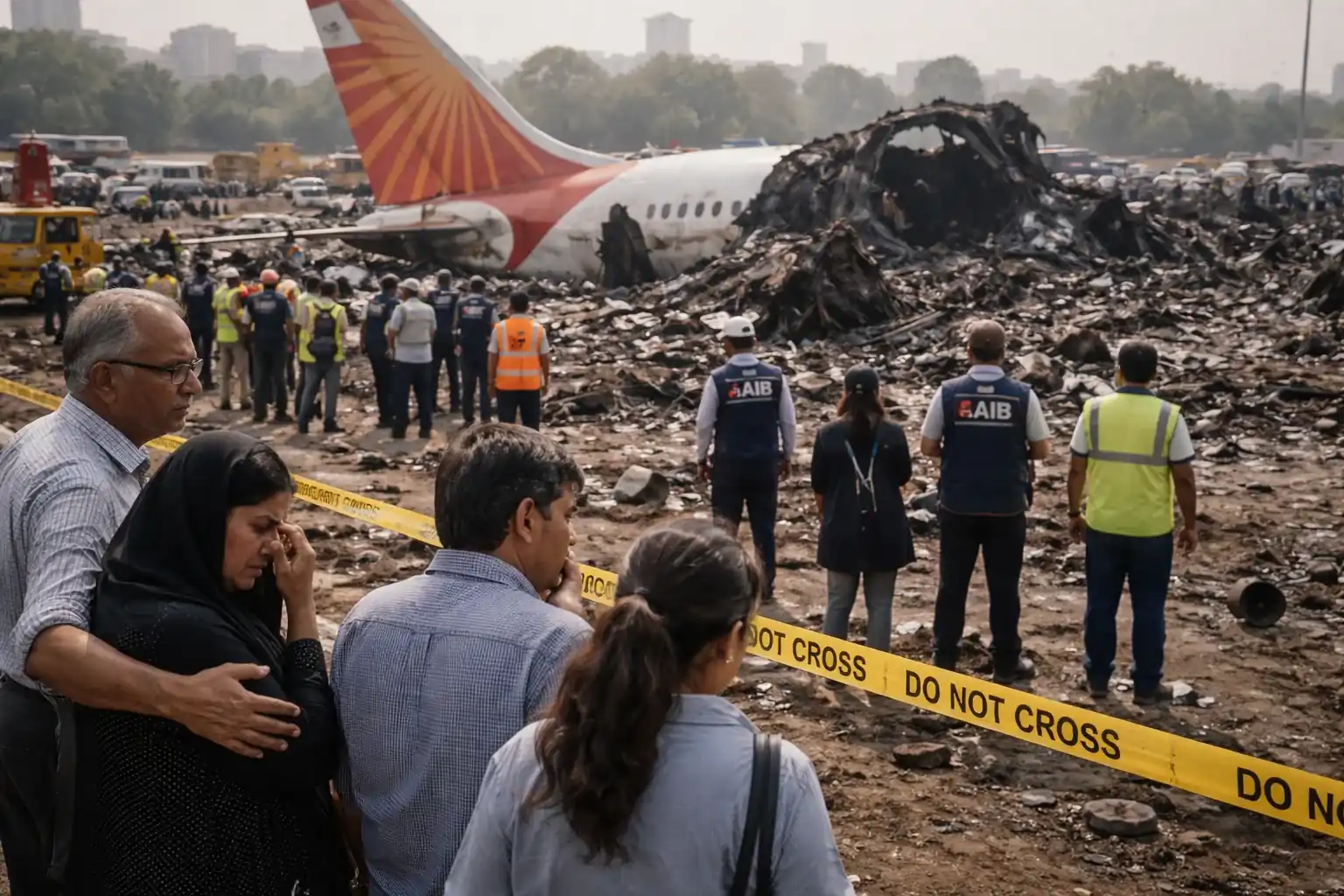
On the first anniversary of one of India's deadliest aviation disasters, the Aircraft Accident Investigation Bureau (AAIB) announced that it is not yet ready to release its final findings. The crash, which occurred on June 12, 2025, involved an Air India Boeing 787 Dreamliner flying from Ahmedabad to London. Shortly after takeoff, the aircraft plunged into a medical college accommodation building, resulting in an explosion that claimed 250 lives. Under international aviation protocols, investigative bodies are required to provide a public status update on the anniversary of an accident if a final report has not yet been published. The AAIB’s statement on Friday confirmed that while the investigation has reached a stage of 'significant progress,' the complexity of the evidence requires more time before a definitive conclusion can be reached.
What's new in this update
The AAIB's latest communique emphasizes that investigators have conducted an 'extensive and rigorous examination' of technical, operational, and human factors. Specifically, the team is currently integrating results from the analysis of aircraft systems, flight recorder data (the 'black boxes'), and maintenance records. While the bureau did not provide a specific timeline for the final report’s release, it noted that the document must undergo a series of international reviews and consultation processes before it can be made public. This update follows earlier comments from India's civil aviation minister in May, who had suggested the report might be ready within a month—a timeline that has now officially lapsed, highlighting the cautious approach the AAIB is taking to ensure the report does not merely apportion blame but serves to enhance global aviation safety.
Key details
The scale of the tragedy remains a point of profound national and international grief. Of the 241 people on board the aircraft, only one survived: Viswashkumar Ramesh of Leicester, United Kingdom. The 19 additional victims were individuals on the ground at the Byramjee Jeejeebhoy Medical College and Civil Hospital, where the plane struck a residential building used by doctors. The victim profile reflects the international nature of the flight, with 169 Indian nationals and 53 British citizens among the deceased. The AAIB reiterated in its statement that its primary objective is to identify safety recommendations and lessons learned, rather than determining legal liability, though the eventual findings will undoubtedly play a massive role in the civil litigations and insurance claims already underway.
Background and context
Speculation regarding the cause of the crash has been intense since a preliminary report was published on July 12 last year. That initial document revealed a chilling technical detail: just seconds after departing the runway, the aircraft's fuel-control switches were abruptly moved to the 'cut-off' position. This action starved the engines of fuel and caused a total loss of power. Cockpit voice recordings captured a brief, confusing exchange where one pilot questioned why the other had taken this action, a claim the other pilot denied. Subsequent media reports, including those from Reuters and The Wall Street Journal, suggested that investigators were focusing on the senior pilot, Captain Sumeet Sabharwal. This focus has sparked a fierce defense from pilots' associations and Sabharwal’s family, who argue that blaming deceased pilots is a frequent and overly simplistic way to close complex investigations.
What to watch next
The aviation industry and the families of the victims are now awaiting the commencement of the 'international review' phase mentioned by the AAIB. This process typically involves sharing draft findings with stakeholders, including Boeing as the manufacturer and the aviation authorities of the countries involved, to ensure technical accuracy. Public pressure remains high; Pushkar Raj, the 90-year-old father of Captain Sabharwal, has vowed to continue fighting to protect his son's reputation against allegations of pilot error. Until the AAIB releases the final report, the central mystery of why the fuel switches were toggled—whether due to a mechanical failure, a design flaw in the 787 cockpit, or human intervention—remains the most contentious unanswered question in the case.
Why it matters
The delay prolongs the wait for closure for families and leaves critical questions unanswered regarding the safety of Boeing 787 operations and pilot actions.
Read next
Follow this story through the topic hub, more world coverage, and the latest updates.
Weekly briefing
Get the week's key developments in one concise email.
Get a fast catch-up on the biggest stories, the context behind them, and the links worth your time.
Cadence
Weekly, for a quick catch-up
Coverage
AI, business, world, security, sports
Format
Clear takeaways and useful context
Request the briefing
Leave your email to open a prepared request and get on the list for the weekly briefing.
Author

The world desk follows geopolitics, humanitarian crises, diplomacy, and major international developments with an emphasis on fast updates and public-interest context.
Sources and methodology