Top BJP Leader's Aide Killed in West Bengal Post-Poll Violence
Chandranath Rath, the personal assistant to chief ministerial front-runner Suvendu Adhikari, was shot dead on his way home following the BJP's historic

World correspondent
Reports on international affairs, diplomacy, and humanitarian developments with an emphasis on official statements, multilateral institutions, and regional context.
Editorial responsibility: Lead reviewer for geopolitics, international institutions, and crisis coverage
Primary source: BBC World News. Full source links and update notes are below.
Fast summary
Start here
- Chandranath Rath was killed Wednesday night while traveling by car, with police finding live rounds at the scene.
- The killing follows a landmark BJP victory that ended 15 years of Trinamool Congress rule in West Bengal.
- Over 400 people have been arrested in connection with post-election clashes that have claimed at least three lives.
What happened
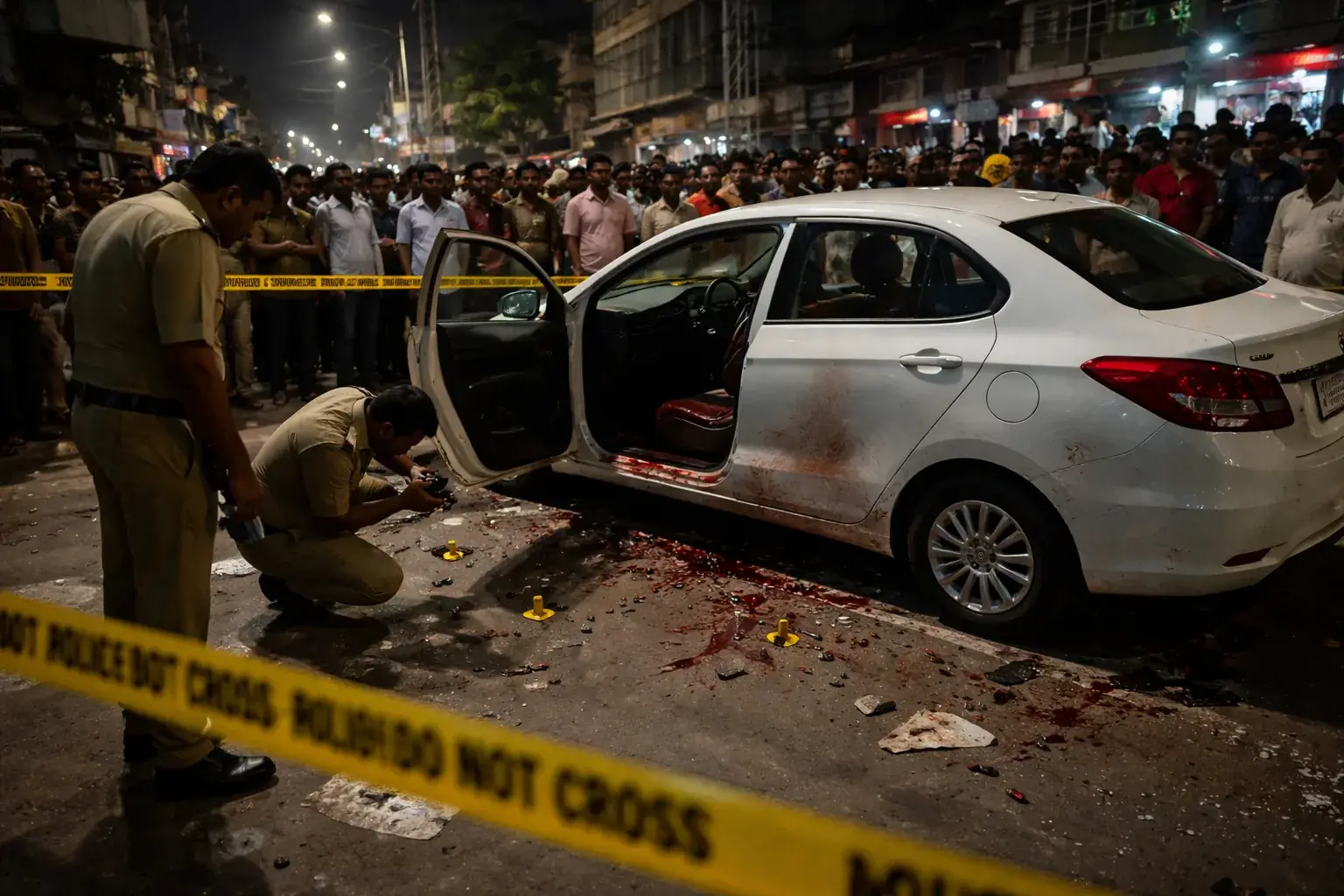
Chandranath Rath, a close aide to senior BJP leader Suvendu Adhikari, was shot dead in West Bengal just days after the Bharatiya Janata Party won a landmark state election and ended 15 years of Trinamool Congress rule. His killing has become one of the most serious incidents in a wave of post-election unrest that has already included arson, street clashes, vandalism, and multiple deaths.
The timing makes the killing especially sensitive. West Bengal is not simply experiencing a routine change in administration. It is going through a major political transfer in one of India's most combative state arenas, where party competition has long been accompanied by accusations of intimidation, retaliation, and localized violence.
What's new in this update
Police say they have recovered a vehicle believed to be linked to the shooting, though it was reportedly carrying false plates. Investigators have also recovered live rounds and cartridge casings from the scene. A witness described seeing a motorbike rider open fire, but authorities have not yet confirmed how many attackers were involved or announced any direct arrests in the murder itself.
That leaves the case in a tense early stage: highly symbolic, politically explosive, and not yet clearly explained. Both the facts of the killing and the context around it are likely to shape how the transition period is remembered and how both major parties frame the legitimacy of the days immediately following the vote.
Key details
Rath worked as the personal assistant to Suvendu Adhikari, who is widely seen as a leading contender for the chief minister's office after the BJP's strong showing. His death therefore carries more than personal significance. It lands close to the center of the incoming power structure.
The BJP won 207 of the state's 294 seats, defeating Mamata Banerjee's Trinamool Congress in a contest that was already charged by accusations over voter rolls, political targeting, and administrative bias. Since the result, authorities have arrested more than 400 people over unrest across districts including Murshidabad, Birbhum, and parts of Kolkata.
The political stakes are high for several reasons:
- A killing tied to a top BJP figure could inflame demands for retaliation and stricter policing.
- The outgoing and incoming camps can each use the violence to accuse the other of failing the state.
- The new administration's legitimacy may be tested by whether it can restore order quickly.
- West Bengal's long history of cadre-based political competition raises the risk of further copycat violence.
Background and context
West Bengal has a long record of post-poll violence, and elections there often function as both democratic contests and struggles for territorial control at the local level. The BJP's victory is historically significant because it breaks the Trinamool Congress's long hold on the state and reshapes the political map in a region that carries major symbolic weight for India's national parties.
That is why even a single targeted killing can reverberate widely. Political violence in Bengal is rarely treated as an isolated crime alone. It is interpreted through networks of party organization, local vendettas, and larger questions about whether the state's democratic institutions are strong enough to contain partisan conflict after a major electoral upset.
What to watch next
The immediate test is whether the police investigation produces credible suspects and whether the swearing-in of the next government calms or aggravates the atmosphere. Both the BJP and Trinamool Congress will try to control the narrative, but the public response will depend heavily on whether violence appears to be ebbing or spreading.
Why this matters
This matters because peaceful transfer of power depends not only on vote counting but on whether political losers and winners can move through transition without bloodshed. The killing of a senior aide so soon after a historic election result raises the danger that West Bengal's political reset could begin under a cloud of fear and revenge.
Reader context
This story belongs to Northstar Herald's Indian Politics and West Bengal Elections coverage, with related entities including Narendra Modi, Suvendu Adhikari, Mamata Banerjee, Trinamool Congress. The report is based on BBC World News source material.
Related coverage
Why it matters
The killing of a top political aide threatens to destabilize the transition of power in one of India's most politically volatile states. It underscores deep-seated partisan tensions following a major electoral shift.
Read next
Follow this story through the topic hub, more world coverage, and the latest updates.
Weekly briefing
Get the week's key developments in one concise email.
Get a fast catch-up on the biggest stories, the context behind them, and the links worth your time.
Cadence
Weekly, for a quick catch-up
Coverage
AI, business, world, security, sports
Format
Clear takeaways and useful context
Request the briefing
Leave your email to open a prepared request and get on the list for the weekly briefing.
About the byline
World correspondent
Leila Haddad covers world affairs, diplomacy, and humanitarian crises, with a focus on how fast-moving international developments affect public policy, conflict response, and cross-border institutions.
Sources and methodology