U.S. Secures Top Spot in World Cup Group D After Paraguay Defeats
A 10-man Paraguay squad's victory over Turkey has mathematically confirmed the United States as the winners of Group D.

Sports reporter
Reports on leagues, tournaments, and athlete developments with an emphasis on verified event details, official announcements, and commercial context.
Editorial responsibility: Lead reviewer for match reporting, tournament context, and league governance coverage
Primary source: ESPN Top Headlines. Full source links and update notes are below.
Fast summary
Start here
- The United States has officially secured the top position in World Cup Group D.
- Paraguay defeated Turkey while playing with only 10 men to finalize the group standings.
- The result guarantees the U.S. a seeded position in the upcoming knockout stage.
What happened
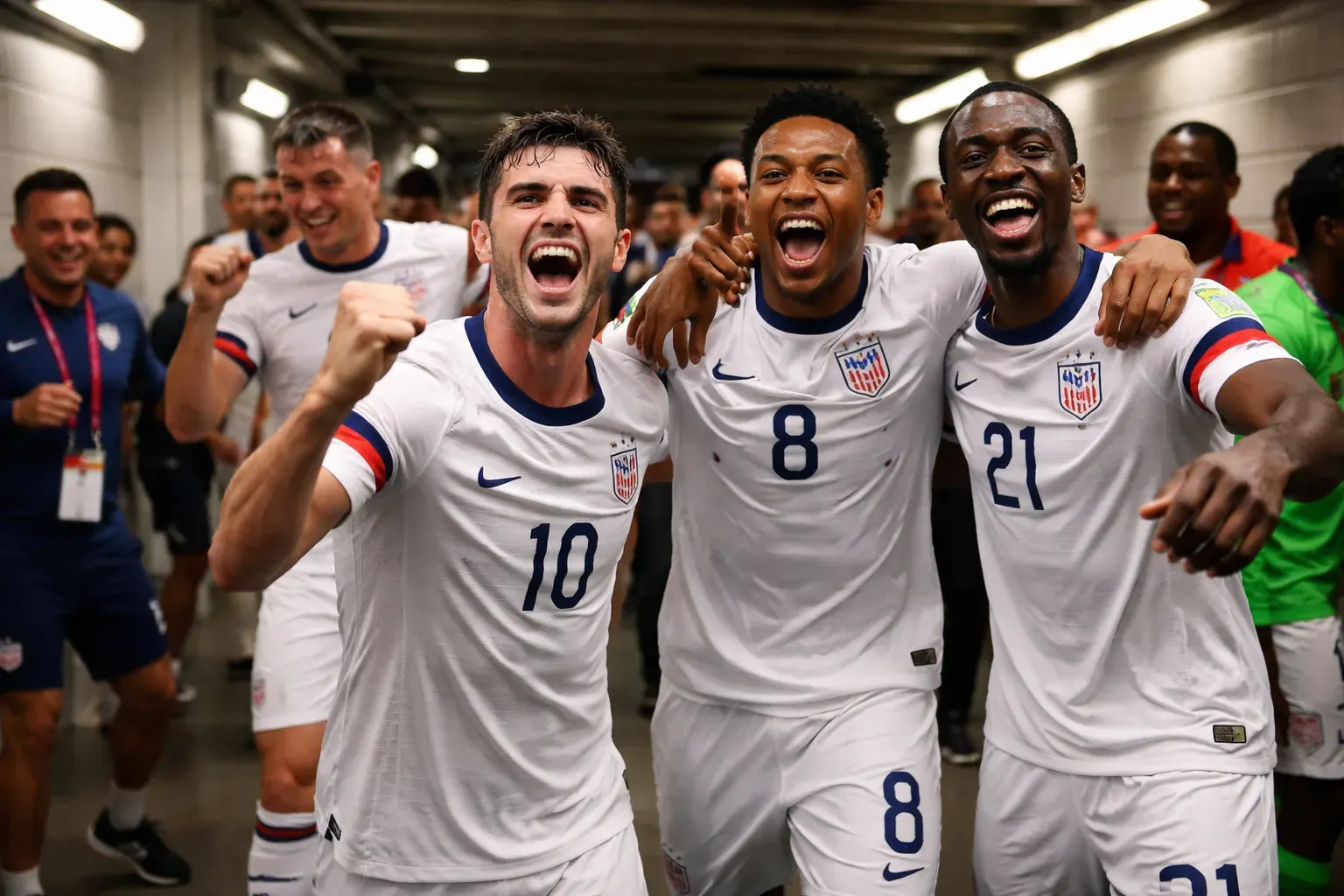
The United States men's national team has officially won World Cup Group D after Paraguay, despite playing with 10 men, defeated Turkey and removed any remaining path for the Americans to be caught at the top of the standings. The result means the U.S. did not need to rely on a dramatic final-day scenario to secure first place. Instead, the group's math settled early, confirming the USMNT as group winners before the bracket moves into the knockout phase.
That is a meaningful development because topping a World Cup group is not just a statistical detail. It changes the shape of the next stage and can affect both rest, preparation, and the caliber of opponent waiting in the Round of 16.
Why winning Group D matters
Finishing first in Group D gives the United States the clearest possible reward available in the format: a seeded route into the knockout round rather than a second-place path that usually carries a more dangerous immediate matchup. In tournament soccer, that matters enormously. Small differences in bracket placement can determine whether a team builds momentum or is forced into a high-risk elimination game earlier than expected.
For the USMNT, the psychological value also matters. A team that emerges from the group stage as a winner can approach the knockout rounds with more confidence and a stronger sense that its underlying performances were good enough to control its own fate.
The importance of Paraguay's result
Paraguay's role in the group outcome is notable because the decisive result came from a team playing shorthanded. Winning with 10 men against Turkey changes the story from routine scoreboard help to a gritty, influential result that altered the group balance. It also underlines a recurring truth of international tournaments: teams are often affected as much by results elsewhere in the group as by their own on-field work.
Even so, the United States still deserves credit for putting itself in position to benefit. Teams that leave qualification unresolved until the end usually do so because they dropped points earlier. The Americans were strong enough that one outside result could mathematically confirm what their own group-stage play had already suggested.
What it says about the USMNT
Group-stage success does not automatically predict a deep World Cup run, but it does say something important about control, discipline, and consistency. If the U.S. has won Group D outright, it means the team handled the opening phase better than its direct rivals over multiple matches. That is often a sign of tactical stability and emotional management, both of which become even more valuable in single-elimination soccer.
The bigger question now is whether the Americans can convert that platform into knockout-round maturity. Winning a group is useful. Capitalizing on it is the harder part.
Why the bracket conversation starts now
As soon as a team clinches first place, attention shifts from celebration to matchup analysis. Coaches and players may avoid public speculation, but analysts and supporters will immediately start evaluating what kind of opponent awaits, what rest advantage exists, and whether the United States now has a realistic path to a deeper tournament run.
That is why this Group D result matters beyond standings. It changes the conversation around the USMNT from qualification anxiety to bracket opportunity.
What comes next
The United States now moves toward the knockout stage with the security of first place in Group D and the expectation of facing a runner-up rather than another group winner in the Round of 16. The exact opponent will depend on results elsewhere, but the Americans have already banked the most important group-stage advantage available to them.
For now, the headline is simple: the U.S. has clinched Group D, and Paraguay's win over Turkey finalized the path. The deeper significance is that the Americans enter the knockout rounds from a position of comparative strength, with a better draw, a clearer sense of progress, and a real chance to turn group-stage efficiency into tournament momentum.
Why it matters
Securing the top seed in the group stage provides a more favorable path in the knockout rounds by avoiding other group winners in the first match.
Read next
Follow this story through the topic hub, more sports coverage, and the latest updates.
Weekly briefing
Get the week's key developments in one concise email.
Get a fast catch-up on the biggest stories, the context behind them, and the links worth your time.
Cadence
Weekly, for a quick catch-up
Coverage
AI, business, world, security, sports
Format
Clear takeaways and useful context
Request the briefing
Leave your email to open a prepared request and get on the list for the weekly briefing.
About the byline
Sports reporter
Olivia Park covers sports with an emphasis on competition, governance, and the business forces shaping global leagues, major events, and athlete decision-making.
Sources and methodology